
New Techniques Aim to Amplify the Ocean’s Role as a Carbon Sink, but Deployment Poses Major Challenges
New techniques aim to enhance the oceans’ role as carbon sinks, but their deployment raises significant issues of traceability, governance, and environmental safety, according to a leading European report. The acceleration of global warming is pushing scientists and policymakers to consider options long deemed extreme. Among these is the possibility of deploying technologies at scale capable of removing carbon dioxide from the atmosphere. And what if the sea, which already naturally stores a quarter of the CO₂ we produce, became a decisive tool to reverse the trend?
The Ocean: An Underutilized Giant in the Climate Fight
For millennia, the oceans have acted as a buffer in the carbon cycle. Each year, they absorb nearly 10.5 billion tons of CO₂, which is stored in deep layers or as organic matter. This natural carbon sink, crucial for climate stability, now inspires a new generation of techniques.
Some approaches rely on biological methods, aiming to stimulate phytoplankton by adding trace elements to seawater. This would boost photosynthesis, and thus CO₂ absorption, before dead organisms sink to the ocean floor. Other strategies are chemical, seeking to increase ocean alkalinity, allowing it to dissolve more carbon dioxide. Large-scale seaweed cultivation, followed by deep-water submersion, is also being considered. Finally, nutrient pumps could help revive biological productivity.
According to an analysis by the Global Carbon Project, presented by the CICERO Center, global fossil fuel emissions continue to rise in 2025 (+1.1%), making new carbon capture solutions essential in addition to source reductions.
How Ocean Carbon Capture Affects Natural Balances
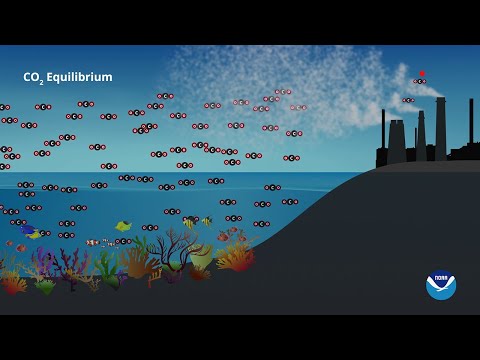
Despite growing interest, these methods are still very immature. Most have only been tested at a small scale, and the consequences of large-scale deployment remain largely unknown. Chemically altering the sea, injecting alkaline substances, or fertilizing it massively carries risks for marine ecosystems.
The study Monitoring, Reporting and Verification for Marine Carbon Dioxide Removal, conducted by the European Marine Board, notes that some techniques can produce secondary greenhouse gases such as methane or nitrous oxide. Others could disrupt nutrient cycles or ocean stratification. Without a detailed understanding of long-term impacts, these interventions could worsen the very problems they aim to solve.
Furthermore, the spatial and temporal variability of the ocean complicates any attempt to prove that carbon is securely and permanently stored. If some carbon quickly resurfaces or is recycled by marine organisms, the sequestration effect becomes illusory. To be credible, any ocean carbon capture project must therefore demonstrate real effectiveness, the duration of storage, and environmental safety.
Source: Science et vie