
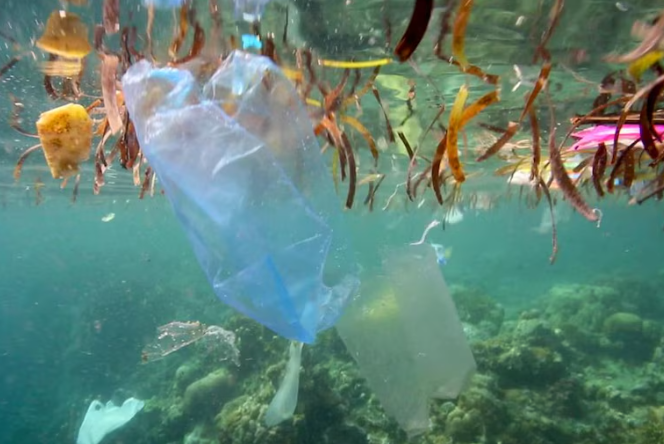
Between 1950 and 2020, approximately 32 million tons of plastic accumulated in the oceans. Facing this threat to marine life and the climate, researchers have developed a robot capable of identifying and collecting debris from the ocean floor using artificial intelligence. According to the OECD, around 32 million tons of plastics currently rest in our oceans—a serious problem for marine life that could become catastrophic. By 2040, the amount of plastic on the seafloor is projected to reach 76 million tons.
This plastic causes immense damage, affecting marine animals, aquatic plants, and even the climate. Some studies suggest that microplastics interfere with plankton’s ability to sequester carbon in the deep ocean, potentially contributing to global warming. A potential solution has emerged from a team of researchers and students at the Technical University of Munich, Germany. They have designed a robot capable of detecting and collecting waste from the seafloor using artificial intelligence to identify different types of debris via cameras or sonar.
The robot, named Smart Grapple, can lift objects up to one meter in length and weighing as much as 250 kilograms. Once collected, the debris is brought to the surface and deposited onto a small, automated boat, which then transports the waste to the shore for recycling.
Smart Grapple can navigate autonomously in deep water or remain tethered to a cable connected to its boat. This cable assists the robot in surfacing more quickly when handling particularly heavy debris.
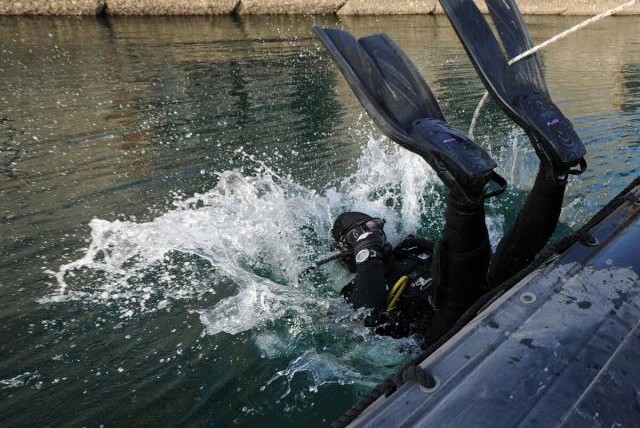
One student involved in the project expressed his excitement after two years of research: “This is not just a fun university project… it could also help ports and countries in general to get rid of this waste,” he told CNN. The Smart Grapple was developed under the EU-funded SeaClear 2.0 project, which seeks innovative solutions to ocean pollution. Currently, debris collection is primarily carried out by divers, which is neither continuous nor scalable. Project lead Bart De Schutter explains: “Divers cannot operate 24/7, and the number of professional divers is limited. This solution allows us to significantly expand the scope and scale of waste cleanup.”
De Schutter also emphasizes that reducing marine pollution remains essential: robots are not a miracle solution, but they can provide crucial assistance in targeted areas.
The full deployment of these robots is expected between 2030 and 2033. Meanwhile, Smart Grapple has already been successfully tested in France and Germany, with promising results.
Source: La Libre