As world leaders gather in Manila for the NUTEC Plastics Forum, the IAEA is highlighting the contribution of nuclear science and technology to the fight against plastic pollution.
Each year, around 20 million tonnes of plastic end up in oceans, rivers, and lakes, disrupting ecosystems and livelihoods. NUTEC Plastics (Nuclear Technology for Plastic Pollution Control), an IAEA initiative launched in 2020, uses science to monitor, understand, and curb plastic pollution at the atomic level. But how exactly does nuclear technology help countries address the scourge of plastic pollution?
1. Addressing Plastic Pollution on Two Fronts
The NUTEC Plastics initiative combines science and technology to combat plastic waste by focusing on:
- Monitoring and assessment, using nuclear techniques to trace and study microplastics in oceans to inform decision-makers;
- Upcycling plastic waste through radiation technology to transform waste into high-value, useful products.
2. Seeing the Invisible
Microplastics are tiny particles, sometimes as small as a thousandth of a millimetre. NUTEC Plastics uses nuclear imaging devices and radiotracers to detect these particles, track their movement through marine ecosystems—and even trace them in seafood.
The initiative has also revealed that microplastics can be transferred from adult female sharks to their offspring.
These data support evidence-based policy development and help protect marine environments and the communities that depend on them
3. Monitoring the Oceans
Nuclear-derived imaging techniques allow scientists to identify even the smallest plastic particles in seawater, beach sand, sediments, and marine organisms.
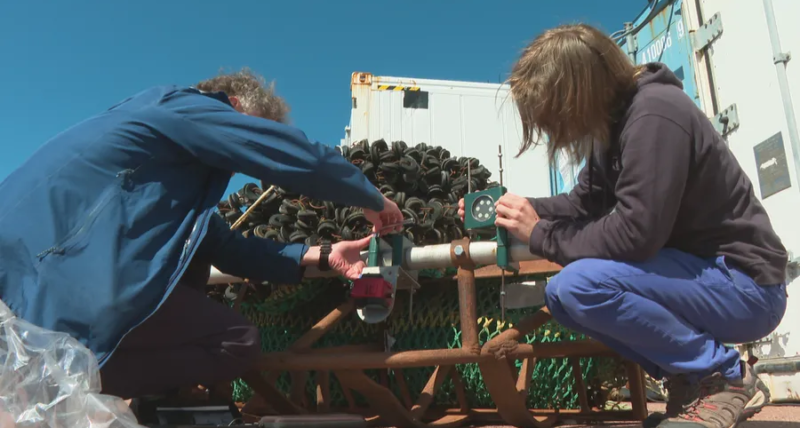
NUTEC Plastics provides laboratories worldwide with the technology and expertise needed to sample, analyse, and monitor ocean microplastic pollution.
As part of the IAEA’s work on marine microplastic monitoring, experts from its Marine Environment Laboratories in Monaco conducted missions in Antarctica and the Galápagos Islands (Ecuador) to collect data and strengthen sampling capacities in the region. Microplastics were found even in these remote corners of the planet.
Today, around 100 laboratories are connected through the NUTEC Plastics Global Marine Environment Monitoring Network, enabling them to share data, knowledge, and expertise. More than 400 scientists have been trained in microplastic monitoring and analysis through the IAEA’s technical cooperation programme.
4. Turning Plastic Waste into Useful Materials
Radiation-assisted technology enables NUTEC Plastics to support plastic sorting and upcycling in several countries. These nuclear technologies make it possible to transform waste into durable construction materials, industrial waxes and fuels, or stronger, more resilient plastics.
5. Bringing Science and Industry Together to Deliver Real Solutions
NUTEC Plastics fosters collaboration between the public and private sectors to ensure that proposed solutions are not only scientifically sound but also market-oriented. Examples include:
- Argentina: Recycled plastic waste is used to produce railway sleepers.
- China: Polyolefin-based plastics—commonly used in food wrap and shrink packaging—are recycled into industrial wax.
- Indonesia: Weather-resistant thatched roofing is made from recycled plastic and rice husk.
- Malaysia: Radiation-induced processes convert Teflon (PTFE) waste into industrial additives and post-consumer polyethylene into fuel.
- Philippines: Recycled plastic is used to manufacture affordable housing materials.
- Tunisia: Cement is partially replaced with irradiated plastic waste to produce lighter, cheaper, yet equally strong concrete.
- Romania & Germany: Advances in sorting technologies have increased the purity of recycled polyethylene and polypropylene, enabling the production of high-quality textiles from plastic waste.
6. Advancing a Circular Economy
NUTEC Plastics helps reduce reliance on fossil fuels, lower CO₂ emissions, and promote sustainable production by turning waste into high-value resources.
The initiative’s new Circular Economy Assessment Platform further enhances the IAEA’s toolkit by complementing existing models that evaluate the technological maturity and economic viability of integrating electron beam technology into plastic recycling.
The IAEA’s new transportable electron beam system will also support Member States in R&D, training, and demonstrations of innovative radiation applications, including sorting and upcycling plastic waste.
7. Supporting Industrial Transition
NUTEC Plastics has developed a structured development plan to help 53 Member States gradually move from laboratory research to industrial-scale production. The goal is to establish operational pilot industrial facilities by 2026–2027, paving the way for greener industries and progress toward a circular economy.
Working Together
NUTEC Plastics is supported by the IAEA’s technical cooperation programme, coordinated research projects (CRPs), and contributions from Member States and partners. More information about the initiative—including facts and figures, the NUTEC portal, donors, and partnerships—is available here.