The transport of goods around the world could soon become cheaper, faster and far more flexible thanks to the adoption of a new UN-backed agreement that modernizes the administrative formalities of international maritime transport.
The United Nations Convention on Negotiable Cargo Documents creates, for the first time, a single document that can be used for trains, trucks and aircraft, making it possible to modify logistics arrangements for goods already in transit.
As a result, valuable cargoes can be sold, rerouted or used as collateral for financing during what may be a long journey, rather than only before they are loaded on board.
“This is a real revolution for international trade,” said Anna Joubin-Bret, Secretary of the United Nations Commission on International Trade Law (UNCITRAL), which led the negotiations over three years. “A single, multifunctional transport document, fully electronic and negotiable.”
From Brazil to Paraguay, via Azerbaijan
Today, negotiable transport documents mainly concern goods carried by sea, whose journeys can last several weeks. Products such as oil or cocoa are often sold several times during transit due to price fluctuations.
By contrast, goods transported by land or by air are generally intended for a single buyer and a single destination, which limits flexibility and access to financial instruments.
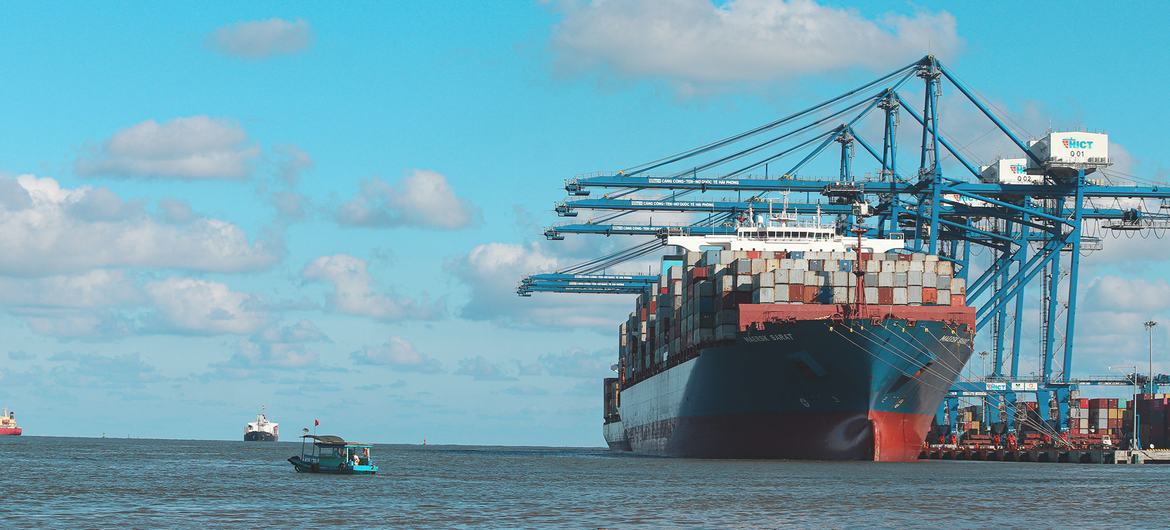
James Hookham, Director of the Global Shippers Forum, described an example of a shipment of goods from a Brazilian supplier to a Paraguayan subsidiary.
“Market conditions change,” Mr. Hookham said. “While the goods are in transit, which may take several days, you might find a buyer elsewhere who is willing to pay a better price.”
With the new system, he explained, these goods could be sold en route to a buyer, for example in Azerbaijan, thereby changing their original destination.
“It’s a bit like crossing out the address on an envelope after you’ve posted it.”
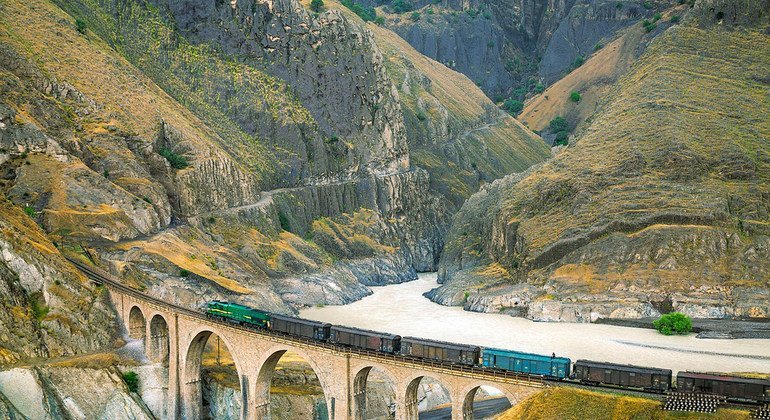
Goods initially destined for Paraguay by ship could thus be transported by air to Istanbul, Turkey, and then by train to Azerbaijan—an operation that is impossible under current restrictions.
Many advantages
This type of flexibility is becoming essential with the opening of new trade corridors in Central Asia, between China and Europe, and across Africa, often involving routes serving landlocked countries.
The new convention “makes it possible not to abandon goods simply because their sell-by date has passed,” Mr. Hookham explained, adding that sources of disruption to international trade continue to multiply.
He also highlighted the negative impact of recent tariff disruptions and unforeseen extreme weather events, such as disruptions in the Caribbean caused by Hurricane Melissa, or cargo seizures in the Red Sea.
“If Plan A fails, here is an alternative”
The convention aims to reduce the risk of losses for banks and carriers by establishing clear legal rules on cargo ownership at all times.
This legal certainty, Mr. Hookham said, encourages banks to finance transactions more easily and helps carriers avoid disputes over delivering goods to the wrong party.
“If Plan A doesn’t work or proves too costly, here is an alternative,” the director concluded.
First Signatory?
This convention will be particularly important for landlocked and developing countries, as it will help them better integrate into the global trading system and reduce their costs.
Several African and Central Asian countries, as well as major trading powers including China—which initiated the agreement in 2019—have already expressed their interest. The negotiation process, which included extensive consultations, is an example of “effective multilateralism,” emphasized Ms. Joubin-Bret.
The UN General Assembly adopted the resolution supporting the convention on 15 December. A signing ceremony is scheduled for the second half of 2026 in Accra, Ghana. The treaty will enter into force once it has been ratified by ten countries.
Source: news