The initiative will support local businesses, attract investors, and reduce the country’s reliance on oil revenues, amid Nigeria’s efforts to diversify its economy.
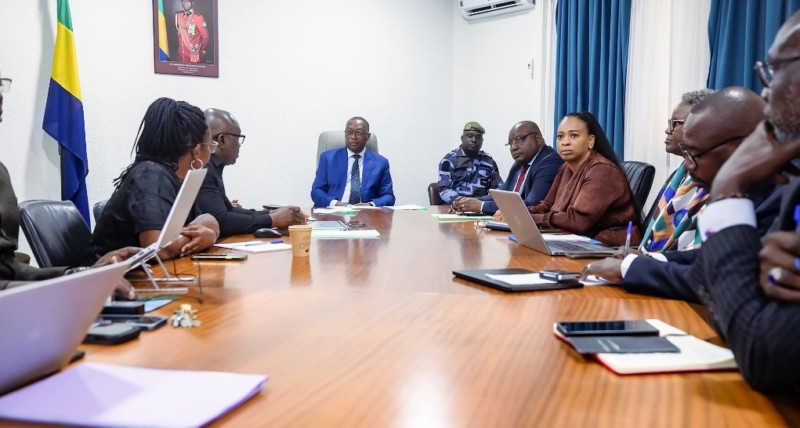
Nigeria will launch a $1 billion fund for blue economy and maritime sector start-ups in March 2026. The announcement was made on Sunday, 14 December 2025, in Abuja by Ronke Kosoko, Director General of the Maritime Innovations Hub, during a press conference held alongside the Blue Economy Investment Summit.
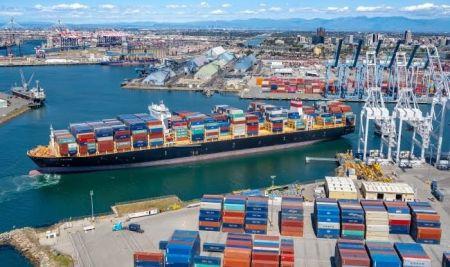
The fund will be officially launched at the Blue Economy Investment Summit in Lagos, scheduled from 9 to 11 March 2026. It will target young companies active in multiple maritime sector segments, including shipping, fisheries, coastal tourism, shipbuilding, and marine renewable energy.
According to Ronke Kosoko, the aim is to provide direct financing to start-ups and strengthen their capabilities. The fund will offer training programs, technical support, and access to international networks. It follows on from $100 million in funding already obtained by Nigeria for training and capacity building in the maritime sector. Ms. Kosoko noted that discussions with financial partners are nearing completion and that fund representatives are expected to return to Nigeria soon to finalize commitments.

Blue Economy at the Heart of Diversification
This initiative comes amid Nigeria’s efforts to diversify its economy. The country aims to reduce its dependence on oil revenues by developing alternative sectors, with the blue economy identified as a federal government priority.
Nigeria has one of the longest coastlines in West Africa, stretching over 850 km, and occupies a strategic position on major international shipping routes. Despite these advantages, its contribution to the country’s GDP remains below 3%, according to Ronke Kosoko.
Several factors explain this situation. The sector suffers from a lack of port infrastructure, limited availability of reliable economic data, and sometimes unstable regulatory frameworks. These constraints hinder the development of maritime activities and slow the inflow of private capital.
According to the Director General of the Maritime Innovations Hub, structured financial support could enable the blue economy to help offset part of Nigeria’s GDP deficit, estimated at around $750 billion. Authorities believe that targeted investments can transform informal activities into structured, revenue-generating enterprises.
A Signal for International Investors
By supporting start-ups through funding, training, and international exposure, the fund aims to reduce the constraints facing Nigeria’s maritime sector and blue economy. Project promoters believe that structuring the local ecosystem will facilitate the entry of investment funds and industrial partners.
This announcement comes a few weeks after Nigeria’s return to the International Maritime Organization (IMO) Council, following a 14-year absence. In late November 2025, the country was elected to the IMO Council for the 2026 term, in Category C, which includes states with particular interests in maritime transport.
The Minister of Maritime Affairs and Blue Economy, Adegboyega Oyetola, described this election as a recognition of the reforms undertaken and the security efforts carried out in the Gulf of Guinea. According to him, this return is expected to energize the sector, strengthen the country’s international partnerships, improve access to technical assistance, and increase investor confidence.
Source: Agence Ecofin