

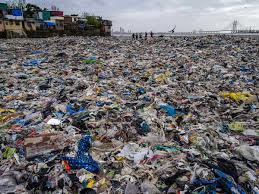
As they break down, plastics do not just fragment into smaller and smaller pieces (microplastics); they also release unpleasant chemical components used during their production.
Plastics in water release invisible chemical clouds under sunlight
Beyond ending up in the stomachs of marine creatures, plastics discarded in the oceans release invisible chemical compounds, particularly under the influence of sunlight, according to a study published in the journal New Contaminants. Researchers employed multiple techniques, including fluorescence spectroscopy, high-resolution mass spectrometry, and infrared analysis, to identify the chemical signatures of various plastics, reports SciTechDaily.
« Microplastics do not only pollute aquatic environments as visible particles. They also create an invisible chemical cloud whose composition evolves over time, » explains Jiunian Guan, lead author of the study and professor at Northeast Normal University in Changchun, China. « Our study shows that sunlight is the main driver of this process and that the molecules released by plastics are very different from those naturally produced in rivers and soils. »
Chemical signature
The research team immersed four types of microplastics in water: polyethylene (PE), polyethylene terephthalate (PET), polylactic acid (PLA), and polybutylene adipate-co-terephthalate (PBAT). They were exposed to ultraviolet light for up to 96 hours. This exposure accelerated the release of matter from the plastics, particularly from so-called “biodegradable” types such as PLA and PBAT.
In addition to carbon, the primary component, microplastics release numerous molecules into the water: plastic additives, monomers, oligomers, oxidized fragments, and more. Each type of plastic generates its own « chemical signature » as it degrades under sunlight. This signature can evolve over time, with the appearance of new molecules, including alcohols or carboxylates.
A growing problem
« Our results highlight the importance of considering the full life cycle of microplastics in water, including the invisible dissolved chemical substances they release, » warns Shiting Liu, co-author of the study. « As global plastic production continues to rise, these dissolved compounds could have an increasing environmental impact. »
The study’s authors recommend using artificial intelligence to track how this dissolved organic matter (DOM) spreads in water. This would improve understanding of its impact on aquatic ecosystems, the distribution of contaminants, and the broader carbon cycle. With plastic waste continuing to enter oceans and rivers unchecked, its transformation under sunlight is set to increase—underscoring the urgent need for better monitoring.
Source: GEO