
Cyprus presented its priorities for the Presidency of the European Union from 1 January 2026, focusing on autonomy, security, defence, migration and support for Ukraine.
After Denmark, it is the turn of Cyprus, a small state with less than one million inhabitants, to take the reins of the presidency of the Council of the European Union (EU) for six months, starting on January 1, 2026. Under the motto « An autonomous Union – open to the world », its presidency program takes up the main lines of the European agenda of the moment (Defense, Mercosur, multi-year budget…).
But like all the countries that occupy this function, Cyprus will try to bring, in the midst of the more than 300 files under negotiation, « its » subjects to the table of the EU Council, which brings together the ministers of the twenty-seven Member States. Conservative President Níkos Christodoulídis wants to put the Mediterranean on the front stage.
Nicosia wants to carry the issue of migration policy, even if the island, due to its geographical location 800 km east of Greece, is very little on the route of traffickers. The subject is one of the hottest at European level, despite irregular arrivals and asylum applications at the lowest level in the EU for years. Many European governments, under pressure from the extreme right, are trying to show white paw to their voters with ever stricter legislation that leads to transforming Europe into a fortress, closed on the southern coast of the Mediterranean.
Another subject, water. Nicosia wants to advance the European Commission’s proposals to combat water shortages and declining quality linked to pollution caused by pesticides, antibiotics, microplastics and eternal pollutants (PFAS). So that in 2022, up to 34% of the EU’s population and 40% of its territory faced a seasonal water shortage. In Cyprus and the rest of southern Europe, this affects up to 70% of the population in the summer.
Maintain its influence against Erdogan’s Turkey
To advance these issues, Cyprus is trying to compensate for its low weight in the EU. To show its influence, Nicosia organized a bilateral meeting with his big Greek brother on Monday, December 22 with Benyamin Netanyahu, the Prime Minister of Israel. Officially for humanitarian aid in Gaza under the American-Israi supervision and the operation of the Centre of Excellence in Maritime Cybersecurity (MCCE) in Cyprus, which is scheduled for commissioning in 2026.
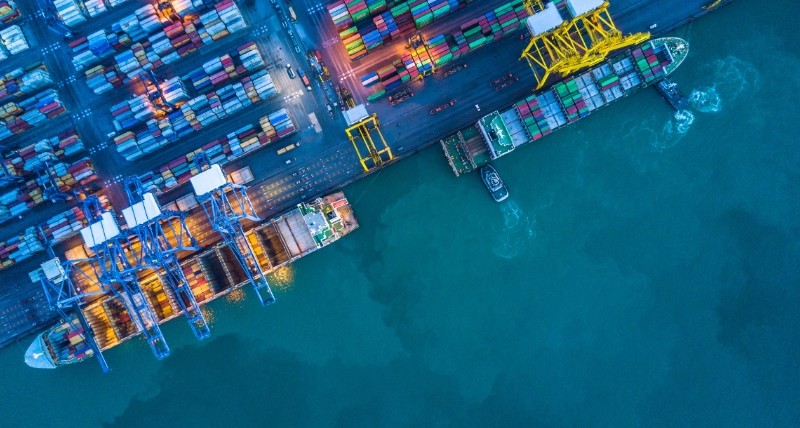
In reality, Cyprus wants to push the file of freedom of navigation and safety on all sea routes because Nicosia is under pressure from the great Turkish neighbor. Ankara is eying the recently discovered gas deposits in the eastern Mediterranean and calls for the movement of maritime borders. This island, a member of the EU since 2004 and still partially occupied by Turkish troops since 1974, was recently presented by its Head of State as « the southeastern tip of Europe, the last Member State of Europe under occupation ».