
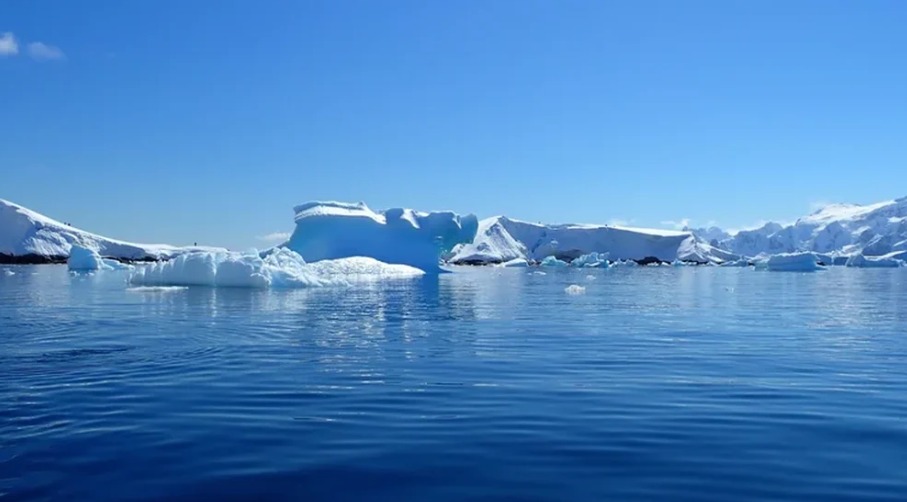
An experiment conducted by Australia’s national science agency, CSIRO, in Antarctica encountered a major setback. However, this unexpected incident ultimately produced exceptionally valuable scientific results.
An Ocean Robot “Lost” for Nine Months
An oceanographic robot deployed to collect data on the Totten Glacier in Antarctica was diverted from its planned trajectory by ocean currents and drifted into a remote and previously unexplored area.
After disappearing for nine months, the robot resurfaced carrying an extremely rare and valuable dataset, providing crucial insights into the Denman Glacier and the impacts of climate change.
The robot, designed as a buoy equipped with salinity and temperature sensors, is capable of diving to great depths and resurfacing every ten days to transmit data to a satellite.
Initially, CSIRO scientists used the robot to study the Totten Glacier, aiming to assess the potential global sea-level rise should the glacier melt—a concern so serious that the U.S. National Oceanic and Atmospheric Administration (NOAA) has developed an interactive map showing coastal areas at risk of permanent flooding.
However, ocean currents pushed the robot westward, carrying it deep beneath the ice of the Denman Glacier, a location that is extremely difficult to observe and from which data collection is particularly challenging.
Although the research team feared the robot had been lost forever, it re-emerged after nine months, bringing back a wealth of critical data on the Denman Glacier and the broader impacts of climate change across Antarctica.
Unexpected Findings from the Data
Throughout its unintended journey, the robot traveled beneath the Denman Glacier and the Shackleton Ice Shelf. Unable to reach the surface to transmit data, it continued measuring water salinity and temperature from the seabed up to the base of the ice shelf.
Each time the robot collided with sea ice while attempting to surface, it recorded the depth of the ice above it.
Thanks to this serendipitous discovery, researchers were able to compare ice-shelf depth data with satellite measurements, reconstruct the robot’s trajectory, and precisely locate 195 salinity and temperature data points.
The data indicate that the Shackleton Ice Shelf is not currently threatened by melting due to warming waters. In contrast, warm water beneath the Denman Glacier is accelerating its melt.
The Denman Glacier alone could contribute up to 1.5 meters of global sea-level rise. Identifying such high-risk zones is critical, especially as scientists believe certain climate change impacts may already be approaching—or have crossed—points of no return.
Significance for Future Scientific Research
What initially appeared to be a failure turned out to be a scientific breakthrough. The robot provided the first-ever oceanographic measurements beneath the ice shelves of East Antarctica, delivering essential data on the region and the threat posed by the Denman Glacier.
The robot’s survival beneath the ice and its successful data collection have opened new avenues for research. Scientists are now considering deploying similar robots in other remote and hazardous regions, despite the inherent risks, in the hope of obtaining rare and invaluable data.
Such information could prove crucial for monitoring glacier melt and improving projections of future sea-level rise.
Conducting targeted robotic measurements in East Antarctica also carries major implications for future research. This region contains significantly more ice than West Antarctica, meaning that glacier melt there poses an even greater threat to global coastlines.
The data collected by the robot may also help scientists better understand whether parts of Antarctica are emerging from the ocean and what the potential consequences could be for the planet.
The study, entitled “Ocean Circulation and Interactions beneath the Denman and Shackleton Ice Shelves,” is scheduled for publication in Science Advances in December 2025 and is expected to become a key reference for future Antarctic research.