
U.S. President Donald Trump reiterated on Sunday, January 4, that the United States “absolutely” needs Greenland and announced that he intends to address the issue “within two months.” This time, following the U.S. raid on Caracas in blatant disregard of international conventions and the publication of an American security doctrine seeking to exclude any foreign power from the continent, the threat of annexation by the United States is being taken very seriously.
Donald Trump cites security reasons. Greenland represents the shortest route for a missile launched from Russia—or even China—toward the United States. The island also lies along the Northwest Passage, the maritime route to Asia that is gradually opening as ice melts. In addition, Greenland’s subsoil contains significant reserves of oil, gas, graphite, lithium, and uranium.
However, these arguments are widely contested. Greenland’s security is already ensured by NATO and the United States, which maintains a military base on the island. As for mineral resources, they are difficult to access and therefore of limited economic viability. Currently, only one gold mine and one feldspar mine are in operation. Ultimately, Trump’s strongest motivation may be his desire to leave his mark on history as a president who expanded U.S. territory—much like Andrew Johnson, who acquired Alaska in 1867 after purchasing it from Russia for seven million dollars at the time.
Can Europeans Oppose an Annexation?
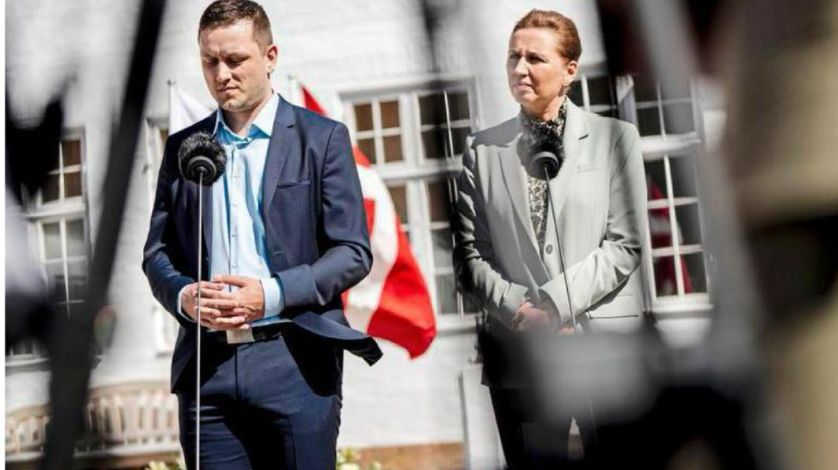
Although Donald Trump has repeatedly expressed his intention to take control of the island for months, the European Union (EU) long kept a low profile, merely reaffirming its “solidarity” with Denmark. On Tuesday, January 6, French President Emmanuel Macron, German Chancellor Friedrich Merz, Italian Prime Minister Giorgia Meloni, Polish Prime Minister Donald Tusk, Spanish Prime Minister Pedro Sánchez, and British Prime Minister Keir Starmer issued a joint statement supporting their Danish counterpart, Mette Frederiksen.
Greenland is part of the Kingdom of Denmark, and Copenhagen has clearly and categorically rejected any U.S. annexation. Nevertheless, the tone of the declaration remains cautious. The European leaders reaffirm their commitment to Arctic security and call for continued cooperation “with the United States.” Such cooperation, they stress, must respect “the United Nations Charter, in particular sovereignty, territorial integrity, and the inviolability of borders”—“essential principles” they say they intend to defend “relentlessly.”
In practice, Europeans have few concrete means to oppose the United States. For now, their main response has been a reminder of international legal principles, with limited impact. A proposal to send several EU foreign ministers to Greenland is currently being discussed as a symbolic gesture of support. France is also considering opening a consulate in Nuuk, Greenland’s capital.
For his part, on December 21, Donald Trump announced the appointment of Louisiana Governor Jeff Landry as U.S. Special Envoy to Greenland, tasked with making the territory “part of the United States.” In response, Denmark summoned the U.S. ambassador to demand explanations. Since Trump took office, only one European head of state has visited Nuuk: Emmanuel Macron, on June 15.
Would a U.S. Action Signal the End of NATO?
“The Kingdom of Denmark, including Greenland, is a member of NATO,” the European joint statement recalls. “Security in the Arctic must therefore be ensured collectively, together with NATO allies, including the United States.” Danish Prime Minister Mette Frederiksen went much further on Monday, January 5: “If the United States chooses to militarily attack another NATO country, then everything collapses—including NATO itself and the security framework established since the end of World War II.”
Such an attack would indeed violate Article 1 of the North Atlantic Treaty, under which members pledge to refrain from the use of force against the territorial integrity or political independence of any other member. It would place the Alliance in an impossible position, as Denmark would be compelled to invoke Article 5.
Article 5 states that an attack against one member shall be considered an attack against all, triggering collective defense. In this scenario, Denmark would invoke Article 5 against the United States—the leader of NATO itself.
How Is the French Military Involved in Greenland’s Security?
This issue is addressed in France’s Arctic defense strategy, adopted in July 2025 to respond to growing interest from major powers in the region. Led by the Directorate General for International Relations and Strategy (DGRIS), the strategy affirms that France’s position within NATO and the EU implies “an evident strategic solidarity with seven of the eight members of the Arctic Council, potentially extending to collective or mutual defense.”
Among those members is Denmark—and therefore Greenland. “France may therefore be called upon to support an allied state or contribute to maintaining regional stability, including through the deployment of military forces,” the document states.
In this context, the French armed forces are preparing for possible operations by conducting exercises and experiments, such as testing the deployment of the A400M Atlas military transport aircraft in the High North, assessing its ability to operate under extreme conditions on icy and snow-covered runways. The High Mountain Military School is responsible for training soldiers to fight and survive in such environments, where, as its commander Colonel Gaëtan Dubois explained in December, “the primary enemy is the cold—for both personnel and equipment.” Units involved include the 27th Mountain Infantry Brigade and the 25th Air Engineer Regiment.
On the Ground: Residents Between Anger and Anxiety
Greenlanders categorically reject any idea of U.S. annexation. Most aspire to full independence for their vast territory, which is currently autonomous but remains under Danish sovereignty.
A map is now circulating widely on social media, displayed like a banner: Greenland, vast and icy, appears in white and red—the colors of the Greenlandic flag. The accompanying messages are clear: “Greenland is not for sale.” “Respect our autonomy and our culture.” “We are a democracy, not a territory to be conquered.”
After a close ally of the U.S. president posted a map of Greenland colored like the American flag on Saturday, January 3, Inuit social media users responded immediately. The overwhelming majority of comments reflect anger and concern among the territory’s 57,000 inhabitants following Trump’s latest threats.
“There is deep anger and great uncertainty among the population toward Trump’s America,” writes author Juaaka Lyberth. “These statements have triggered profound unease that is felt even among children.” Reached by phone, Aviana, a student, asks: “How can anyone speak of our country as if it were an object? It feels like a return to colonial times.”
Long ignored by the world, Greenlanders have lived for over a year under the threat of absorption by the United States—a prospect opposed by 85% of the population, according to a poll published in January 2025. All five parties represented in the local parliament share this rejection, having issued a joint statement last spring denouncing “the unacceptable behavior of the United States toward friends and allies.”
In Nuuk, a city of 20,000 residents, hundreds of people gathered on March 15, 2025, in a rare demonstration in front of the U.S. consulate, chanting “Nok ernok” (“Enough is enough”). Nearly a year later, newly appointed Prime Minister Jens-Frederick Nielsen echoed those words on Facebook: “Enough… No more pressure. No more insinuations. No more annexation fantasies. We are open to dialogue—but only through the proper channels and in respect of international law.”
At a press conference, the head of Greenland’s autonomous government also sought to reassure citizens, stating that he did not believe in a show of force similar to what occurred in Venezuela. “There is no risk of an American invasion,” he insisted.
Within the opposition, some call for ending what they describe as an ostrich-like policy by both the Nuuk government and Denmark. Meanwhile, nationalist parties such as Atassut argue for opening negotiations with the U.S. administration through all possible channels.
Since Donald Trump’s election, the United States has sought local allies on the island. The most prominent is Jørgen Boassen, a former bricklayer turned public figure, who organized the brief visit of Trump’s son, Donald Trump Jr., to Nuuk. Contacted by message, Boassen claims he ultimately seeks Greenland’s independence and views the White House’s statements as new opportunities to achieve it. “I’m not worried,” he concludes. “The ‘Big Man’ (Donald Trump) is running things for us.”
In Greenland, he remains one of the very few who believes this.
Source: La Croix