
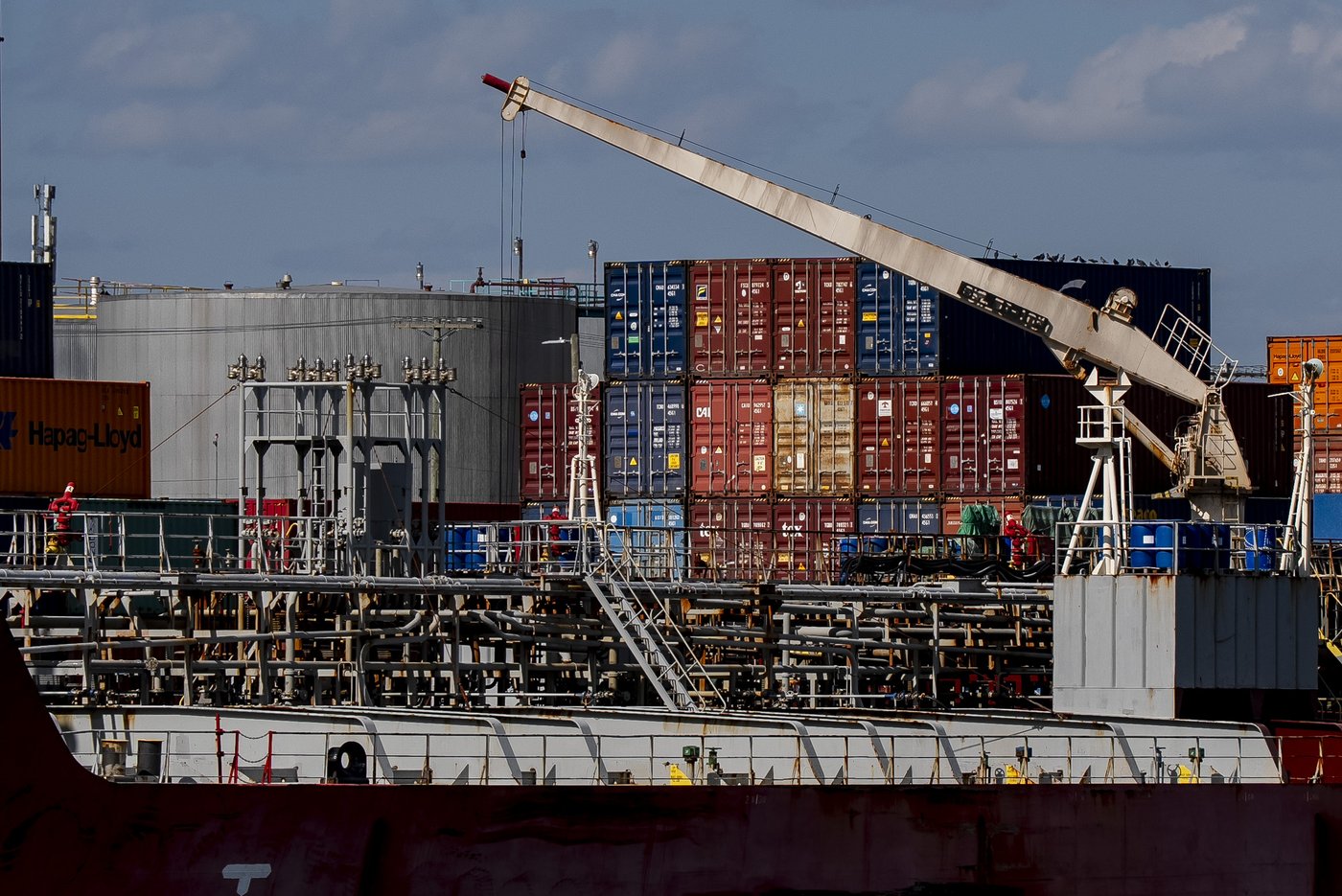
A study commissioned by the Society for Nature and Parks (SNAP Québec) indicates that the Port of Montreal expansion project in Contrecœur could become a “financial burden for taxpayers” and is based on projections deemed unrealistic, contrary to the claims of the port authority.
Unrealistic projections and traffic stagnation
The study, conducted by Éric Pineault (UQAM) and Henri Chevalier (University of Waterloo), reveals a significant gap between the container traffic projections made in 2017 by the Montreal Port Authority (MPA) and reality: while nearly 2.47 million TEUs were forecast for 2030, volumes in 2025 are around 1.5 million. According to the researchers, “there has been no continuous growth in traffic over the past 11 years,” casting doubt on the project’s profitability.
Structural and climate constraints
The study points out that the shallow draft of the St. Lawrence River prevents Montreal and Contrecœur from accommodating mega-ships, making the port less competitive compared to hubs such as Halifax or New York. In addition, climate change could lead to chronically low water levels, undermining navigability and the reliability of the maritime corridor.
Predominantly public financing and economic risks
The total cost of the expansion has risen to $2.3 billion, financed partly by the state (Ottawa and Quebec) and through borrowing by the Port of Montreal. The study warns of “significant risks of unprofitability,” although the presence of a private investor, the Emirati group DP World, could partially offset these risks.
Environmental impact
The works require dredging the bed of the St. Lawrence River in the distribution area of the copper redhorse, a threatened species endemic to the St. Lawrence and a few of its tributaries. SNAP Québec plans to challenge the permit issued by Fisheries and Oceans Canada for these works.
MPA response
The Montreal Port Authority declined to comment in detail on the study, stating that it “contains several omissions and factual errors” and asserting that the project “remains structuring, competitive, and compliant with nearly 400 environmental conditions.”
Source: L’actualité