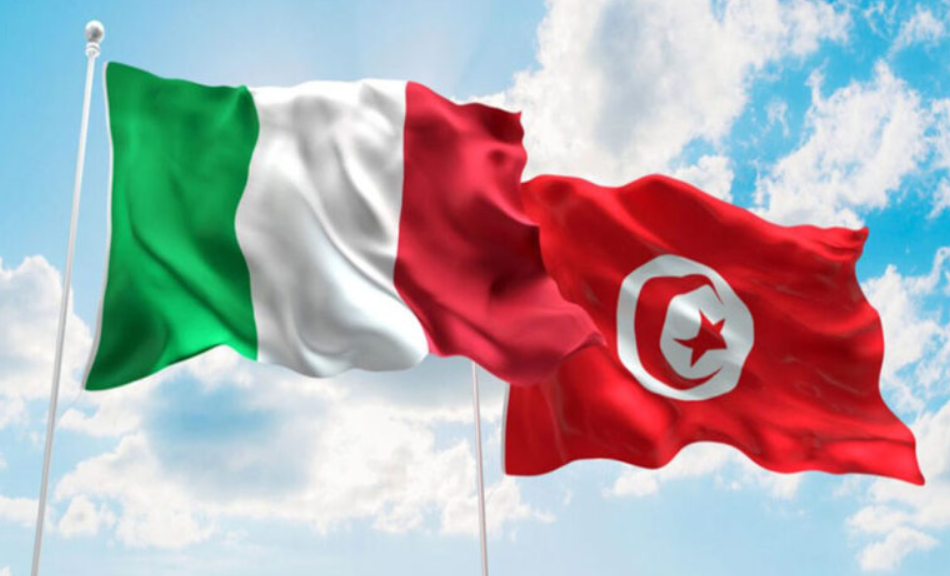
In a context where the energy transition has become an imperative for Mediterranean countries, Italy and Tunisia have launched an ambitious scientific cooperation project aimed at harnessing the energy resources offered by the sea.
Named Flottant, this European research project seeks to design innovative technologies capable of capturing and enhancing marine energy through efficient hybrid systems, while minimizing environmental impact. The initiative is co-financed by the European Union under the Interreg Next Italy–Tunisia programme, a mechanism designed to strengthen cross-border cooperation between nine Sicilian provinces and sixteen Tunisian governorates.
The official launch of the project recently took place in Sfax, Tunisia, in the presence of academic partners and representatives of the Interreg programme. This meeting marked the beginning of an ambitious scientific collaboration between the University of Catania (Italy), which leads the project, the University of Palermo, and the Tunisian universities of Sfax and Gabès. The event also provided an opportunity to present the project timeline, budget management, and strategic objectives.
A project focused on innovation and clean energy
The central objective of the Flottant project is to develop a next-generation device capable of harvesting marine energy from various natural sources such as wave motion, thermal gradients between water and solar radiation, and biological phenomena present in the marine environment.
To achieve this, researchers are considering the use of advanced technologies, including microbial fuel cells installed on the seabed, capacitive transducers that convert water movement into electricity, piezoelectric cables for energy transmission, and floating thermoelectric transducers capable of exploiting the natural heat of the marine environment.
Beyond clean energy production, the project also plans to develop energy storage solutions and practical applications such as powering coastal equipment or environmental monitoring devices. These technological advances aim to offer complementary energy options to more traditional sources such as solar or wind power, while ensuring greater resilience to current climate challenges.
A structured European cooperation
Officially entitled Optimized Energy Pathways with Transducers and Advanced Technologies (Flottant), the project falls under the Interreg Next Italy–Tunisia programme, which supports research, innovation, and ecological transition initiatives. This programme seeks to encourage technology transfer, the involvement of local communities, the participation of the energy sector, and regional governance around projects rooted in concrete applications.
Energy cooperation between Italy and Tunisia is not limited to this project alone. Other initiatives, such as joint efforts to strengthen electrical interconnection through the ELMED project (a direct current link between the Italian and Tunisian power grids), demonstrate a broader strategic partnership. This project is expected to enhance energy security, integrate more renewable energy into both countries’ power systems, and promote energy exchanges between North Africa and Europe.
European funding and expected outcomes
Funded with approximately one million euros by the European Union, Flottant is scheduled to run until May 2028. This funding is intended to support fundamental research, prototyping, real-world testing, and the integration of advanced technologies into practical applications.
Support from Brussels illustrates the European commitment to promoting cross-border projects capable of contributing to a sustainable energy transition in the Mediterranean area, considered a key region for innovation in clean energy.
The expected outcomes of this project are numerous: new energy technologies, strengthened research capacities within the participating universities, training opportunities for young researchers, and potentially new economic prospects for the coastal regions concerned. These outcomes align with the vision of a Mediterranean that values its natural resources while adapting to the challenges of climate change.
By placing the sea at the heart of its energy strategy, this project gives an even more ambitious dimension to what institutions committed to sustainable innovation can achieve. It represents a bet on the future, in which the Mediterranean could become a source of clean, reliable, and integrated energy for the benefit of coastal populations and the economies that surround them.