
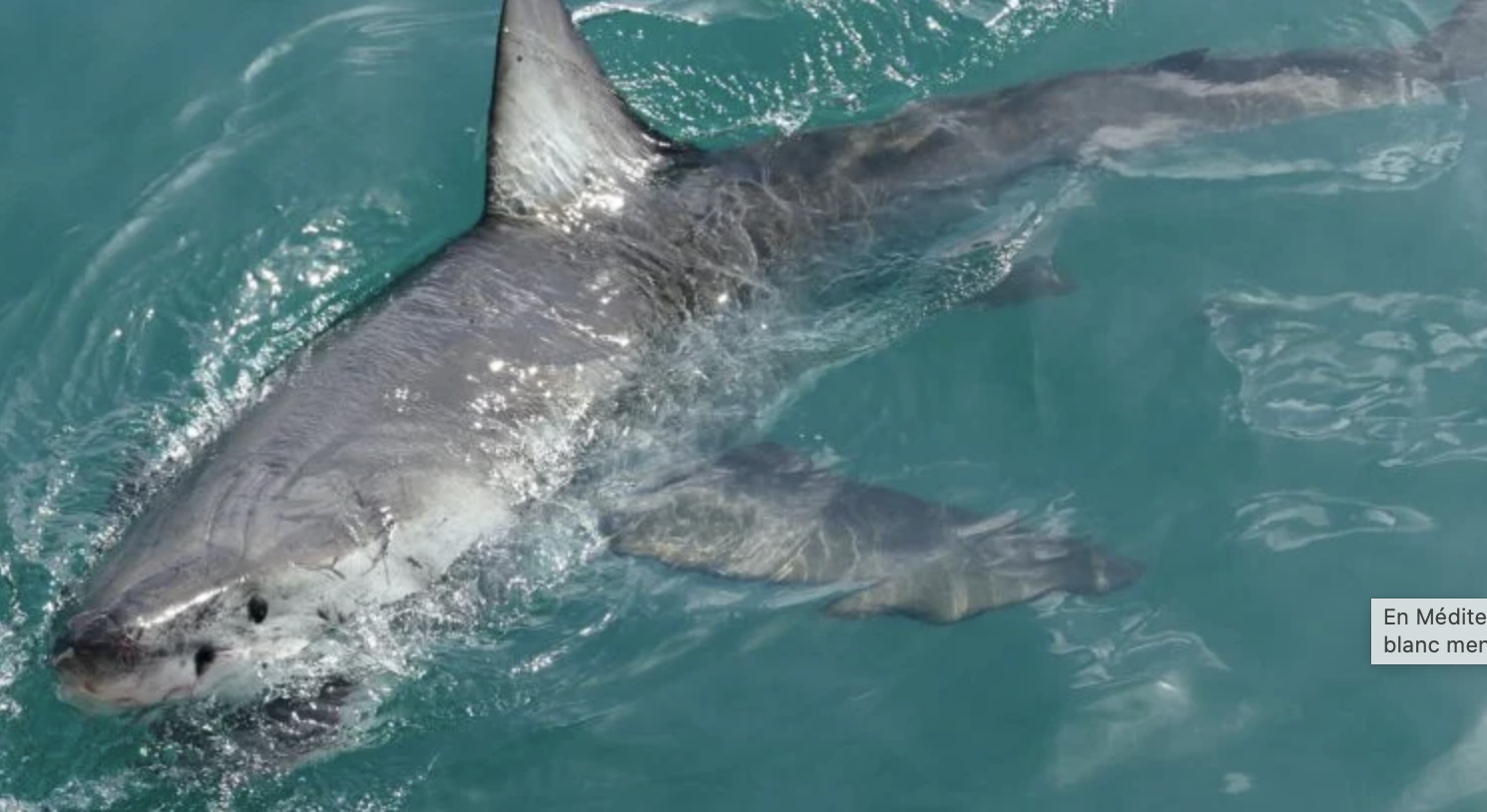
Protected by international conventions, this great marine predator nevertheless continues to disaper in general indifference. In the Mediterranean, scientific signals are multiplying and drawing a portrait of a weakened ecosystem, unable to absorb the loss of its most emblematic species.
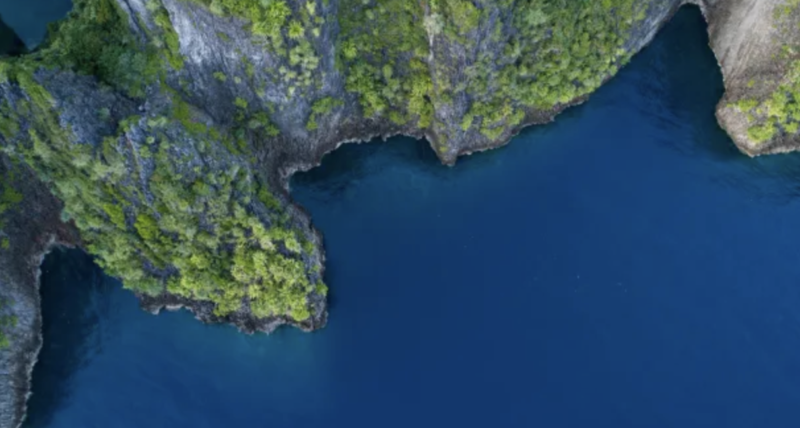
Often perceived as a cradle of civilizations, the Mediterranean is also for marine biodiversity. Its waters are home to a unique wealth of species, shaped by millennia of natural interactions. But under this apparent stability, the balances are faltering. Some emblematic figures of these ecosystems, such as the great white shark, are now on the verge of erasure, threatened both by uncontrolled fishing and by legal protection disconnected from the terrain.
Clear legislation, an application that remains unclear
On paper, the Mediterranean is one of the most regulated marine areas in the world in terms of species protection. Twenty-four countries, including all the member states of the European Union, have signed an international agreement prohibiting the capture, sale and even the exhibition of about twenty endangered shark species. Among them, the great white shark (Carcharodon carcharias) is in a prominent place. Added to this are the annexes to the SPA/BD protocol of the Barcelona Convention, which formally list the species at risk in the region.ADVERTISING
Despite these commitments, images are multiplying showing protected specimens, sometimes cut out, sold on fishing market stalls in Algeria or Tunisia. In 2025, American researchers in collaboration with the Blue Marine Foundation documented the sale of at least forty large white sharks on the North African coasts. This data is based on both field surveys and the analysis of videos posted on social networks, verified by the BBC. This casualness with the rules in force betrays a persistent difficulty in enforcing the law in some ports. Controls are rare and sanctions are not very dissuasive, which considerably weakens the effectiveness of the protection system.
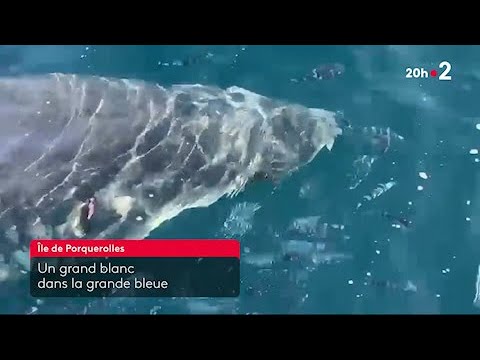
The decline of the great white shark in the Mediterranean betrays a profound ecological imbalance
Once a dominant predator of Mediterranean waters, the great white shark has seen its population collapse over the decades. It is now classified as critically endangered by the International Union for Conservation of Nature. According to Virginia Tech biologist Francesco Ferretti, quoted by Calibre, industrial overfishing has largely contributed to this decline. No other sea in the world is subjected to such intense fishing pressure as the Mediterranean, he believes. In November 2025, his team conducted a scientific mission in the Strait of Sicily, an area reputed to be one of the last potential refuges for endangered sharks. Despite two weeks of intensive hunting, three tons of baitfish and 500 liters of tuna oil, the researchers were able to observe only one blue shark, briefly captured by an underwater camera.ADVERTISING
This void is not trivial. It reflects a profound alteration of the marine balance. The absence of superior predators such as the great white shark leads to a cascade of ecological effects, changing the dynamics of fish and invertebrate populations. In an ecosystem as closed as the Mediterranean, such an imbalance can become irreversible. A 2024 study relayed by the University of Plymouth also identified more than 200 conservation measures implemented in the 22 riparian states. But she also points out that these actions are unevenly distributed, poorly coordinated and rarely evaluated.
The survival of marine species also involves that of local fishermen
In several coastal countries, shark capture is not always intentional. It is sometimes an accident, sometimes a necessity. When a net raises an animal of several hundred kilos, few modest fishermen choose to throw it to sea. Sara Almabruk, of the Libyan Society of Marine Biology, recalls that many seafarers face a daily dilemma between the survival of their family and respect for a legal text. Flesh, fins or shark teeth can be a significant economic resource in areas where the morning net determines the evening meal.ADVERTISING
The solution therefore lies not only in a strengthened legislative arsenal. It is becoming urgent to involve fishing communities in conservation. Providing them with tools, training and concrete incentives to avoid accidental catches could change the game. Associations like Blue Marine have understood this well and are multiplying local partnerships to initiate more sustainable fishing practices.
At the same time, it remains crucial to raise awareness of the ecological role of sharks among the general public. Changing their image would make it possible to no longer see them as threats. They could finally be recognized as essential regulators of marine biodiversity. Protecting the great white shark in the Mediterranean can only work on one condition. It will therefore be necessary to rely on the actors of the sea, rather than imposing rules on them.
Source : science-et-vie.