

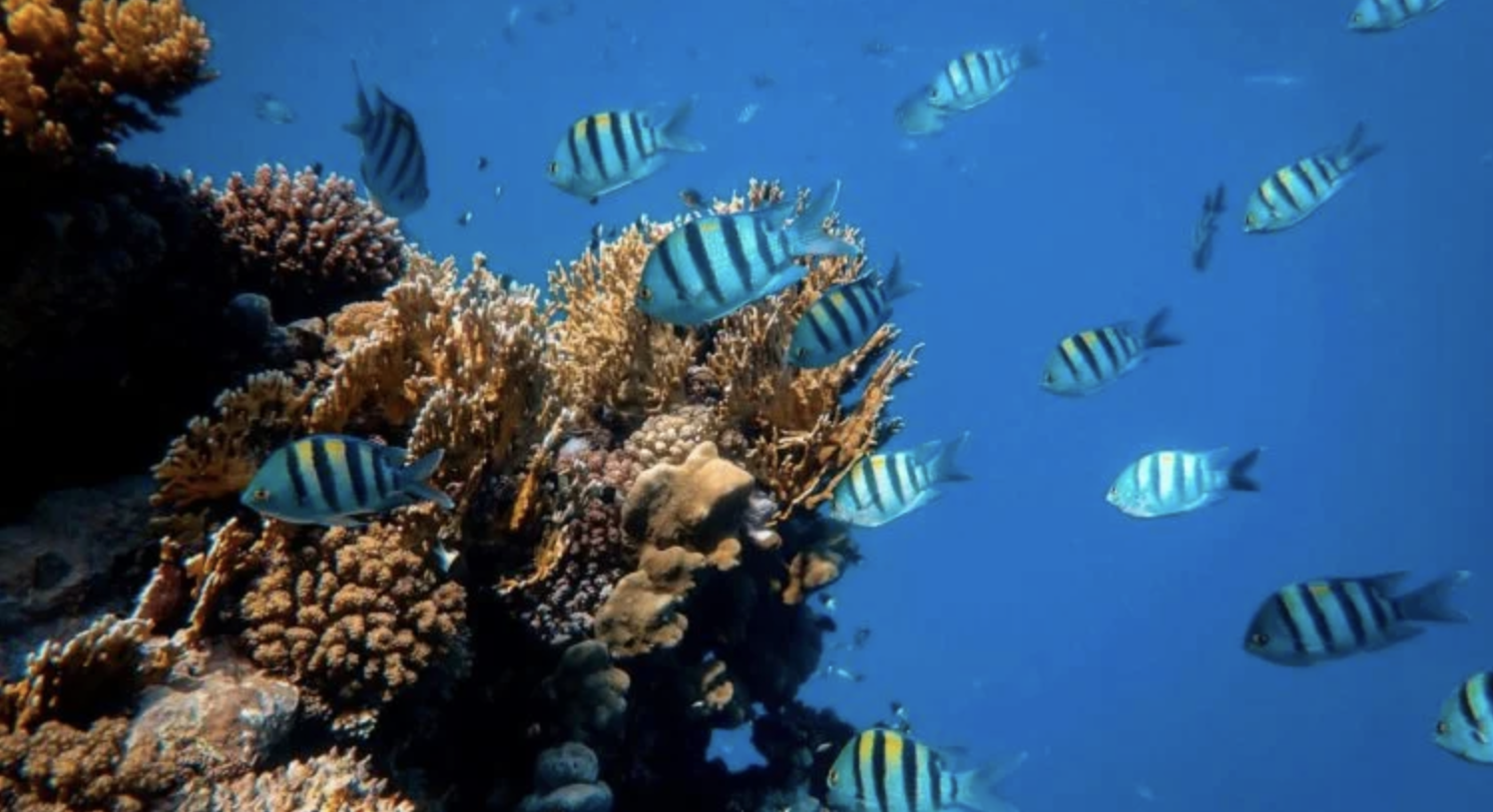
Coral reef fish could transform sustainable fishing according to a study that shows a largely untapped potential.
Coral reef fish play an essential role in the feeding of millions of people. The world population now exceeds 8 billion inhabitants. In many tropical countries, access to sufficient food remains fragile. However, a solution is already in the ocean. Rich in protein and micronutrients, these fish could contribute more to food security. However, their decline limits this potential. Scientists are now showing that their reconstruction could change the game.
Coral reef fish remain very far from their sustainable yield
Coral reefs have supported local fisheries for generations. They provide accessible proteins to millions of people. However, fishing pressure has profoundly unbalanced these ecosystems. In many regions, fish populations have fallen to critical levels.
Sustainable yield is the maximum amount of fish that can be caught each year without depleting stocks. When this threshold is not reached, food production decreases. According to a study published in Proceedings of the National Academy of Sciences, the majority of global reefs are well below this optimal level. This underproduction represents a massive loss of potential food. Researchers estimate that current sustainable catches are far lower than what reefs could provide.

Reconstitution of coral reef fish stocks could strengthen global food security
The scientists analyzed more than 1,200 reef sites spread over 23 territories. They compared current stocks of coral reef fish to those needed to achieve maximum sustainable production. This approach makes it possible to evaluate possible long-term food gains. Biomass corresponds to the total weight of fish on a reef. In many cases, it would have to double to regain a productive balance.
According to an analysis relayed by Phys.org, the reconstitution of coral reef fish would increase sustainable catches by almost 50%. This would represent between 20,000 and 162 million additional portions per country per year. These quantities would be sufficient to cover the recommended intake of seafood for millions of people. The benefits would be particularly marked in regions affected by hunger and micronutrient deficiencies. Indeed, Africa and Southeast Asia concentrate a large part of these nutritional needs. Indonesia is among the countries with the highest potential.
Sustainable management of coral reef fish fisheries remains essential to feed populations
The reconstitution of coral reef fish cannot be based on a simple occasional reduction of fishing. It requires sustainable and continuous resource management. This includes capture limits, protected areas and regular scientific monitoring.
According to the study, the recovery time varies greatly according to the measures applied. It can reach six years with strict restrictions. It can also exceed forty years when fishing pressure remains high. During these periods, some communities will need alternative solutions to preserve their income. On the other hand, the long-term benefits are multiple.
Sustainable fishing improves food security, supports public health and stabilizes livelihoods. It guarantees regular access to protein and essential micronutrients. Thus, coral reef fish become a concrete lever to fight hunger. Their reconstitution also strengthens the food autonomy of coastal communities. In addition, healthier reefs support the biodiversity and resilience of the oceans to climate change.
By reconciling ecosystem protection and human needs, sustainable coral reef fish management charts a realistic path. It opens up lasting prospects for the future.
source : science-et-vie