
HM King Mohammed VI chaired, on Wednesday, January 28, 2026, a working meeting devoted to the port and industrial complex of Nador West Med. On this occasion, the Sovereign gave His High Instructions to ensure a successful start of the project and ensure that its economic and social benefits fully benefit the northeastern provinces. Here are the main things to remember about this large-scale project with regional and global ambitions.
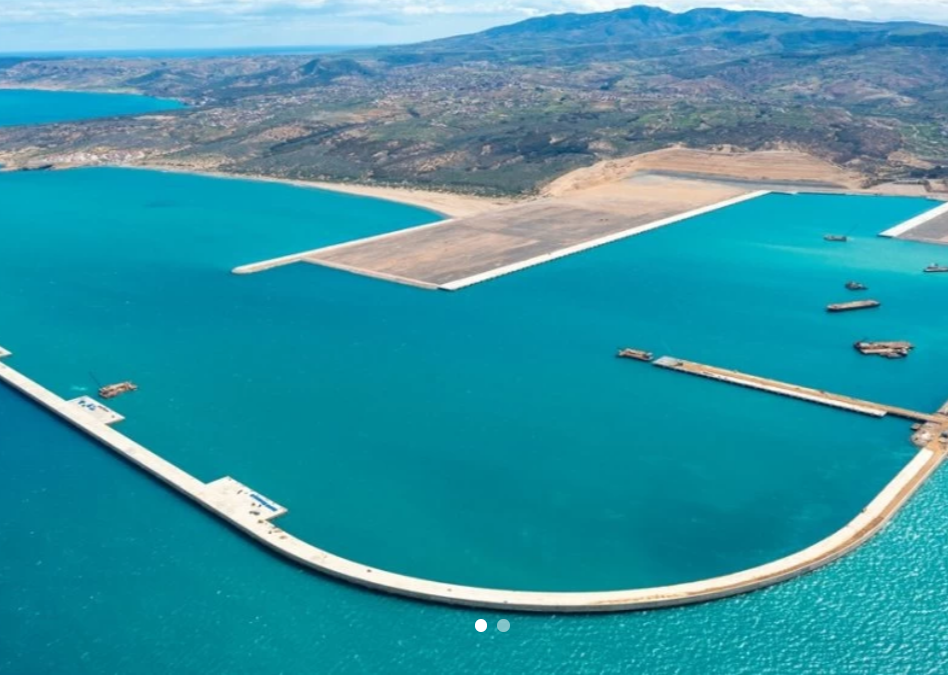
The Nador West Med port and industrial complex, which is scheduled to be commissioned in the fourth quarter of 2026, reinforces the Kingdom’s logistics ambitions. Located 130 nautical miles from the Strait of Gibraltar, it extends the momentum initiated with Tanger Med, by adding a new strategic platform to the national network. Designed as an integrated ecosystem, it combines a state-of-the-art port with a large-scale industrial, logistics and energy zone. This project is at the heart of the Royal Vision aimed at providing Morocco with world-class infrastructure, at the service of its economic sovereignty and territorial influence.
With a total amount of 51 billion dirhams, financed by public and private contributions, the project is one of the largest logistics and industrial investments in the Kingdom.
To date, 13.7 billion dirhams have been invested in basic port infrastructure, including 5.4 km of dikes, 4 km of quays and four energy substations. The first container terminal, 1,520 metres long, will be put into operation this year, with a capacity of 3.5 million containers per year. A second terminal, 900 metres long, will complete it in 2027, with an additional capacity of 1.8 million containers.
Two other terminals will enrich the port offer: a general cargo terminal, with a linear length of 540 metres, with a capacity of 3 million tonnes per year, conceded to Marsa Maroc; and a 360-metre dry bulk terminal, capable of handling up to 7 million tonnes per year, which is also scheduled to be commissioned in 2027.
The project includes a major energy component. Nador West Med will house the Kingdom’s first liquefied natural gas (LNG) terminal, with an annual capacity of 5 billion cubic meters, as well as a hydrocarbon terminal capable of processing up to 25 million tons per year. This infrastructure, expected by 2027, aims to strengthen Morocco’s energy security and offer a scalable redistribution platform, in support of the decarbonization of maritime transport.
On the industrial side, the first phase provides for the development of 700 hectares of business parks, for a public investment of 3.2 billion dirhams, to which are added 9 billion dirhams already committed by private investors. A budget of 14 billion dirhams is devoted to rail, road and electricity connections, ensuring the integration of the site into the national networks.
In line with sustainability goals, the complex will benefit from a supply of green electricity, produced from wind and solar resources available in the region.
The project is expected to generate 14,000 direct jobs in the short term, then reach 50,000 direct jobs by 2035, to which will be added nearly 90,000 indirect jobs. It will thus contribute to the professional integration of young people, the development of new skills and the dynamism of the regional entrepreneurial fabric.
During a working meeting held on January 28, 2026 in Casablanca, His Majesty King Mohammed VI gave His High Instructions to ensure the success of this strategic project. The Sovereign stressed the importance of an effective start-up, the rapid implementation of training programs adapted to the needs of investors, and the strengthening of the employability of young people, while ensuring that the economic, social and territorial benefits fully benefit all the provinces concerned.
To date, 20 billion dirhams of private investment have already been confirmed, reflecting the confidence of leading maritime and industrial operators. With Nador West Med, Morocco is strengthening its position as a logistics and industrial hub at the crossroads of major flows between Europe, Africa, the Mediterranean and the Atlantic.
source : le matin