
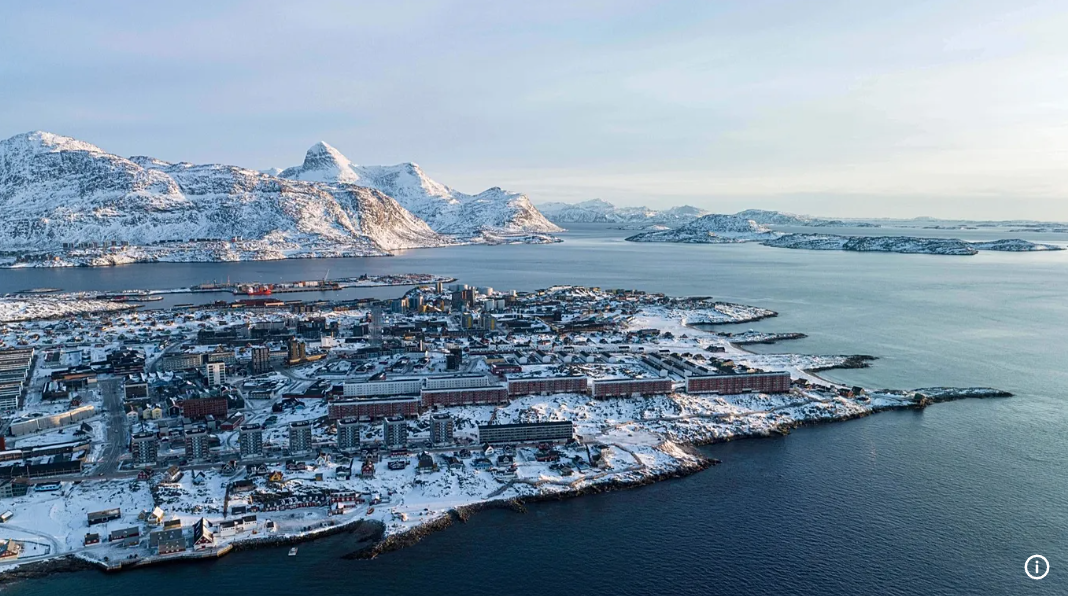
Scientists believe that the drop in sea levels in Greenland will have cascading effects on coastal communities, shipping routes, fisheries and infrastructure.
Rising temperatures are driving up sea levels around the world, exposing millions of people to severe flooding and coastal erosion. But in Greenland, the opposite is true.ADVERTISEMENT
Researchers at the Lamont-Doherty Earth Observatory, part of the Columbia Climate School, warn that sea levels around the autonomous territory are actually expected to drop, despite heat-trapping emissions that cause record ice melt.
The study, published in Science Communications, predicts that, under a low-emissions scenario, sea level will rise by about 0.9 meters by 2100. In a high-emission scenario, it would drop to 2.5 metres.
Why should sea levels in Greenland drop?
It may seem paradoxical that a land that is mostly covered by ice can see sea levels drop in a warming world, but that’s precisely what makes Greenland an anomaly. As the ice sheet loses mass, the land below rises, freed from its immense weight.
Jacqueline Austermann, co-author of the study, compares this phenomenon to the decompression of a memory foam mattress when the person lying on it gets up.
The researchers blame Greenland’s rebound on recent and historic ice loss, explaining that as the ice sheet loses mass, sea levels will drop even further due to gravity.
« When the ice sheet is very large, it has a lot of mass, » says lead author Lauren Lewright
« The sea surface is attracted to the ice sheet because of this gravitational force. As the ice sheet loses mass, its gravitational pull on the sea surface decreases, resulting in a drop in sea level. »
These two effects will explain up to 30% of the future sea level decline in Greenland, and are technically called « glacial isostatic adjustment ».
Coastal communities left « dry »
Rising sea levels have long been associated with increased coastal flooding and accelerated coastal erosion. In fact, every inch of rise exposes about six million people on the planet to coastal flooding.
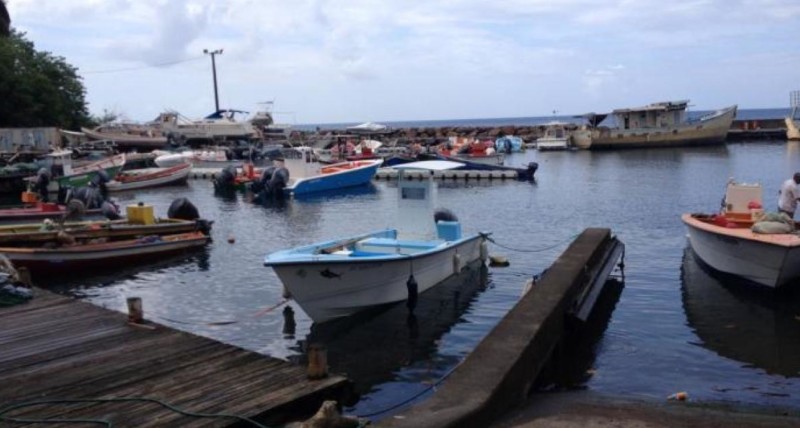
When the opposite happens, the consequences are very real. Greenland’s coastal communities design their infrastructure around current sea levels, which means they could run « dry » in the event of a significant drop.
« The most significant impacts are on local communities and the effects on shipping routes, fisheries and infrastructure, » Austermann said.
Falling sea levels could help some glaciers stabilize as they enter the ocean, potentially slowing their retreat. However, the researchers say they don’t know if the projected decrease in sea levels will be enough for this stabilizing effect to occur.