

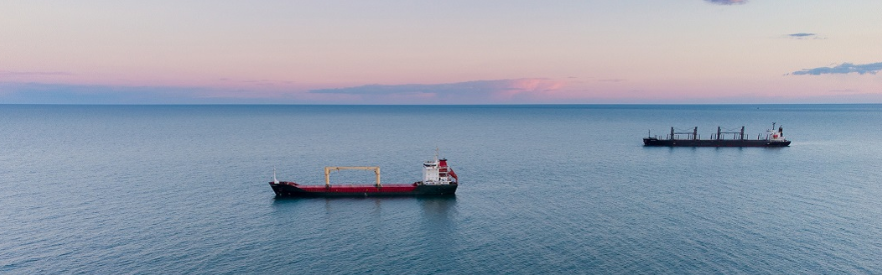
While the International Maritime Organization (IMO) is due to decide this year on structuring targets for reducing emissions from maritime transport, divergences between major powers complicate the adoption of an ambitious global framework. Between the stated climate desires and economic resistance, the year ahead promises to be decisive for the future of the sector.
International shipping currently accounts for nearly 3% of global greenhouse gas emissions and this share could increase with the continued growth of world trade if no structural measures are implemented. Faced with this challenge, the International Maritime Organization (IMO) adopted a revised strategy in 2023 aimed at a carbon neutrality trajectory around 2050. The strategy includes interim targets to reduce the carbon intensity of shipping by at least 20-30% by 2030 and 70-80% by 2040 compared to 2008 levels.
This strategy is based on a set of technical and economic measures, including the proposed Net Zero Framework, to be integrated into Annex VI of the MARPOL Convention. This includes strengthening standards on the carbon intensity of marine fuels and introducing a global mechanism for pricing greenhouse gas emissions from the sector. The stated objective is to send a clear economic signal in order to direct investments towards ultra-low-emission technologies and fuels.
However, at the extraordinary session of the Marine Environment Protection Committee held in London in autumn 2025, the formal adoption of this framework was postponed for a year due to a lack of consensus among Member States. This postponement illustrates the depth of divisions within the IMO, particularly on the issue of carbon pricing and its economic impact on national fleets.
The United States, supported by several hydrocarbon-producing countries such as Saudi Arabia, is particularly reluctant to establish a binding global financial mechanism. Washington believes that some of the measures envisaged could penalise its maritime competitiveness and create unjustified economic distortions.
A European divide revealing sectoral tensions
In addition to these oppositions, Greece has decided to distance itself from the common position of the European Union, by moving closer to the American and Saudi positions during the negotiations. This choice is particularly significant insofar as Greece has one of the largest merchant fleets in the world, which gives it a decisive weight in the debates at the IMO.
On the Brussels side, the European institutions and several Member States are calling for the maintenance of an ambitious and coordinated line in order to avoid a weakening of the international climate framework for the maritime sector. Europeans fear that in the absence of a robust global agreement, the proliferation of regional or national regulations could lead to a fragmentation of the global maritime market.
Fuel availability and transition schedule
Beyond political considerations, the debates also focus on the technical feasibility of the transition. Several delegations stressed that truly zero-emission fuels were not yet widely available and that intermediate solutions, such as liquefied natural gas or certain biofuels, would remain needed in the short and medium term. Conversely, supporters of a strict framework believe that a strong regulatory signal is essential to accelerate the industrialization of truly carbon-free fuels.
The coming year will therefore be decisive for the credibility of the climate strategy for maritime transport. If IMO manages to overcome the current divides, it could lay the foundations for a coordinated transition on a global scale. Otherwise, regional initiatives, such as the integration of maritime transport into the European Emissions Trading System, will continue to develop without offering the overall coherence sought.
source : techniques-ingenieur