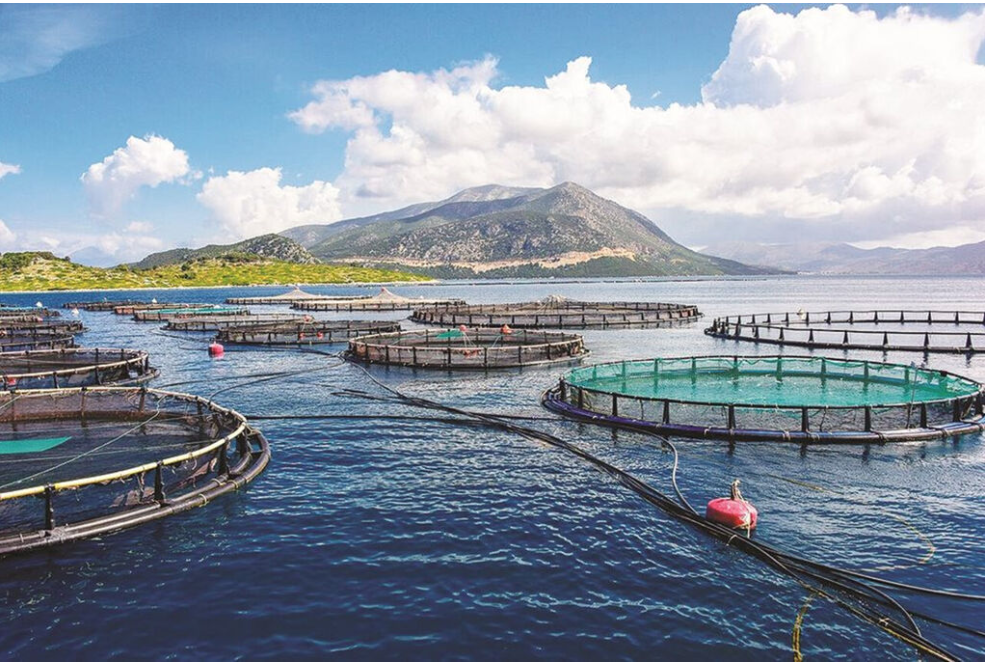
In the face of climate change, the scarcity of natural resources and increasing pressure from export markets, Vietnam’s aquaculture sector is undergoing a profound transformation, placing sustainable marine aquaculture at the heart of its development strategy.
The period 2025-2030 promises to be a pivotal phase, marked by the convergence of the efforts of the State, companies and fishing communities to build a modern, responsible sector that is fully integrated into the global economy.
According to data from the Ministry of Agriculture and Environment, Vietnam’s exports of aquatic products in 2025 reached an all-time high of 11.3 billion USD. Aquaculture now accounts for more than 55% of this value, confirming its driving role in the national maritime economy. However, sea farming remains mostly small-scale, often spontaneous, insufficiently planned and not very technological, resulting in limited efficiency and significant environmental risks.
In order to address these structural weaknesses, the Government has rolled out a series of strategic policies, including the Vietnam Fisheries Development Strategy to 2030 and 2045. It sets ambitious targets: to reach 1.45 million tonnes of marine aquaculture production and generate between $1.8 billion and $2 billion in annual exports by 2030. At the same time, national maritime spatial planning has been adjusted to promote the establishment of industrial aquaculture areas, accompanied by incentives for investment in infrastructure and logistics services.
Towards a green economy and global integration
At the aquaculture sector review conference, held in mid-January 2026, Deputy Minister of Agriculture and Environment Phung Đuc Tien stressed that « sustainable marine aquaculture is not a trend, but a necessity to preserve Vietnam’s position in international markets, while protecting marine ecosystems and fishermen’s livelihoods« .
In this dynamic, several coastal provinces such as Khanh Hoa, Phu Yên and Quang Ninh have developed industrial aquaculture models based on HDPE cages, cutting-edge technologies inspired by Norwegian expertise and automated environmental monitoring systems. Large Vietnamese companies, such as Vingroup, Nam Viet or Viêt-Uc, are investing heavily in the farming of marine fish, lobsters and molluscs, favouring circular, low-emission and traceability-based models.
At the National Maritime Economy Forum held in Quang Ngai in November 2025, Prime Minister Pham Minh Chinh reaffirmed that the sustainable development of marine aquaculture is one of the central pillars of Vietnam’s blue economy strategy. He insisted on promoting farming models that are environmentally friendly, technologically advanced and create sustainable value for coastal communities.
At the same time, preferential credit, digital transformation and human resources training policies are being implemented in a coordinated manner. International cooperation projects, such as Smart Coastal Communities, funded by UNDP and the Government of Canada, support fishers in adopting eco-friendly aquaculture practices and build resilience to the effects of climate change.
However, to achieve the 2030 targets, the sector will need to address several major challenges, including institutional reforms, disease control, sustainable management of livestock areas and transparency of supply chains. Close coordination between the State, companies, fishermen and international partners will be decisive in building a green, responsible and globally competitive aquaculture sector
source : lecourrier