
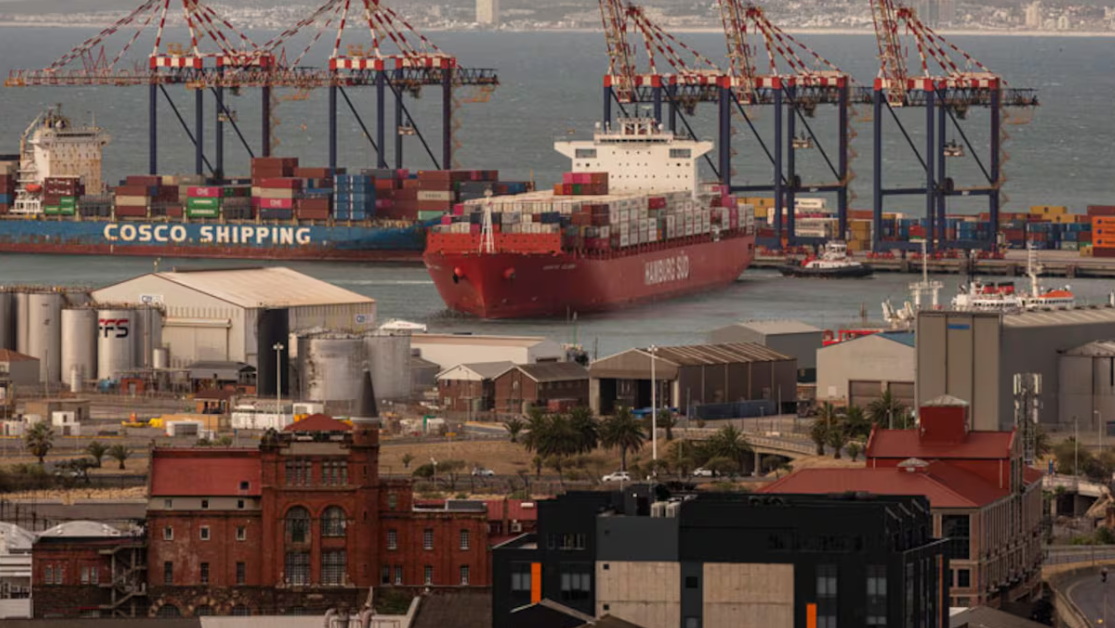
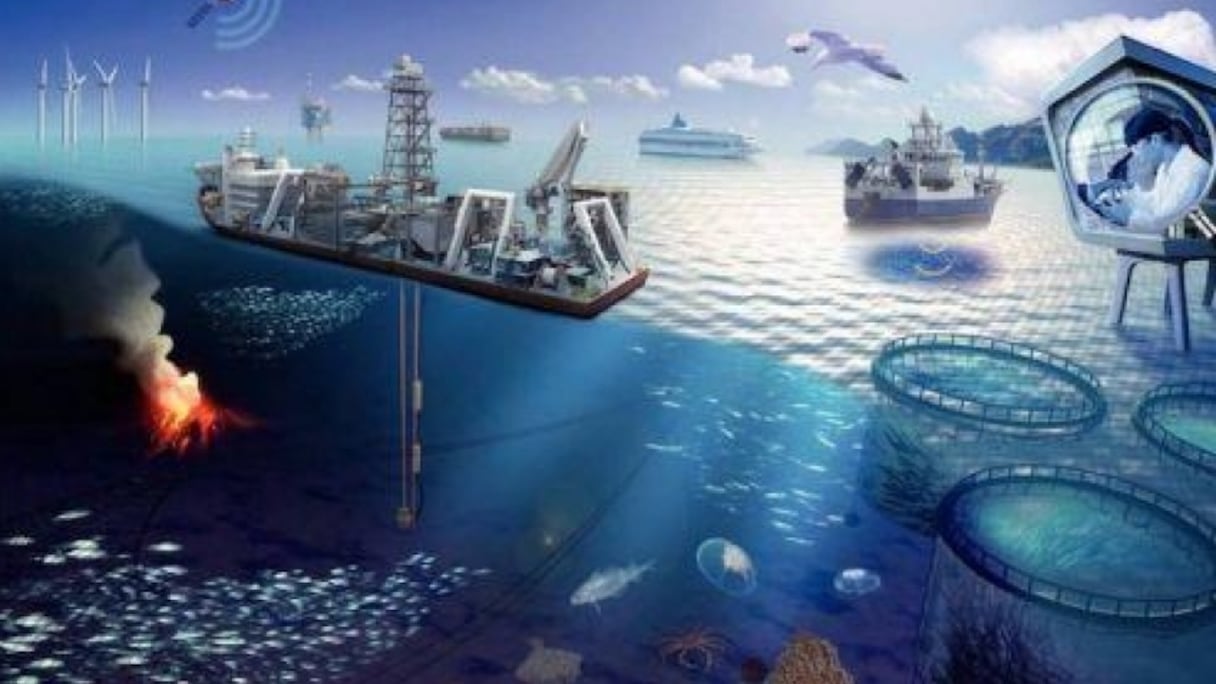
While more than 90% of its foreign trade transits by sea, Africa remains one of the continents that captures the least value from its maritime spaces. This contradiction, long relegated to the background of public policies, now places the blue economy at the heart of the trade-offs of sovereignty, regional integration and economic power. In this recomposition, the African Atlantic is imposing itself as a strategic corridor, linking Europe, the Americas and West Africa.
With more than 30,000 kilometres of coastline, 38 coastal and island states and exclusive economic zones that exceed, for several countries, the surface area of their land territory, Africa has exceptional maritime potential. Yet, according to the World Bank, Africa’s blue economy generates just over $300 billion in annual gross value, mostly from shipping, fishing, coastal tourism, and offshore hydrocarbons. This figure, which seems significant, remains far below the continent’s real potential, due to a chronic deficit in local processing, high value-added maritime services and integrated governance.
The United Nations Conference on Trade and Development (UNCTAD) recalls that 95% of African trade in volume and nearly 90% in value transits by sea, confirming the vital nature of the ocean for African economies. However, less than 2% of the world’s merchant fleet is owned or controlled by African players, while most of the associated services – armaments, maritime insurance, financing, chartering, legal arbitration – remain outsourced. This structural dependence deprives the continent of tens of billions of dollars in value each year, according to consolidated estimates by UNCTAD and the World Bank.
The African Atlantic is home to several of the world’s busiest shipping routes. It connects the major European industrial hubs to African markets, while providing a direct interface with the Americas. Despite this geographical centrality, the African Atlantic coast remains poorly integrated economically. The ports function mainly as points of gross export, without sufficient industrial structuring upstream and downstream.
According to UNCTAD, African ports handle less than 4% of global container traffic, a figure that is disproportionate to their strategic position. This logistical weakness translates into high commercial costs. The World Bank estimates that logistics costs in Africa are on average 40% higher than in comparable emerging economies, directly penalizing the industrial competitiveness and economic diversification of coastal countries.
In this constrained environment, the African Atlantic remains an area with high potential but with little regional structure. National initiatives are multiplying, but without sufficient coordination, limiting the emergence of a truly integrated maritime corridor capable of supporting continental economic integration.
Comparative Table of the Pivotal Countries of the African Atlantic
| Country | Key maritime assets | Potential geo-economic role |
|---|---|---|
| Morocco | Hub ports, logistics, industry | Regional hub, Atlantic structuring |
| Senegal | Fishing, a strategic port | West African Platform |
| Ivory Coast | Logistics, agriculture and export | Regional redistribution |
| Nigeria | Offshore hydrocarbons | Critical mass, unrealized potential |
| Angola | Offshore Energy | Regional Energy Hub |
It is precisely in this structural flaw that Morocco’s trajectory is inscribed. Located at the junction of the Atlantic and the Mediterranean, in the immediate vicinity of the maritime routes linking Europe, Africa and the Americas, Morocco has gradually built an integrated maritime vision, going beyond the simple port logic. This approach is based on a clear geo-economic principle: a country’s industrial and commercial competitiveness is inseparable from its ability to control its logistics and maritime chains.
Data from the World Bank and UNCTAD show that Morocco is among the African countries with the highest level of maritime connectivity, a key indicator measuring the frequency of connections, the size of vessels and the diversity of services. This performance is marked by massive investments in port, industrial and logistics infrastructure, backed by relatively stable governance and active economic diplomacy.
The African Development Bank points out that Morocco concentrates a significant share of port and logistics investments in North and West Africa, with a growing knock-on effect on Atlantic flows. Beyond volumes, it is above all the country’s ability to integrate ports, industry, energy and services that distinguishes it in the African landscape.
Fisheries resources, a largely externalized value
Africa’s blue economy is also based on some of the richest fish resources in the world. According to the FAO, Africa’s maritime areas produce about 9 million tonnes of fish per year, or nearly 10% of the world’s catches. This natural abundance is a major potential lever for growth, jobs and food security.

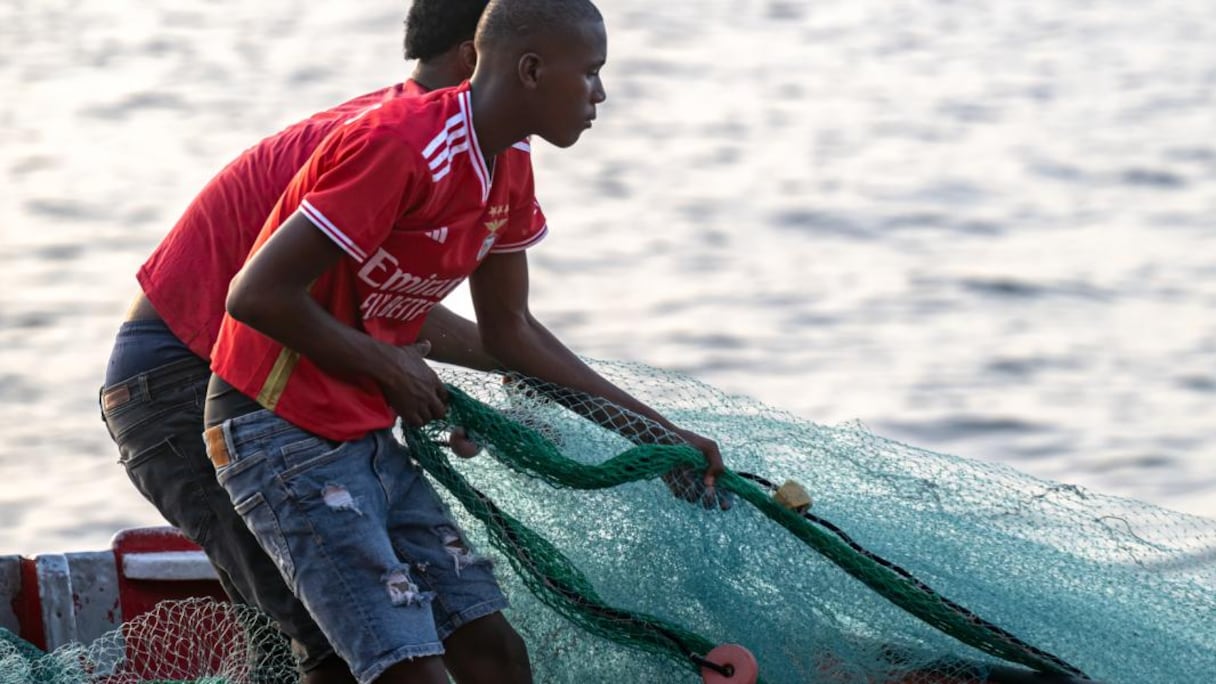
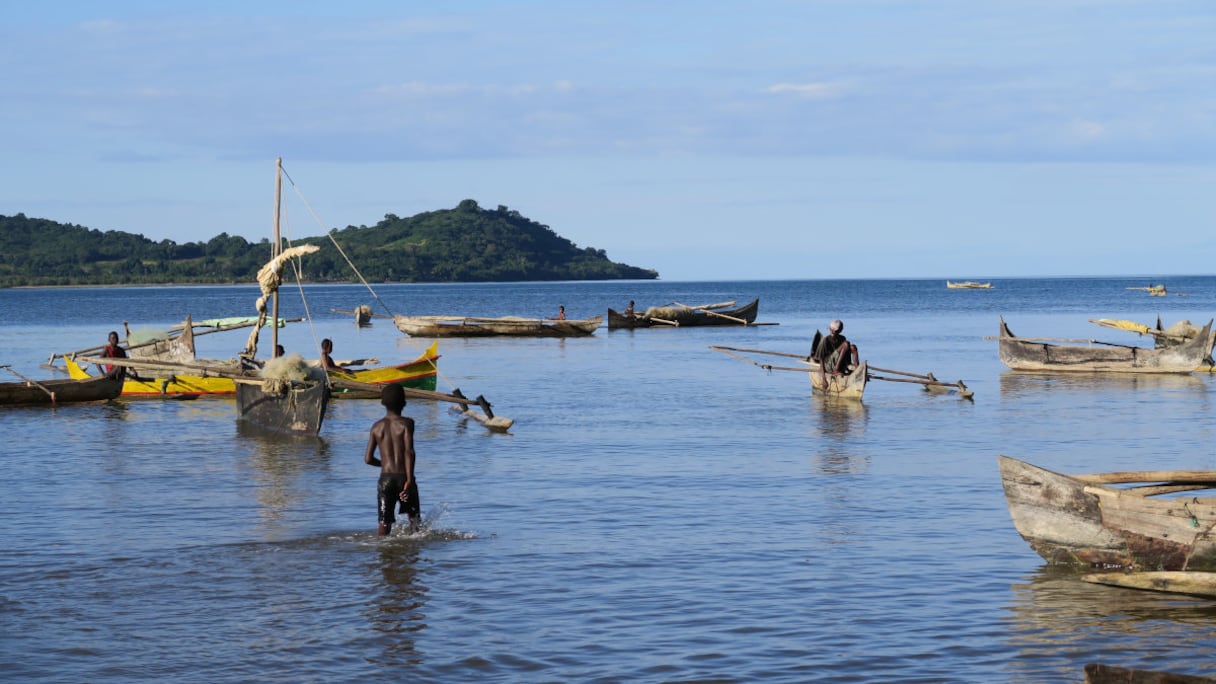

However, the FAO points out that more than 60% of African catches are exported in their raw state or minimally processed, mainly to the European Union and Asia. This lack of local processing results in an estimated loss of value of more than $10 billion per year, not to mention the social impact on coastal communities. In addition, illegal, unreported and unregulated fishing costs African states between $2 billion and $3 billion a year, according to joint estimates by FAO and the World Bank.
Thus, countries capable of developing processing, certification and distribution chains appear to be the big potential winners of the blue economy. Here again, Morocco stands out for its gradual structuring of its fisheries sectors, integrating processing, export and international standards.
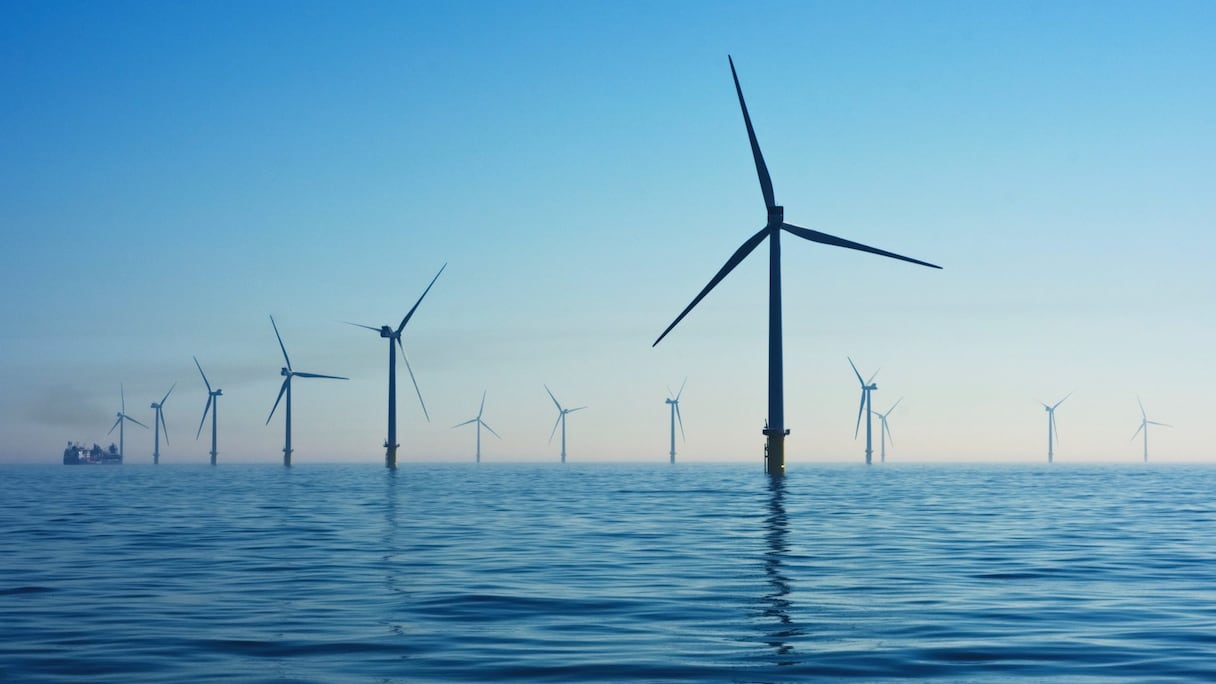
The Gulf of Guinea is one of the world’s leading offshore energy basins. According to the AfDB, this region concentrates nearly 5% of the world’s offshore oil production, with countries such as Nigeria and Angola leading the way. This energy wealth gives the Gulf of Guinea a major strategic role in the African Atlantic.
However, the AfDB points out that the majority of this production remains poorly integrated into local economies. Local content remains limited, while capital- and technology-intensive value chains remain dominated by foreign multinationals. This situation reduces the real macroeconomic impact of offshore hydrocarbons, despite considerable volumes.
In addition to these weaknesses, there are major security challenges. UNCTAD and the World Bank believe that maritime insecurity in the Gulf of Guinea, including piracy, generates high indirect economic costs, by increasing insurance premiums and discouraging certain logistical and industrial investments.
International rivalries and investment battle
Africa’s blue economy is now part of an increasingly explicit game of international rivalries. The European Union is stepping up initiatives focusing on maritime safety, sustainable fisheries and environmental standards. China is investing heavily in port and logistics infrastructure, integrating the African Atlantic into its overall connectivity strategy. Gulf countries are strengthening their presence in ports, logistics, and energy, while the U.S. is focusing its efforts on maritime security and critical digital infrastructure, including submarine cables.
In this context, the ability of African states to direct these investment flows becomes a central issue of economic sovereignty. The World Bank emphasizes that countries with a clear vision, a stable regulatory framework, and institutions that can negotiate balanced partnerships are those that are able to maximize local benefits.
The implementation of the African Continental Free Trade Area is a historic opportunity to strengthen the continent’s economic integration. According to the World Bank, the AfCFTA (AfCFTA) could increase intra-African trade by more than 50% in the long term. However, the institution specifies that this objective will remain out of reach without effective logistical and maritime integration.
At this stage, less than 15% of African trade is intracontinental, a figure that illustrates the current limits of integration. The African Atlantic could play a key role in this dynamic, by facilitating trade between North, West and Central Africa. However, this ambition presupposes regulatory harmonisation, the development of regional cabotage and coordinated investment in port infrastructure.
Beyond the figures, the blue economy raises a fundamental question: that of sovereignty. Controlling one’s maritime space means being able to monitor, regulate, transform and finance. It also means having the human, legal and technological skills necessary to capture value where it is created.
source : afrique.le360