
The debate on the fisheries agreement between Gabon and the European Union is resurfacing, against a background of political transition and discourse of economic sovereignty. Denunciation, renegotiation or arranged status quo: beyond slogans, what concrete benefits can Gabon really derive from a flattening of this strategic partnership?
It is a sensitive file, long treated behind closed doors, but now exposed in the public square. The fisheries agreement between Gabon and the European Union, renewed several times under the old regime, is increasingly perceived as unbalanced. In a context where the Transition shows a desire to regain control of national resources, the question is no longer taboo: should we denounce the agreement, renegotiate it, or radically change its philosophy?
Behind the argument of fisheries sovereignty lies a more complex reality, made up of economic interests, limited national capacities and strategic choices to be assumed.
What the agreement really brings
On paper, the EU-Gabon agreement provides for annual financial compensation, technical support and a regulated framework for the exploitation of Gabonese fisheries resources. In fact, these falls are considered low in relation to the real value of the catches made in Gabonese waters.
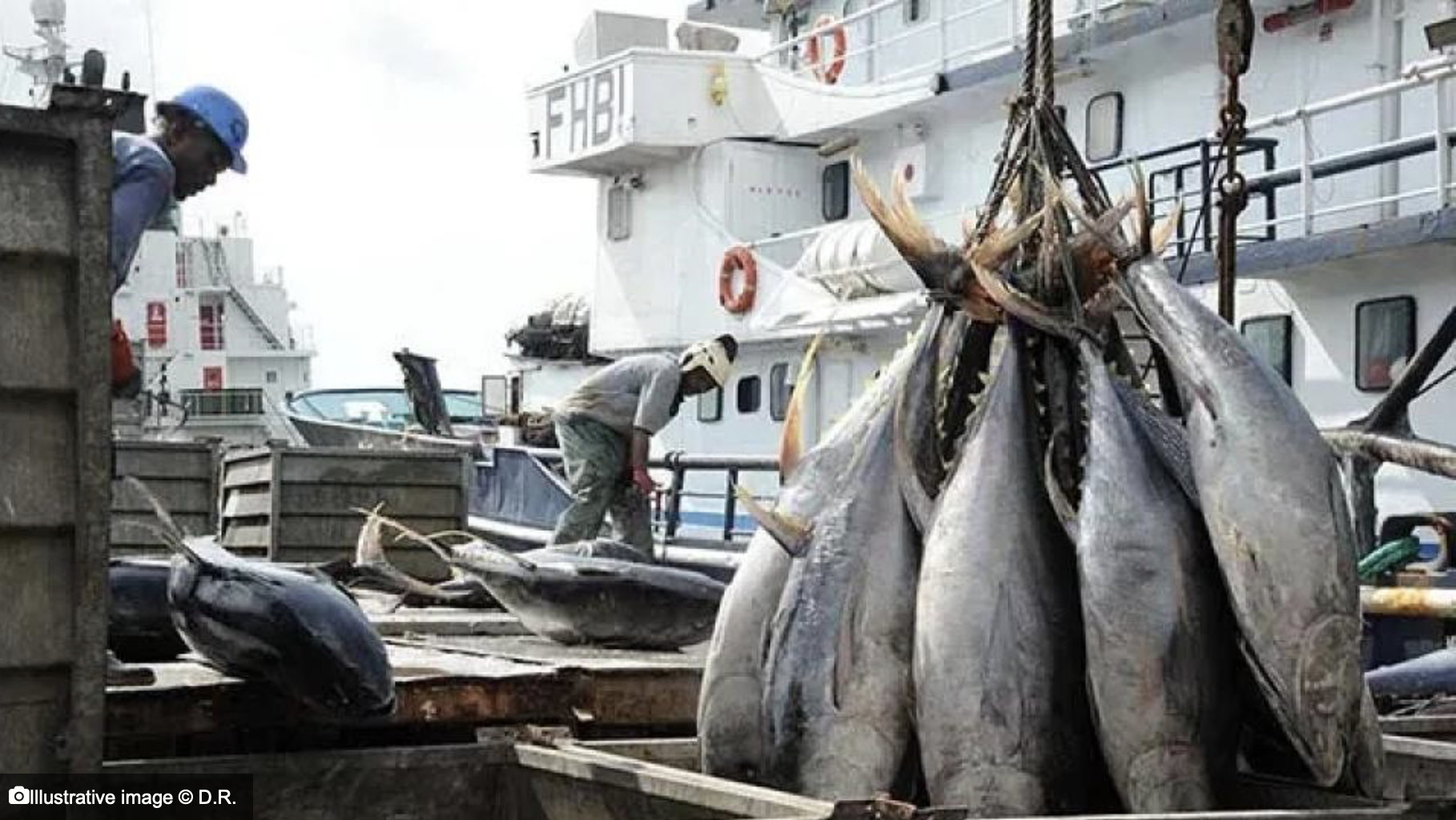
Criticism is recurrent: modest budgetary contribution, limited local jobs, low transfer of skills, and above all an almost non-existent transformation of fish on national territory. As a result, the fishery wealth leaves the Gabonese waters without creating a significant value chain on land.
Fisheries sovereignty: slogan or strategy?
Denouncing the agreement would be a strong political act. But we still need to know what Gabon puts in place. Fisheries sovereignty is not decreed, it is built.
This first of all requires effective control of catches: volumes caught, targeted species, compliance with quotas and authorized areas. However, maritime surveillance remains insufficient, despite the efforts made in recent years. Without reinforced naval, satellite and human resources, a denunciation could paradoxically pave the way for increased illegal fishing.
Renegotiate to better capture value
The most realistic option remains that of firm renegotiation. Objective: significantly increase the financial counterpart, but above all impose local fallback bonds. Mandatory landing of some of the catches in Gabon, job quotas for Gabonese seafarers, investments in processing units, support for training and fisheries research.
It is on this ground that the credibility of the sovereignist discourse is played out. Without a processing industry, Gabon will remain a simple provider of raw resources, dependent on foreign fleets.
Local industry: the great blind spot
The processing of fish – freezing, cannery, filleting – is almost non-existent on a large scale. However, it could generate thousands of direct and indirect jobs, structure port hubs and strengthen national food security.
But this ambition implies heavy investments: reliable energy, cold chain, port logistics, access to financing. So many prerequisites still fragile in the current context.
Maritime surveillance: non-negotiable condition
Whether it is a matter of denouncing or renegotiating, a prerequisite is required: the strengthening of the surveillance of Gabonese waters. Without this, any reform will remain cosmetic. The fight against illegal, unreported and unregulated fishing (IUU) is at the heart of the credibility of fisheries policy.
A test of political coherence
The EU fisheries agreement is a revelation. It tests the consistency between the discourse of sovereignty and the real capacity of the State to structure a strategic sector. Denouncing without alternative would be a jump into the unknown. Maintaining without renegotiating would be an admon of helplessness.
The Transition is faced with a clear choice: to transform the agreement into a lever for national development or to assume that, for lack of resources and industrial vision, fisheries sovereignty will remain one more word-suit in the public debate
source : gabonmediatime