

The development of large-scale aquatic farming in an area as inhospitable as Taklamakan is not anecdotal. This project reveals a broader strategy, led by Beijing, to strengthen its food autonomy while pushing the physical limits of agriculture.
The Taklamakan has always been a lifeless desert, too dry, too hostile to agriculture. For a long time, no one would have imagined one day seeing ponds full of fish and shrimp. However, a transformation is underway. Aquaculture in the desert is gradually emerging as a bold bet, capable of changing the face of this region.
The Taklamakan no longer scares the pioneers
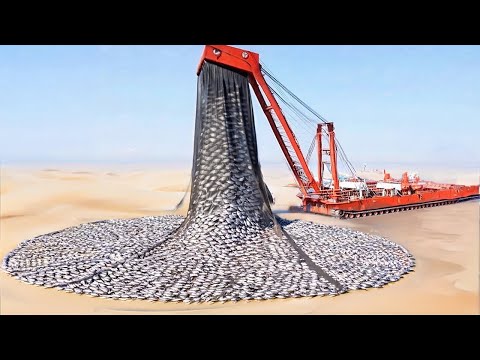
Taklamakan remains one of the most inhospitable deserts in the world. Located in Xinjiang, it covers more than 300,000 square kilometers, with annual rainfall of less than 100 millimeters. This territory, nicknamed the « sea of death », has so far not been home to any form of viable agriculture. However, in Qiemo and several neighboring counties, fish, shrimp and lobster farms are now expanding as far as the eye can see.
Jeuxvideo.com reports that this apparent reversal of the laws of nature is based on massive installations, built in a few months, capable of maintaining marine species in artificially reconstituted water. Fish such as grouper, golden pump or mullet are raised in controlled conditions, thanks to recirculation technologies, specific microorganisms and permanent thermal monitoring. The survival rate sometimes reaches more than 99%.
Production centers such as Hotan expect up to 280 tons of annual harvest. Others, in Makit or Atux, also raise pearl oysters and vanamei shrimps. In 2024, the region produced 196,500 tons of seafood, proof of rapid industrialization.
Aquaculture in the desert redefines the rules of living
Reproducing a marine ecosystem in the middle of a desert area requires extreme precision. The soil of the Taklamakan is saturated with salt and alkali, which makes any form of conventional agriculture impossible. To cultivate marine life, engineers pump salt water from groundwater and add specific microbial cultures to obtain a chemical composition close to seawater.
Researchers report in South China Morning Post the discovery of small shrimps, capable of surviving in highly salty desert environments. This observation supports the idea that some aquatic species could naturally adapt to extreme conditions. Inspired by these mechanisms, technicians adjust each water parameter to ensure optimal growth of the raised animals.
Over the months, this method spread to other counties and new species. A local sector is developing, training residents in precision aquaculture. Some employees are even considering launching their own structure, encouraged by a model involving businesses and small producers.
A fragile balance between prowess and overexploitation
The rapid development of these aquaculture farms in the desert nevertheless raises a number of questions. Constant evaporation makes it necessary to compensate for water losses by pumping into deep, not very renewable water tables. The gradual thawing of the glaciers partially feeds these reserves, but this resource remains uncertain. In the event of prolonged drought or climate instability, the system could falter.
The intensive use of chemicals and treatment technologies to maintain basins risks permanently altering the local ecological balance. Some experts fear increased soil salinization or invisible pollution affecting the water tables.
These challenges, China continues to see a solution for the future. Taklamakan is becoming a territory of experimentation for deterritorialized aquaculture, capable of operating without the sea. If this model proves sustainable, it could pave the way for similar production in other arid regions of the world. For the moment, the desert still pushes the limits of the living. He also put to the test the human will to revive life where it seemed lost forever.
source : science et vie