
On Wednesday, February 18, the US president welcomed the position of Athens, which aligned itself with Washington by opposing a directive of the International Maritime Organization (IMO) on clean fuels in shipping – a politically sensitive issue that had already caused tensions in Brussels last year.
« Relations between the United States and Greece are stronger than ever, » said Donald Trump in a letter to the new Greek ambassador in Washington, highlighting the progress made by Athens in several areas, including defense.
« We appreciate the courage Greece has shown by abstaining during the IMO vote on the adoption of the net zero framework, » he added.
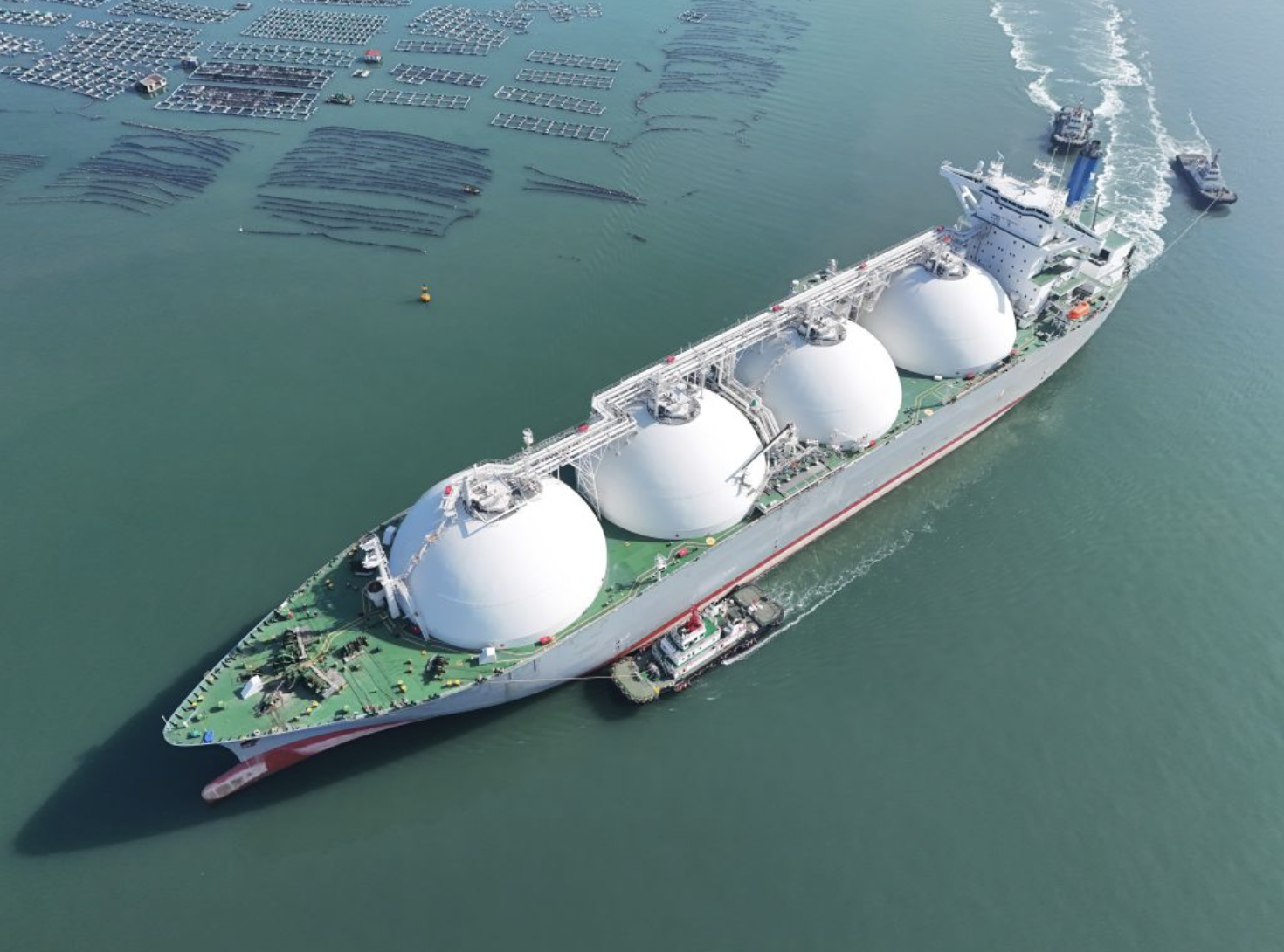
In terms of energy, the American president welcomed the Greek abstention in last October’s vote on future global rules governing shipping fuels. This « net zero framework » aims to guide the sector towards less polluting solutions.
At this meeting, Washington threatened to sanction any country or official who voted in favor of the agreement, which would have favored hydrogen and synthetic fuels as an alternative to polluting fuels, to the detriment of natural gas.
The vast majority of EU member states, as well as China, supported this agreement. However, the Americans imposed a one-year postponement of the vote, with the effective support of Greece and Cyprus who abstained, while all other EU states opposed this decision.
Greek media report that Athens’ position was seen in Washington as a sign of consistency and reliability.
With the final vote on the interim agreement now postponed to the autumn, the director of the IMO recently said in Brussels that the EU should adopt a more pragmatic approach in order to rally the United States.
In Brussels, however, supporters of the Green Deal within the European Commission’s Energy DG are opposed to the new official policy of renegotiation of the agreement in order to reach a compromise with the Americans.
Gas exploration
In addition, the Greek Minister of Energy, Stavros Papastavrou, told Skai TV on Wednesday that if gas reserves in the Mediterranean prove to be commercially exploitable, the country’s energy needs could be met for the next 30 to 40 years.
« This could be a considerable source of public revenue that would finance the country’s social policy, » the minister explained.
On Monday, February 16, American energy giant Chevron signed exclusive concession agreements with Greece to explore hydrocarbon resources in four offshore blocks around the Peloponnese and the island of Crete.
Earlier this month, we reported that the Trump administration showed a growing interest in the Eastern Mediterranean, Chevron and ExxonMobil having already concluded agreements with all the main regional actors: Greece, Turkey, Cyprus and Libya
source : euractiv