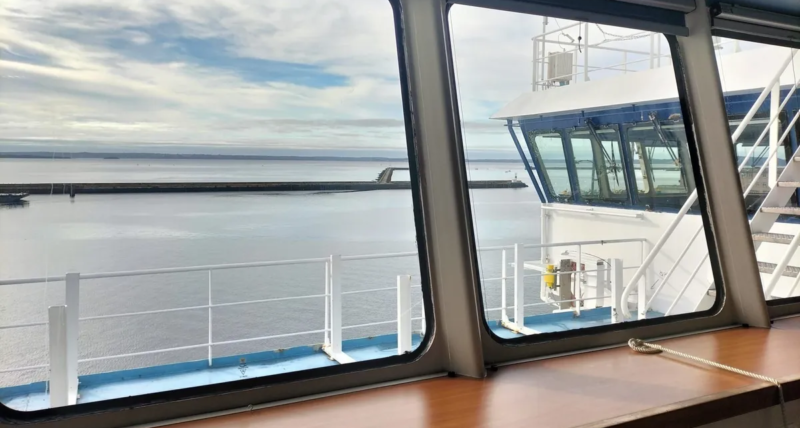

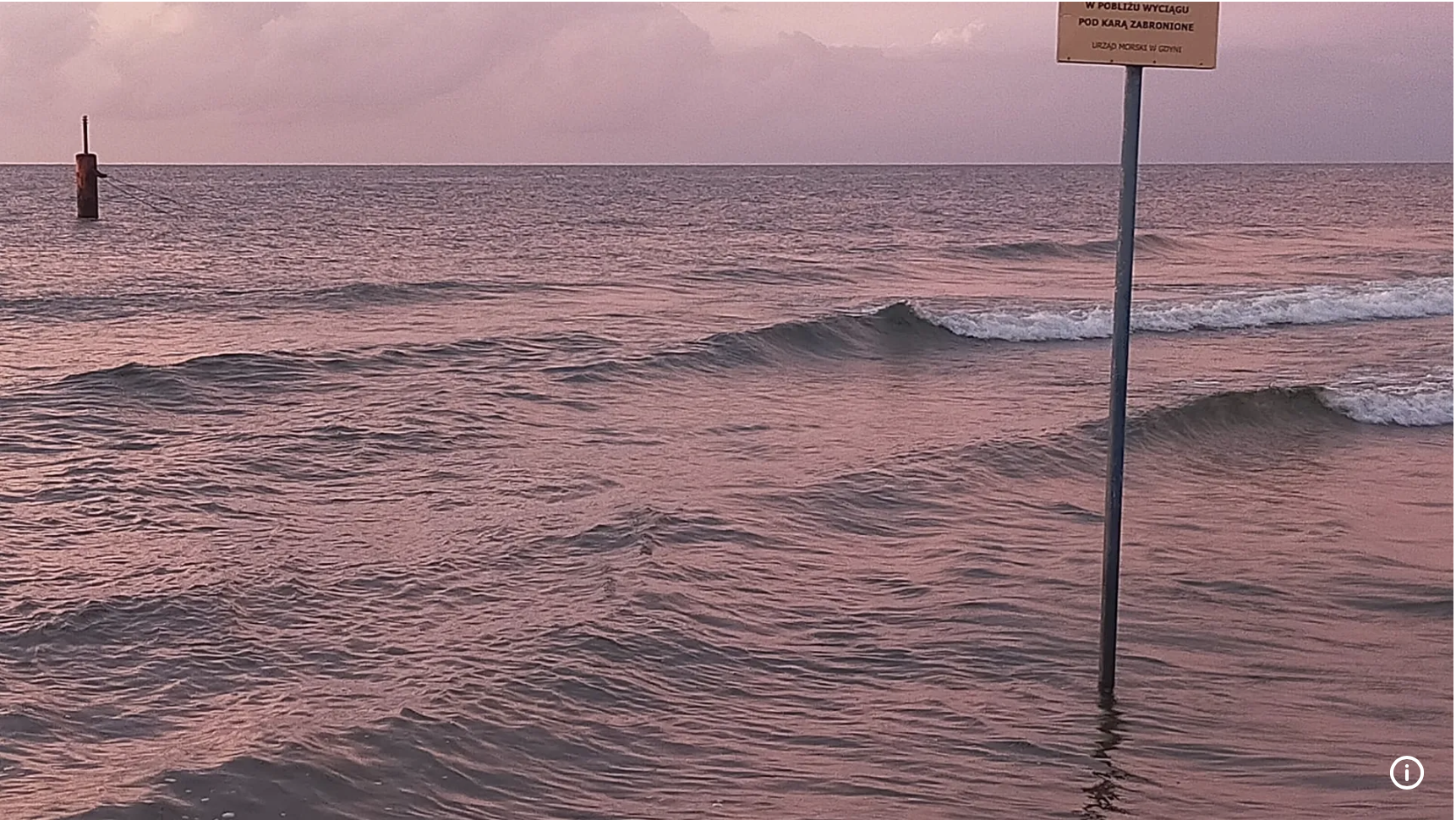
At the beginning of February, the water level of the Baltic Sea dropped sharply, as recorded by the Landsort-Norra resort, off the Swedish coast. This is the first time in years that such a situation has occurred.
As the water and ocean levels rise globally, the Baltic Sea lost 275 billion tons of water in early February. This is 67 cm less than the average recorded in 1886.
This situation, which has not occurred for 140 years, is due to atmospheric factors. A priori, there is no need to worry, but as Dr. Tomasz Kijewski, of the Institute of Oceanology of the Polish Academy of Sciences, explains to Euronews, such a deviation is a clear example of the impact of climate change on the environment. The Arctic plays the leading role here.
« The open refrigerator effect
If the water level is rising, why has so much water disappeared in the Baltic Sea basin? Experts explain that this is the result of strong winds, a high pressure zone and the absence of significant atmospheric fronts.
« The strong east winds that have persisted since the beginning of January have pushed the water masses through the Denmark Strait towards the North Sea, leading to a drop in levels throughout the basin, » reads a post by the Institute of Oceanology of the Polish Academy of Sciences. As long as this meteorological configuration is maintained, water is « retained » at the southeast end of the basins, with levels that fall locally.
he strong winds and harsh winters that allow these conditions to occur do not prove, as some claim, that climate change does not exist, quite the contrary. As Tomasz Kijewski points out, the phenomenon of climate change itself is not a sudden warming – it is the many meteorological anomalies that are caused, among other things, by the melting of the Arctic glaciers.
« The persistence and extent of the anticyclone, which has also spread over the North Sea, making room for the large volume of water flowing from the Baltic Sea, are responsible for the magnitude of the phenomenon, » he explains. « This is 275 cubic kilometers of water! This exceptional situation did not occur independently of the large-scale processes we observe in the Earth’s atmosphere. The most important of them in this context is the decay of the polar vortex, an air circulation in the upper layers of the atmosphere (10-50 km) which, colloquially, is responsible for maintaining the cold in the Arctic. This vortex is linked to the jet current, whose speed and route are responsible for the migration of depressions and anticyclones. Thus, deviations such as blocked anticyclones, Arctic ice waves or heat waves to the north are the result of disturbances of this jet stream, and therefore the warming of the Arctic. »
As he explains, the icy air mass that has always existed over the Arctic and has somehow isolated it from the rest of the world begins to « unseal », which has a significant effect on the temperature of atmospheric currents.
« We call it jokingly the open fridge effect, » explains the biologist. « When we open the refrigerator, the air escapes from below and our feet are cold.
In the case of the Baltic Sea, a combination of anthropogenic and independent factors of man leads to a gradual drying of the sea.
« The total volume of rainwater in the region is increasing, » according to the expert. « Since the last glaciation, the earth’s crust has risen slowly, which makes the sea shallower. This phenomenon also promotes the decrease in depth. Shalm water bodies are more likely to warm due to global warming, and water transported by regulated rivers brings more fertilizing compounds into the sea, especially phosphorus, which favors cyanobacteria. The sum of these factors is not conducive to the richness of species. The water becomes softer and warmer, which promotes the proliferation of algae. Algae, in turn, absorb the oxygen that other living organisms need. »
Researcher: the Arctic is warming « four times faster than the world average »
Anna Sowa, of the Institute of Oceanology of the Polish Academy of Sciences, who is currently working at the Gdynia Scientific Center for Her Research on the Arctic, found that low-latitude species extend their range to the north. « This phenomenon is called borealization and this type of change has already been recorded in various Arctic habitats, » she explains in an interview with Euronews. – This phenomenon is called borealization and this type of change has already been recorded in various Arctic habitats, » she explains in an interview with Euronews. « Newcomers can begin to compete with local Arctic wildlife, which could result in a reduction in the abundance of Arctic species or even their complete displacement. »
During her research between 2004 and 2020, she noticed a marked decrease in the density of the endemic bryophyte species Harmeria scutulata. « This allowed me to conclude that with climate change, we are also witnessing a reorganization of species communities in the Arctic hard bottom ecosystem. »
The Arctic region is particularly vulnerable to climate change, she explains, because** »the warming reported there is about four times faster than the world average** ». Rising temperatures can act directly on marine organisms, explains the researcher, but beyond that, « it also causes cascade changes such as melting glaciers and sea ice, water turbidity associated with the increase in suspended solids from rivers and glacier melting, desalination of surface water and increasing water acidification resulting from increased concentrations of dissolved CO2 in water ».
« A dynamic reef is turning into an underwater wasteland.
What challenges are the seas and oceans currently facing and can they still be saved?
According to biologists, the increase in temperatures cannot be stopped, but the extinction of some species can be partially stopped. One of the greatest tragedies of the seas and oceans today is the massive extinction of coral reefs, which ensure the survival and shelter of at least 25% of all marine species. Biologists point out that a warming of 1.5 °C will destroy 70 to 90% of coral reefs. However, warming is not the only factor behind the loss of biodiversity in the oceans.
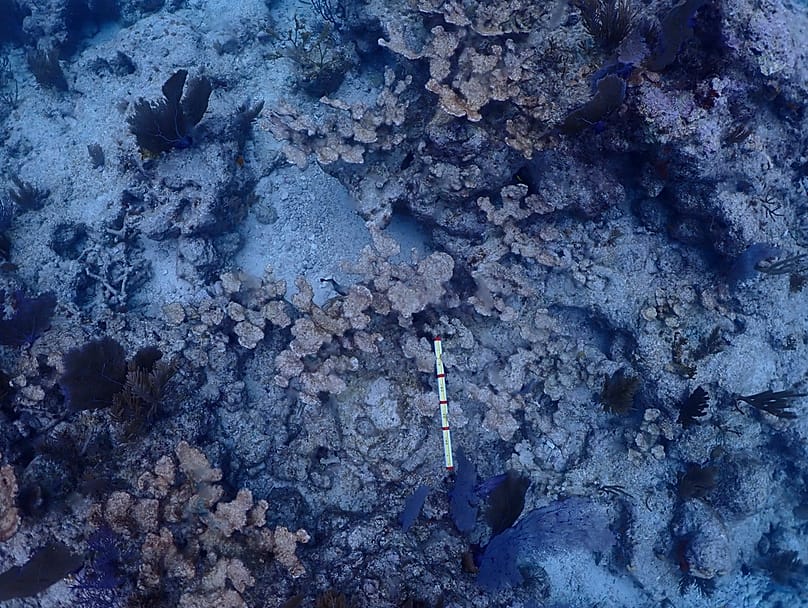
« What worries oceanographers the most is the warming of the world ocean (i.e. all the salt waters connected to each other – the Baltic is part of the ocean), » explains Mr. Kijewski. – explains Mr. Kijewski. « The accumulation of energy, which affects climate change, and severe weather phenomena are both worrying. The most spectacular example is coral bleaching, which results in the annihliation of entire ecosystems of coral reefs. When temperatures are high, coral polyps get rid of symbiotic algae that produce a dangerous excess of oxygen. The polyps then die of hunger and the entire ecosystem collapses like a house of cards. A few weeks after an oceanic heat wave (up to 2°C), a dynamic reef turns into an underwater desert« .
The disappearance of ecosystems in turn results in the collapse of the fishing industry, explains the expert. Similarly, the exploitation of underwater metal resources – rare earth mines at the bottom of the oceans to free themselves from China – leads to environmental degradation on a larger scale than open-air landmines. » It is not only the bottom that is destroyed, but the deadland – this part of the scree that, on earth, is stored in piles – in the ocean disperses into the depths, eliminating access to light and space for the creatures of the ocean. »
Does the Baltic have the worst « behind it »?
The Baltic is a sea that has a reputation for being one of the most polluted. However, according to Mr. Kijewski, the worst period of pollution of the basin is behind it. » Since the common policy of the Baltic States, coordinated by HELCOM and the EU, has led to the installation of biological treatment plants and generally increased attention to the state of the environment, pollution in the Baltics has been largely stopped. Puck Bay is a good example of this: until recently, it had practically disappeared. For about twenty years, there has been a spontaneous return of marine meadows and even algae. The state of plastic pollution is also low and, unlike the rest of the ocean, it has not increased over the past 30 years. » However, he says, the peculiarities of Baltic hydrology require a long time for water to undergo a purifying exchange. An event such as the current depression is conducive to this purification, but it will take another 30 years for the Baltic Sea to undergo significant self-purification. However, it will remain under pressure from climate change and global warming. The cod population, for example, is currently in a critical state. « There are not many typically marine creatures in the Baltic Sea, such as starfish, there are only a few species of mussels. Most marine animals cannot function at such low salinity. Cod, although suitable for Baltic water, must spawn in the bottom waters, which are saltier and colder, so much so that anaerobic conditions develop near the bottom and in a few decades, the areas conducive to cod eggs have more than doubled. It is true that no species has disappeared from the Baltic Sea, but the ecological capacity of this sea is decreasing for everyone, except for blue-green algae.
Can we help the seas and oceans? According to Tomasz Kijewski, the only thing to do, and the most effective, is to « not intervene ». Experts agree: the incompetent interference of man in the oceans has already caused enough lasting damage.
source : euro news