

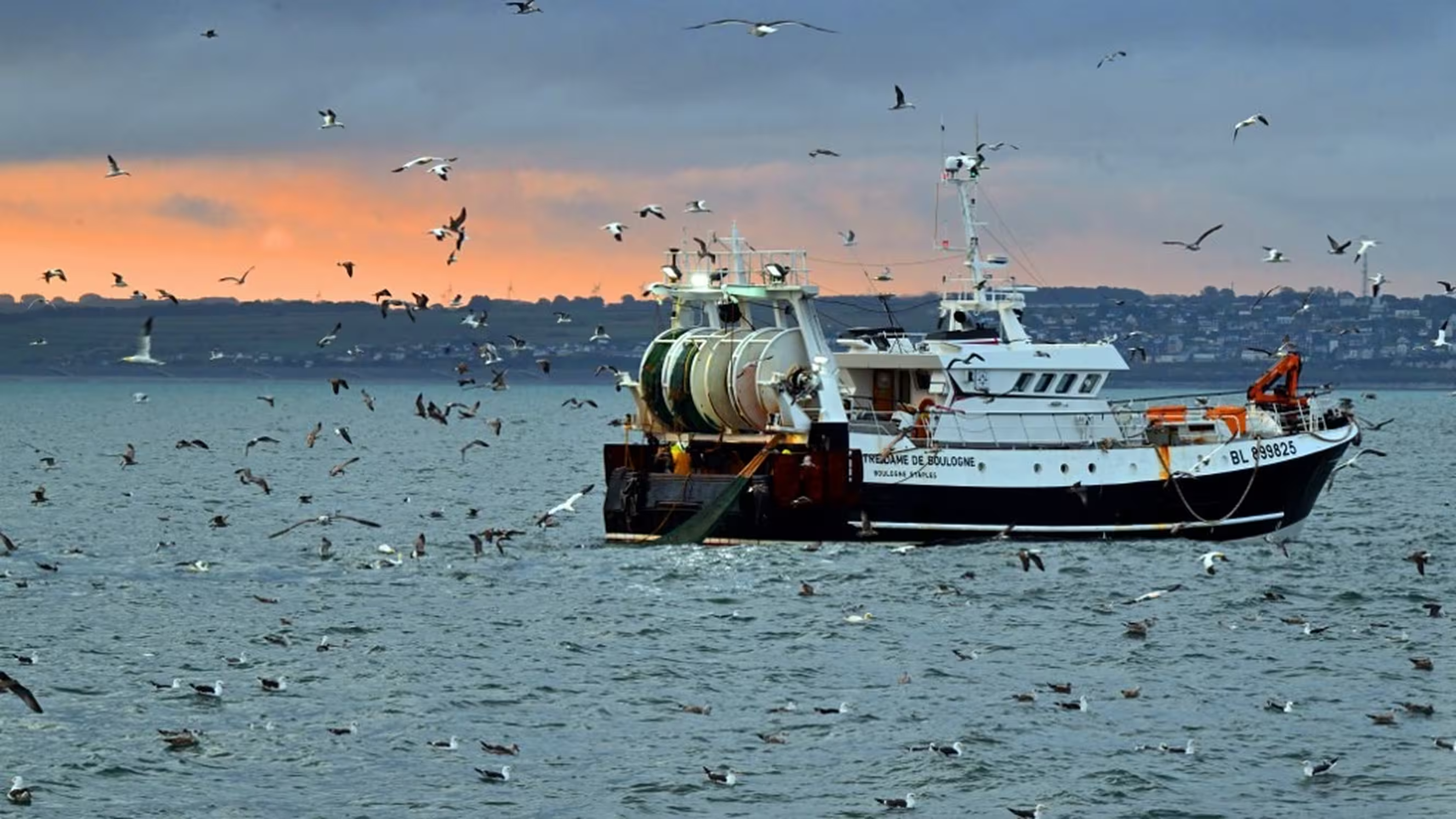
Global warming leads to acidification and deoxygenation of the oceans, which disrupt the functioning of marine ecosystems.
An alert, and a call to fish less. Fish biomass could decline by a quarter in French waters by the end of the century, under the effect of global warming, underlines the French Institute for Research for the Exploitation of the Sea (Ifremer) in a report on Tuesday, March 3.
Depending on climate scenarios, the estimated decrease in biomass worldwide by 2100 is between 10% and 30%. In France, climate change is expected to cause average biomass losses estimated between 5 and 8% in the middle of the century, and up to -23% at the end of the century for warming to 4°C, according to Ifremer.
Caused by massive greenhouse gas emissions, global warming is accompanied by acidification and deoxygenation of the oceans. These phenomena disrupt the functioning of marine ecosystems, reducing plankton production (at the base of the food chain) and altering the physiology, growth and reproduction of fish. Global warming leads in parallel to the migration of some species to the North, in search of colder waters.
A call for « slightly lower » operating levels
Faced with this observation, the researchers recommend reviewing the fisheries management objectives, which are currently based on maximum sustainable yield (RMD). This indicator corresponds to the maximum level of catches of a fish population, without compromising its ability to renew itself. The researchers advocate considering the current RMD as a limit, rather than a target, and aiming for « slightly lower » exploitation levels.
« As the risk and uncertainty increase, we must be a little more cautious and have a little more room for maneuver, » explains Clara Ulrich, coordinator of fisheries expertise at Ifremer, to AFP. « If there is no change, we will move towards a situation that will continue to deteriorate because of changing environmental conditions. »
source : france info