
The oceans not only receive excess heat from human activities, they are also capable of sending out heat and thus disrupting weather conditions on land.
Since 2020, the rise in temperatures has accelerated at an unprecedented rate, both on land and in the oceans. In the Atlantic , the Pacific, and the Mediterranean, marine heatwaves are becoming more frequent, and the overall surface temperature of the oceans has never been so high.
Thibaut Guinaldo is a researcher in climate extremes analysis forWeather report-France. This expert on waves ofheatmarine and climate variability interactions have recently exposed the latest findings on the terrestrial impact of ocean warming: » Predicting the weather without taking ocean extremes into account has become a risky gamble . »
To support this observation, consider a concrete example: the marine heatwave of June 2023 around the British Isles. It was precisely at this time that the northeastern Atlantic Ocean experienced its longest-ever marine heatwave, with a heat surplus of nearly 3°C during a plateau. Locally, temperatures exceeded the norm by 4 to 5°C in the North Sea and north of Ireland.
“ Once established, this marine heatwave did not remain confined to the ocean ,” the researcher explains. This had consequences for the surrounding land, particularly the British Isles. “ Temperatures of theairTemperatures over the British Isles were on average 1°C higher during the second half of June and up to +1.5°C locally on some days .
This led to a record: June was the hottest ever recorded in the UK since weather records began. “ About two-thirds of thisanomalieterrestrial (0.6 °C) would be directly linked to the heat associated with the marine heatwave and the maintenance of low cloud cover (positive feedbackwith ocean temperatures) .
» Such temperatures are expected to become commonplace by mid-century in a scenario of… »emissions » high greenhouse gas emissions , » reads the study on this case published in Communications Earth & Environment .
 England experienced record heat in June 2023, directly linked to the marine heatwave. © erika8213, Adobe Stock
But in fact the entire weather was directly influenced by this superheated ocean: sea breezes were strengthened and the rain was much more abundant ( » +20 to +25% during the active phase of the event « ).
The weather in coastal cities is directly impacted.
At a higher levellocalMarine heatwaves strongly influence the weather in coastal cities. » During a marine heatwave, air temperatures and humidity increase in neighboring cities. This has a significant impact on theperceived temperature« In other words: even if the air temperature only changes slightly, the combination of heat and humidity makes the conditions much more difficult to bear , » explains Thibaut Guinaldo.
This phenomenon is becoming increasingly common, particularly in France along the Mediterranean coast. Major seaside cities like Nice, Cannes, and Marseille are directly affected. As Thibault Guinaldo points out, » The ocean not only absorbs heat waves, but it can also amplify them . »
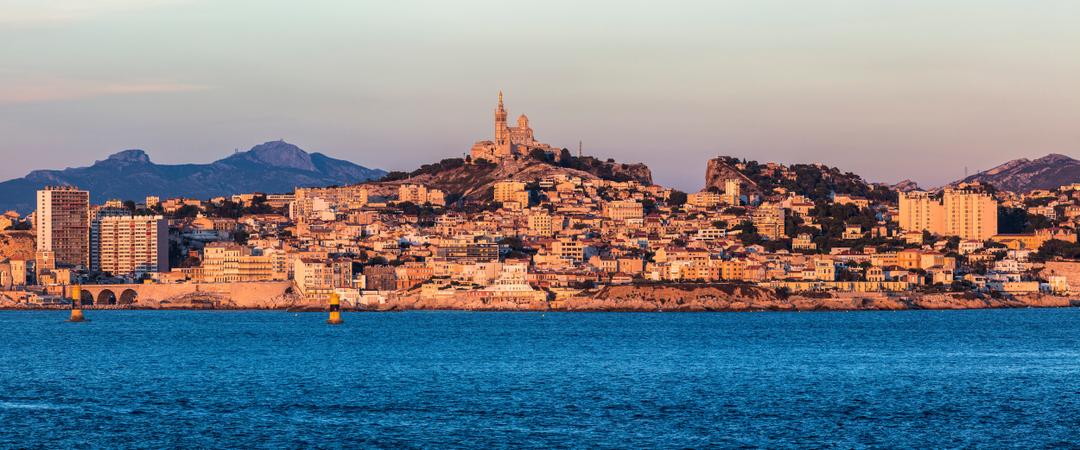 The feeling of being in Marseille, on land, also depends on the sea temperature. © Henryk Sadura, Adobe Stock
Another study published in AGU , on which the researcher bases his workMétéo FranceHowever, it is noted that » our understanding of the potential influence of marine heatwaves on atmospheric heatwaves remains limited . »
A better understanding of the consequences of overheating seas and oceans opens the way to a field of major interest: » improving seasonal forecasts , » weather forecasts three months or more in advance, which are crucial for…agriculturetourism and the economy.
source : futura sciences