
Undercover fishing. Faced with declining catches and pressure from industrial trawlers, Gambian fishermen are training at sea to monitor and denounce illegal practices that threaten their future. Vert attended one of these training sessions aboard a Greenpeace ship, the Arctic Sunrise. Come along.
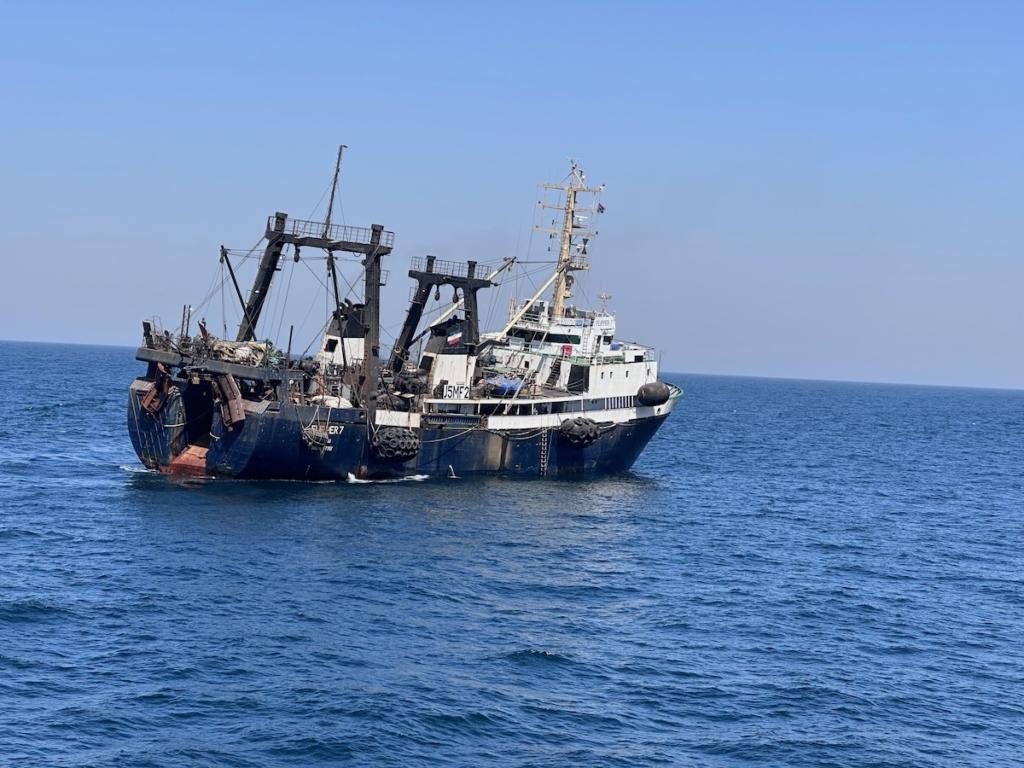
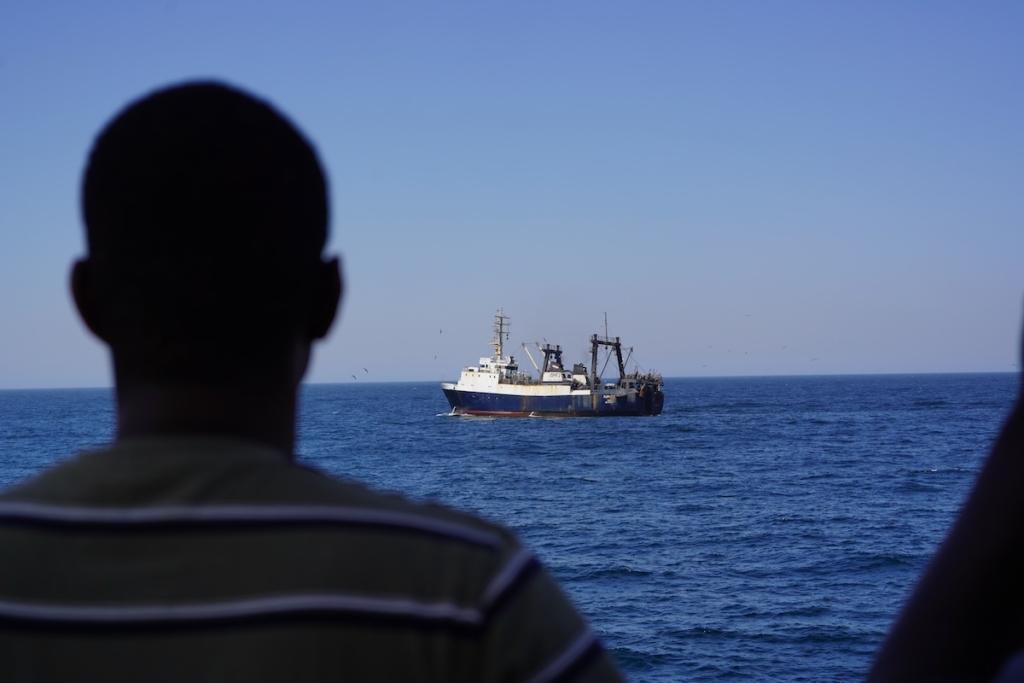
Nine nautical miles off the coast of Gambia, a small West African country, a dark silhouette glides across the horizon. A trawler. At this distance, a little over fifteen kilometers from the shore, the artisanal fishing zone ends: industrial fishing vessels can legally deploy their nets. In early February, on the deck of the Arctic Sunrise , the Greenpeace ship, binoculars are passed from hand to hand. The wind stirs up a bit of sea spray. A fisherman notes down GPS coordinates. Beside him, another tries to make out the name painted on a rusty hull.
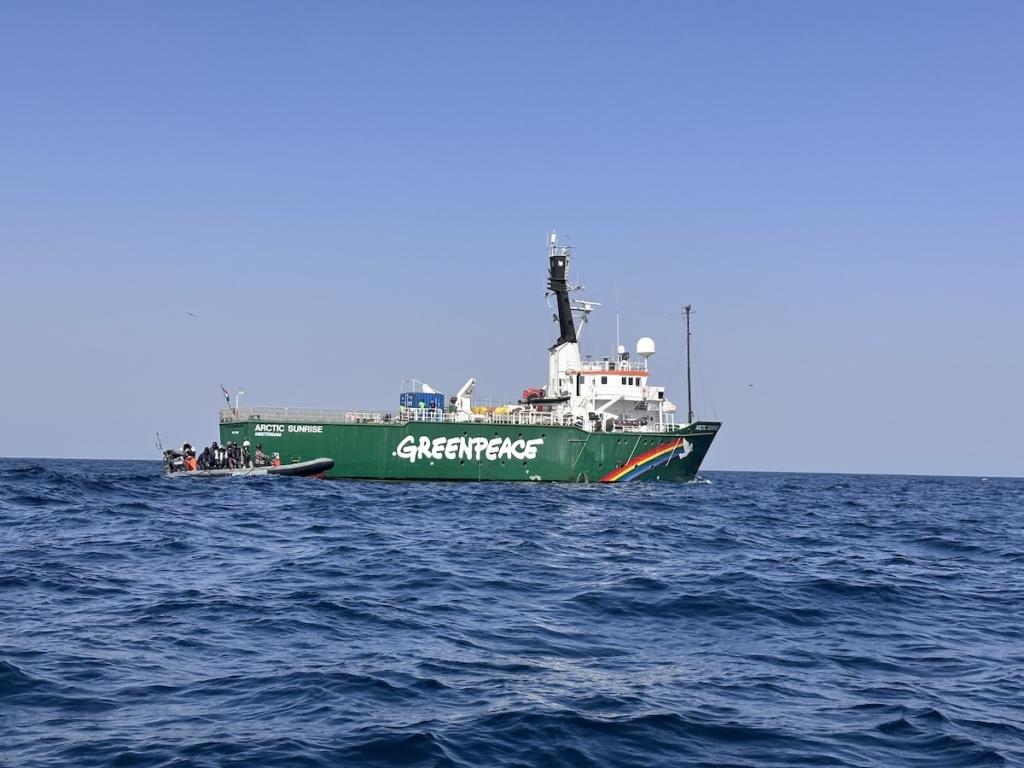
The scene sets the tone for the mission: for a week, Gambian fishermen aboard this vessel learn to track illegal fishing and use the right tools to expose bad practices. Is the trawler too close? No, it’s at the legal distance. But what is it catching? The Zodiac is launched. In a few minutes, a small team cuts through the waves to get closer. Photos. Exact time. Coordinates. The nets are lowered. The boat is indeed hauling in fish.
“We can’t force them to haul in the nets,” reminds Amadou Touré, head of the Greenpeace campaign. “ It’s a shame ,” adds Omar Gaye. The fisherman is convinced: this boat looks like it’s using illegal methods. “It’s exactly this type of boat that comes into our waters to take our fish ,” he observes.
In the common room, transformed into a training center, Sophie Cook, a Greenpeace trainer specializing in the subject, presents the various tools. AIS – the Automatic Identification System – displays the trajectories of ships. Each equipped vessel emits a signal containing its identity, position, and speed. This data is captured by coastal stations and satellites, and then accessible in near real-time. In theory, it’s impossible to disappear.
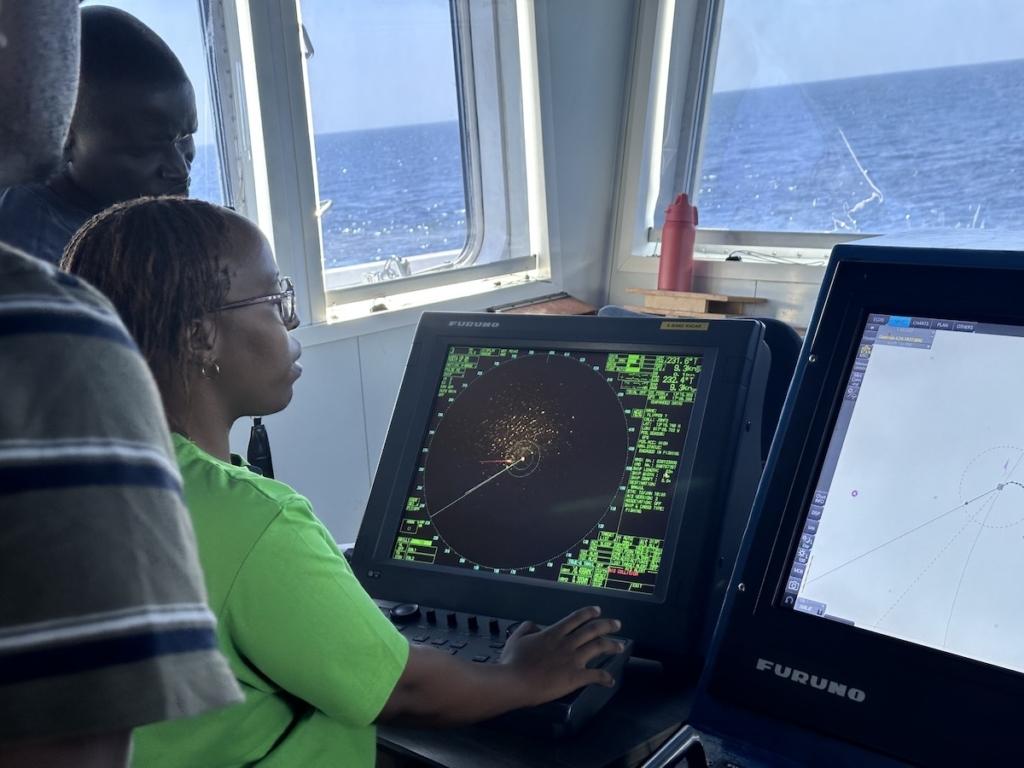
In theory only. Because even though the practice is illegal, with few exceptions, a vessel can switch off its AIS. When it’s off, the boat becomes invisible. « That’s often where suspicions and bad practices begin , » explains the trainer.
The Global Fishing Watch platform goes further. It combines AIS signals with satellite imagery and algorithms capable of detecting suspicious behavior: prolonged slowdowns, zigzag trajectories, and abnormal concentrations of vessels. In this area of West Africa, so-called IUU fishing – illegal, unreported, and unregulated – is commonplace. Specifically: illegal, when a vessel enters a prohibited zone or uses prohibited gear; unreported, when it catches more than it declares; and unregulated, when it targets species or stocks without authorization.
« It’s not just a question of foreign boats , » explains Omar Gaye. « It’s a question of rules that are not being respected. » He mentions nets cut by trawlers, nighttime intrusions into the artisanal fishing zone, pirogues brushed by ships ten times larger, and even, on several occasions, fights between fishermen.
Disappearance of sardines
One evening, as the sun sets behind the waterline, the conversation drifts to the sardinella, a small fish related to the sardine. « Before, it was everywhere , » says Momodou Sarr, a fisherman since the late 1980s. » Now, it takes days at sea to bring back enough . » It is now one of the most endangered fish species in West Africa.
According to a recent survey by the French Research Institute for Development (IRD), sardinella catches, which fluctuated between 100,000 and 250,000 tons per year in the 2010s, have fallen to around 10,000 tons annually in recent years, their lowest recorded level. Today, scientists agree that these stocks are « critically overexploited » and at risk of collapse.
On the one hand, artisanal fishing targets it massively to supply local markets because it is the most consumed fish locally, a cornerstone of food security in Senegal, Gambia, Mauritania, and Guinea-Bissau. On the other hand, a growing share is processed into fishmeal and fish oil in factories located along the coasts to feed aquaculture and industrial fish farming in Europe and Asia. Added to this are the capture of juveniles (young fish not yet able to reproduce), the disregard for breeding seasons, industrial encroachment in coastal areas, and finally, warming waters which alter migratory routes.
At the very moment the fishermen were gathered on board, a meeting of experts was being held in Dakar to save the species . They advocated for a strict biological rest period during the breeding season and for the establishment of a minimum catch size of 18 centimeters to protect juveniles. In the medium term, the experts called for harmonizing regulations between neighboring countries and strengthening the scientific assessment of fish stocks.
Chinese factories
For Lamine Jassey, a Gambian activist also on board, the focus should be on targeting the fishmeal factories, primarily Chinese-owned, located along the coast. Their production feeds fish farms in Asia, but also in Europe, particularly for sea bass and salmon sold in European supermarkets, as demonstrated by an investigation by DeSmog and The Guardian in late May 2025.
“When the fishmeal factory was set up in Gunjur [in southern Gambia, editor’s note] , at first we were happy. We were promised jobs, economic opportunities. The elders gave up the land for free, thinking about the development of the community,” recalls Lamine Jasseyl. “But, very quickly, the problems started.”
Pollution, constant noise and odor nuisances, impact on tourism, social tensions… The activist quickly joined the fight against these factories, facing threats and even imprisonment after organizing demonstrations and removing pipes that were discharging pollutants into the environment. “We’re not against investment. We’re simply asking that they respect the rules and not destroy artisanal fishing. For me, the main problem remains the political leadership of the authorities. Too often, decisions aren’t made in the best interests of the communities, often because of corruption ,” he says, while the other fishermen nod in agreement.
In Senegal, as in Gambia, fish is the primary source of animal protein. When stocks decline, prices rise, but fishermen’s incomes still fall.
Omar Gaye, the fisherman, speaks of these young people who invest in a pirogue: « If they return several times without a good catch, they go into debt. Some end up selling their boat. Many think about leaving because they no longer see a future here. »
Between briefings, the paths are taking shape: making AIS truly mandatory and monitored, strictly regulating transshipment (the practice of transferring a cargo of fish from one vessel to another to avoid port controls and conceal illegal catches) everywhere at sea, effectively protecting artisanal fishing zones, mandating the use of appropriate fishing nets, and providing financial support to fishermen during any potential closure periods. And thus, relying on communities to combat illegal fishing.
In states where means of control remain limited, communities become « sentinels . » « Fishermen know the sea better than anyone , » insists Amadou Touré. » Involving them in monitoring is essential if we want practices to change. »
source : vert eco