Arctic sea ice is on track to experience one of its worst winters ever recorded, according to US satellite data analyzed by AFP, a further manifestation of human-caused global warming in this area at the center of geopolitical tensions.
Arctic sea ice, formed by the freezing of seawater, melts naturally in summer and reforms in winter. But due to climate change, the extent to which it reforms is declining.
Please close the floating video to resume playback here.
Winter 2025-2026 shows a level of ice replenishment below that recorded last year which was already at its lowest in four decades, according to data from the National Snow and Ice Data Center (NSIDC), a leading American observatory.
A record?
If the trend continues until the end of March, this winter will be among the five worst ever recorded, along with those of 2025, 2018, 2017 and 2016.
If the ice does not continue to spread before the end of this winter, by the end of the month it would even beat the record set last year.
This winter is expected to be « among the five » worst, Samantha Burgess, strategic climate officer at the European Centre for Medium-Range Weather Forecasts (ECMWF), told AFP. According to Gilles Garric, a polar oceanographer at Mercator Ocean Toulouse, « we’re currently in the top three. »
Last year, the Arctic sea ice reached its maximum extent on March 22, with an estimated area of 14.31 million square kilometers. So far this winter, its maximum extent was 14.22 million square kilometers on March 10.
Rising global temperatures are disproportionately affecting the poles and the Arctic, which is warming four times faster than elsewhere. The last eleven years have all been among the hottest ever recorded on the planet.
« The sirens are sounding to warn us that we are heading towards an overheated planet that will experience considerable devastation, » warned Shaye Wolf, chief scientist in climate science at the Center for Biological Diversity, an American NGO, in a comment sent to AFP.
Consequences for the polar bear
The poor replenishment of the ice pack may already result in « a potentially faster and more significant summer melt, » says Samantha Burgess.
Although the melting of sea ice does not directly raise ocean levels, unlike the melting of ice on land (ice caps, glaciers), it causes many climatic consequences that threaten many ecosystems.
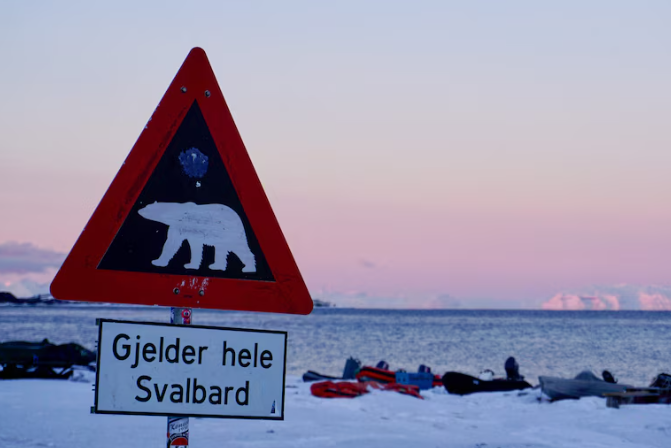
Many species , such as polar bears and seals, depend on sea ice for reproduction and feeding.
source : L’avenir