

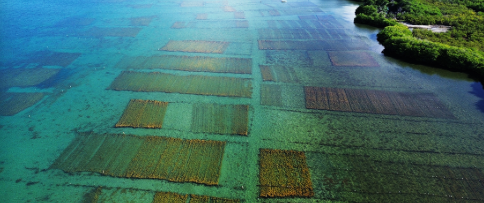
Seaweed, long a traditional component of Asian diets, is increasingly seen as one of the world’s most promising resources for nutrition, livelihoods and climate resilience. Once overlooked, this crop is emerging as a key ingredient in the future of sustainable food systems.
Policymakers are beginning to recognize the nutritional value of seaweed, especially in contexts that are vulnerable to malnutrition and rising food costs. Seaweed supports healthy and affordable diets because it is rich in protein, vitamins, essential minerals, and omega-3 fatty acids.
Seaweed cultivation provides livelihoods and opportunities for diversification in coastal communities that depend on small-scale fisheries
Women are at the heart of the seaweed farming sector: in some countries, they account for up to 90 percent of the workforce employed along the seaweed value chain — from farming to processing and marketing.
As food prices continue to rise and climate change threatens land-based agriculture, the seaweed industry holds great potential to drive inclusive livelihoods, especially in developing countries where it can support local economies and communities, create jobs and empower women and youth.
How seaweed farming can be good for the environment
Beyond its promise for nutrition and livelihoods, seaweed is increasingly recognized as an environmentally regenerative crop. It grows without the need for freshwater or fertilizer, making it a nature-based solution and one of the most environmentally friendly forms of aquaculture.
In addition, seaweed helps remove excess phosphorus and nitrogen from agricultural runoff — water that washes off farmland, carrying animal waste and fertilizers and that can trigger harmful algal blooms in coastal areas.
Seaweed also captures carbon dioxide, and buffers coastlines from turbulence by absorbing and dissipating the energy of waves. So, seaweed farms can help mitigate climate change, safeguard coastlines and make coastal communities more resilient.
As well, seaweed farms can support marine biodiversity, not only by restoring water quality but also because the seaweed itself and the gear used to farm it, such as ropes and cages, can provide shelter for juveniles and breeding habitats for fish and invertebrates.

Hottentott fish swim through a kelp forest off the coast of Cape Town, South Africa. Cultivating kelp and other seaweeds can help conserve biodiversity by providing habitat for other aquatic species.
When combined with other species such as shellfish, seaweed cultivation can further recycle excess nutrients, restore water quality and provide welcoming habitats. This farming model is called integrated multitrophic aquaculture and it is a beneficial, low-impact way to grow highly nutritious aquatic foods.
Another virtue of seaweed is that it contains bioactive compounds with medicinal, nutritional and cosmetic properties. It can also be used to produce biofuels, bioplastics and biopolymers, so it has the potential to reduce our dependence on fossil fuels. Seaweed farming is not only about food – it can drive innovation across industries and support circular low-carbon economies.
“When farmed responsibly, seaweed becomes a natural ally for the planet, absorbing carbon, improving ocean health, and restoring ecosystems while producing food with almost no environmental footprint,” says José Aguilar-Manjarrez, Aquaculture Officer at the FAO Regional Office for Latin America and the Caribbean.
What FAO is doing to promote seaweed farming
To support countries in harnessing seaweed’s potential, the Food and Agriculture Organization of the United Nations (FAO) is working at global and regional levels.
“FAO promotes seaweed farming as a driver of sustainable growth for the benefit of current and future generations” says Alessandro Lovatelli, Senior Aquaculture Officer at FAO. “Our work positions seaweed as one of the cornerstones of a sustainable ocean economy under the FAO Blue Transformation Roadmap.”

Women sorting farmed tropical seaweed in El Guamache, Isla Margaritha, Venezuela.

Ingredients for pickled seaweed products processed by women in the small fishing community of Sibutad, Zamboanga del Norte, the Philippines.
FAO’s role includes supporting countries to develop enabling legal frameworks, building the capacities of farmers and decision-makers, and fostering inclusive value chains.
“One example of this work is a workshop for policymakers and other stakeholders held in Chile to promote seaweed farming in Latin America, where many countries have requested technical assistance from FAO to build sustainable seaweed industries,” says Lovatelli.
“FAO recently published a policy brief, Seaweed for the future, which provides recommendations for decision-makers on how to enable flourishing and sustainable seaweed value chains,” he adds.
The recent adoption of the FAO Guidelines for Sustainable Aquaculture (GSA) has also reinforced the Organization’s support to seaweed farming that develops in environmentally responsible and socially inclusive ways, contributing to long-term ecological sustainability, economic resilience, and equitable livelihoods.
As the world’s oceans continue to face threats from climate change and pollution, seaweed symbolizes hope for a sustainable future.
source : FAO