
Today, Chile established 337,000 square kilometers of new marine protections ocean around the Juan Fernández and Nazca‑Desventuradas islands—waters that scientists say contain the highest concentrations of marine species found nowhere else on Earth.
With these added safeguards, more than half of Chile’s exclusive economic zone is now protected, reinforcing the country’s leadership in large-scale ocean conservation.
What makes this achievement especially meaningful is who led it. For nearly two decades, the Juan Fernández community has championed the protection of their surrounding seas—drawing on generations of stewardship, sustainable fishing traditions, and a deep cultural connection to the ocean. Their leadership has given the world one of the most compelling examples of community‑driven ocean conservation.
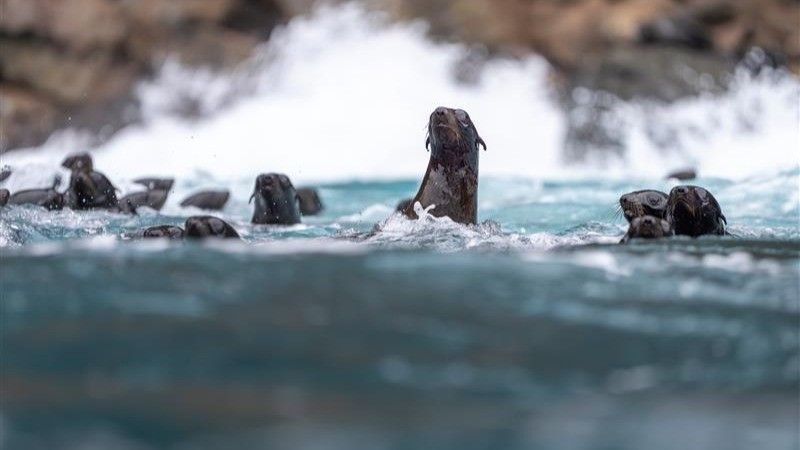
Last year, they brought forward a clear proposal to strengthen protections, and today that vision became reality. Once implemented, these fully protected waters will span nearly 900,000 km²—an area one-fifth larger than Chile’s entire land territory. At this scale, protections will safeguard extraordinary biodiversity—from endemic species found nowhere else on Earth, such as the Juan Fernández fur seal, to critical habitat for whales, turtles, seabirds, and fish—while strengthening resilience against industrial fishing, pollution, and climate change.

Science has shown that preventing harmful activities, such as industrial fishing, across large ocean areas is one of the most effective ways to protect marine life. Safeguarding key habitats, such as spawning and nursery grounds, helps rebuild fish populations and supports healthy fisheries around the protected areas and beyond.
Fishing is a key contributor to the Juan Fernández archipelago, accounting for roughly 46% of the local economy. Artisanal fishing is more than a livelihood, it is also a cultural practice that connects people to their islands’ heritage and the sea that the community wants to ensure can continue for a long time.
In my role at Pew Bertarelli Ocean Legacy, I have been proud to support the Juan Fernández community alongside partners Blue Marine Foundation, Island Conservation, and Fundación Patagonia Azul .
When local leadership drives global impact, we move closer to the goals outlined in the Kunming-Montreal Global Biodiversity Framework in which nations have committed to protect at least 30% of the global ocean by 2030 to help reverse biodiversity loss. Today’s achievement is more than a national ocean policy or international commitment milestone. It is recognition that community‑led ocean protection works—for biodiversity, for climate resilience, and for people.
source : Linkedin