
(Ecofin Agency) – A landlocked country in southern Africa, Zimbabwe relies primarily on inland fishing for its local fish supply. The government is seeking to reduce its dependence on imports by focusing on developing aquaculture to address the production deficit.
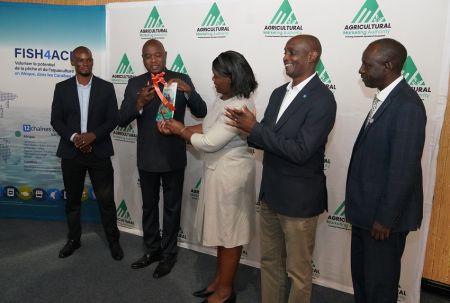
In Zimbabwe, the government has just launched the first value chain marketing strategy for farmed tilapia, developed with FAO support. This roadmap, to be implemented between 2026 and 2030, provides a framework for strengthening local production of this fish species, structuring markets, and improving its value.
According to a press release published by the Ministry of Agriculture on March 24, this project has a budget of $5 million funded by the European Union and the German Federal Ministry for Economic Cooperation and Development (BMZ). The interventions will focus on improving producers’ access to quality fingerlings, fish feed, and good aquaculture practices, as well as on developing the cold chain and the processing sector.
« The strategy provides for a phased implementation focused on infrastructure, including the creation of collection centers and the development of the cold chain, including the Mutare cold storage unit. It also emphasizes the standardization of packaging, traceability to guarantee food safety and value addition through processing, » the statement emphasizes.
This initiative aligns with the country’s ambitions to increase local tilapia production to 14,000 tonnes by 2032. By comparison, aquaculture production in Zimbabwe reached only 4,942 tonnes in 2024, according to data from the World Organisation for Animal Health (OIE), of which 90% of the stock was composed of tilapia.
According to Milton Tinashe Makumbe, director of the Department of Animal and Fisheries Production at the Ministry of Agriculture, the marketing strategy for the tilapia value chain will also allow aquaculture to position itself to capture the local market. Currently, the country’s fish needs are primarily met by inland fisheries and imports.
In Zimbabwe, the demand for fish is estimated at 60,000 tonnes per year according to data from the Ministry of Agriculture, while the local supply (fishing and aquaculture) is around 35,000 tonnes, revealing a production deficit of 41 percent to be filled.
source : Agence Ecofin