
« What is common to the greatest number is the subject of the least attentive care. Man takes the greatest care of what is his own, he tends to neglect what is in common. » This quote borrowed from Aristotle perfectly reflects what we think today of our Mediterranean and the subjective way of acting, deliberately, in the face of the ecosystem challenges that threaten it.
Although it is home to about 500 million inhabitants, spread over 24 countries in Europe, Africa and the Middle East, the issue of its sustainability has never been a shared responsibility.
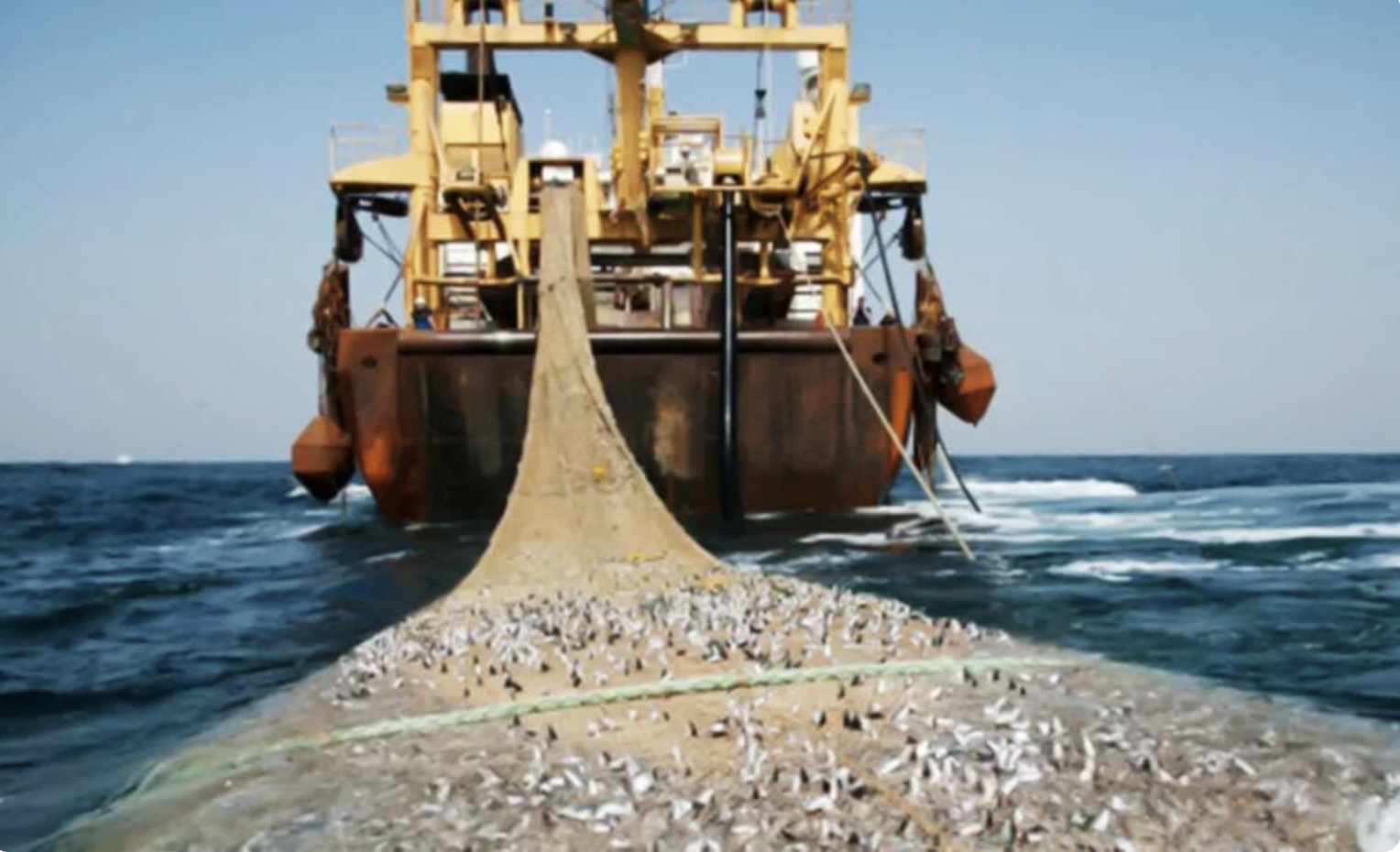
Overfishing is then added to marine pollution and plastic waste to put our management and consumption methods to the test.
La Presse – On both shores, from North to South, human impact is no longer to be demonstrated and demographic pressure weighs heavily on an already weakened marine ecosystem and a stock of resources almost exhausted. And the one who lives from the sea feeds on its fruits, i.e. 20 to 48 kg of fish, annually, per inhabitant. Such excessive consumption has, by turn, only intensified illegal fishing, described as the second threat after climate change. « The overfishing is such that there could soon be no more fish to fish and consume. Supporting figures, about 73% of the stocks recorded in the Mediterranean are overexploited, » according to the World Wildlife Fund (WWF).
The Gulf of Gabes in distress
Indeed, the FAO, the Food and Agriculture Organization of the United Nations, had thus declared the Mediterranean « the most overexploited sea on the planet », where more than 80% of fish species were overfished, i.e. beyond what is viable. In terms of funds enguned in the informal, this uncontrolled activity had affected the pace of the organized blue economy, with a shortfall considered very high.
« Assessed at about 20% of global catches, or between 11 and 26 million tons, illegal fishing or IUU fishing (Illicit, Undeclared and Unregulated) represents a loss of 10 to 23 billion euros each year worldwide, » estimates the WWF.
Similarly, on our sides, 1300 km long, the situation is hardly an exception. The poachers of the sea are still running, not caring about the ecological damage they have brutally caused. « A victim of fishing traffic, the Gulf of Gabes, which extends from Chebba, Mahdia governorate, to the Tunisian-Libyan borders, sees its fish stocks collapse and empty at a high speed, going from 270 marine species in the 1960s to less than 70 today, » warns La Saison bleue, a component of national civil society born in
2018 to devote itself to the enhancement of the Tunisian coast, as well as to supporting the initiatives of coastal communities.
And yet, the trawlers, so refractory, always make the law, threatening the sustainability of fish resources in the region. For lack of protection, the Gulf of Gabs, described as a « hot point of pollution in the Mediterranean », seems to have lost its exceptional ecological assets. It was once the nursery of the Mediterranean, since 28% of fish reproduce there.
To the great disdes of traditional fishermen!
After the revolution and to this day, the Gulf of Gabes is under wild pressure. Its so degraded ecosystem is coupled with a trawling fishing considered abusive. While the law governing it is perceived, thus, as a wet firecracker because, sparing the goat and the cabbage. Especially since regulations and prohibitions regularizing both fishing methods and opening and closing seasons are marginalized. Even more serious, the depths allowed for trawling, from 50 meters, are no longer respected.
To the point that the French ministry in charge of the file considered that illegal fishing is not a marginal phenomenon, but rather « a parallel, globalized industry, sometimes organized with the complicity of States that choose to close their eyes ». That said, according to the FAO, unreported and unregulated fishing takes advantage of corrupt administrations and exploits weak management regimes. It’s serious! But this everyday ride is not from yesterday. To the great disdes of traditional fishermen!
In 2018, the Tunisian Sustainable Traditional Fishing Network, an associative collective, had then strongly denounced the decisions taken by the Tunisian Union of Agriculture and Fisheries (Utap), concerning, at the time, the freezing of certain provisions of the law regulating the sector, including those relating to the protection of the Gulf of Gabs and the organization of the activity of trawlers.
However, the latter did their own thing, depriving about 40,000 families in the region of their livelihoods. « So this illegal trawling is likely to weigh on the fishing wealth and destroy the ecosystems of the region… » growl the small traditional fishermen. They are always on the alert.
Against the law
An ardent ecologist, Abdelmajid Dabbar, president of the NGO « Tunisia ecology » had repeatedly sounded the alarm, challenging local and regional authorities about a persistent problem: » Sinners using artisanal and traditional methods face enormous vital difficulties, because their nets deposited the day before are destroyed and disembombeled by trawls, being the next day at zero without equipment to earn a living ». And to continue that this trawling also concerns the posidonia meadows savagely uprooted without mercy or consideration, making the seabed a lifeless desert. « What remains of our fish stock is now in great danger, in a deafening silence of the authorities concerned. » Worse, three-quarters of catches are non-target species, or a good part of the fishing potential is declared lost.
However, the Tunisian Sea is in trouble. No less serious than trawling, the illegal use of the Kiss, off Gabes, is all the more worrying as it makes noise in the sphere of artisanal fishing. « It is that the so-called « Kiss » nets have very narrow meshes not letting the small fish out and once picked up, these frets are thrown away because they have no commercial value, » explains Mr. Dabbar, arguing that 75% of these fish measure 1 cm, or even a few millimeters. Unwanted, these species, he regrets, have ended up being rejected, dead, at sea or ending up on the coasts. Although this trawling by Kiss is prohibited by the Tunisian law of January 1994, many sailors continue to indulge in it, with impunity.
And although it is only allowed at depths of more than 50 meters, these illegal trawlers continue to scrape the seabed up to 3 and 4 meters.
Faced with their invasion of the coasts of Kerkennah, a Tunisian archipelago of the Mediterranean Sea, the island’s traditional fishermen had, many times, threatened to leave Tunisia to migrate to Italy.
Even if it means losing their livelihoods: Their traditional installations and octopus traps are completely ruined. In Sfax, Skhira and Kerkennan, these bandits of the sea wreaking havoc, in plain sell.
In the meantime, this passivity of the authorities had revealed, about ten years ago, other illegal practices, namely the fishing of the Dorra. « Banned in Italy since 1990, this new technique seems more dangerous, using nets of 3 to 4 km2, which represents a major risk of reducing stocks of species targeted or not, and consequently the destruction of the marine ecosystem, » says La Saison Bleue.
The Gulf of Guinea too
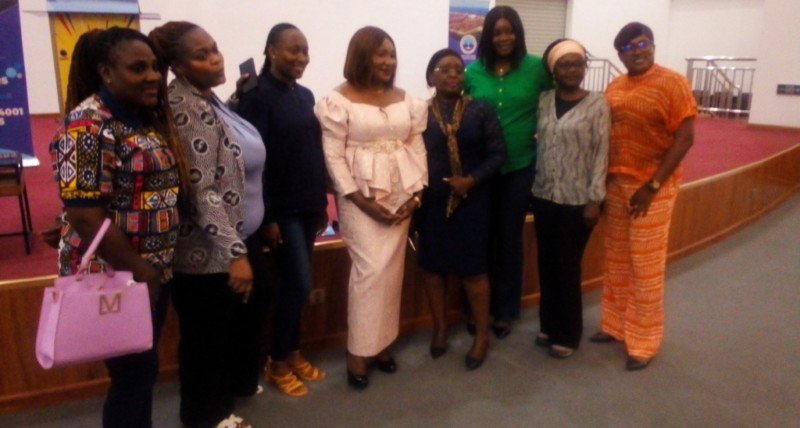
All in all, illegal fishing does not only threaten Tunisia and other neighboring countries, it hits the Gulf of Guinea, where the overexploitation of resources further depletes fish deposits and compromises the future of food security. At the international conference, held on July 9, in Yaoundé, Cameroon, on « the sustainable blue economy in the Gulf of Guinea », Rym Benzina, president of La Saison Bleue, returned to a disturbing reality: « Illegal fishing deprives our local communities of their livelihoods and destabilizes our economies. It should be noted that the so-called INN fishing leads to the loss of 300,000 artisanal fishing jobs and makes West Africa lose $10 billion a year’. That is crazy money that should have been invested in other sectors of development.
All in all, Dabbar ended on a negative note: « Tunisia, which was an exporter of fish and seafood, has now become an importer and consumer of fish from breeding, import and freezing. « . A shortfall, so to speak. The man knows what he is talking about. Without forgetting to formulate certain recommendations, as solutions. « Develop a fish traceability system that takes over the boat, the shipowner, the fishing area, the wholesale buyer… This label is only issued to sustainable fishing professionals, those who pay taxes, taxes and insurance. ».
source : la presse