
Pollution, warming, overexploitation: the Mediterranean is in danger. An idea emerges: to recognize her rights to finally better protect her.
Interview with Victor David, researcher in environmental law at the IRD, within the IMBE unit. It explores a still emerging track: granting legal status to the Mediterranean Sea.
« The Mediterranean is one of the most studied seas, but also one of the most threatened in the world. Pollution, overexploitation of resources, artificialization of the coastline or climate change weaken this space shared by 21 States. Faced with these growing pressures, a track still little explored in the maritime field is to legally recognize the Mediterranean Sea. An emerging idea, but one that could profoundly transform the way this common space is protected.
This reflection is part of a broader evolution of environmental law, which has been driven for several years by the rights of nature. These are already applied in different contexts, often to rivers, lakes or forests, such as the Whanganui River in New Zealand, recognized as a legal entity. The idea is to recognize them as a form of legal personality, with their own rights.
After work carried out in particular in New Caledonia, where these principles were mobilized for the protection of species such as sharks or turtles, my reflection gradually extended to marine environments. I wondered why not apply this logic to the oceans, and then more specifically to the Mediterranean Sea. Current legal frameworks, international and national — such as the United Nations Convention on the Law of the Sea or the Barcelona Convention — apprehend the ocean mainly from the perspective of state sovereignty and resource management. A transformative change is necessary to overcome this dominant perception of the ocean as a « marine environment », « natural resource », « recreation space », « navigation route » or « exclusive economic zone ». The seas and oceans are not subjects of law: they are maritime spaces, either international or under the jurisdiction of coastal states. This legal reality partly explains the difficulties in establishing a coherent protection of a living environment made of interdependencies and ecological solidarity.
Breathless protection mechanisms
The Mediterranean operates as a single ecological system, where local disturbances can quickly have repercussions on a basin scale. Since the 1970s, international conventions, regional agreements and cooperation mechanisms have multiplied. The Barcelona Convention, adopted in 1976, is thus one of the pillars of this legal architecture. It was already aimed at combating pollution and protecting Mediterranean ecosystems.
However, despite this stacking of instruments, the degradation continues. Coastal urbanization, plastic pollution, pressure on fisheries resources or accelerated warming testify to the limits of a system based mainly on cooperation between states. Too often, decisions remain fragmented, dependent on national interests or divergent economic priorities.

In the Mediterranean, warming is faster than the global average, ecosystems are changing and extreme events are increasing.© IRD – Thomas Changeux
A sea fragmented into 21 systems
There are almost no international waters in the Mediterranean. We can say that there are 21 Mediterraneans, since each portion depends on a coastal state. This means 21 different frameworks for fishing, pollution control or resource exploitation. This heterogeneity does not allow effective protection.
The Mediterranean is now a true laboratory of climate change. Warming is faster than the global average, ecosystems are changing and extreme events are strewing. In addition to these climate pressures, there are insufficiently regulated human activities at the regional level. The lack of harmonization of practices accentuates the degradation. The Mediterranean is exposed without real defense capacity.
An innovation to change the paradigm
Faced with these limits, the idea of a specific legal status aims to take a step forward. It would no longer be just a matter of protecting the sea according to human interests, but of recognizing the Mediterranean ecosystem as an entity in its own rights, with its own rights. This requires the Mediterranean to be able to defend itself, with representatives responsible for acting in court on its behalf, in particular to prevent or challenge certain environmental damage.
However, the concept of traditional legal personality poses difficulties. It implies rights, but also obligations and responsibilities, which are difficult to transpose to an ecosystem. That’s why the idea of a status of « legal natural entity » is privileged: an intermediate category of subjects of law, adapted to the specificities of the living.

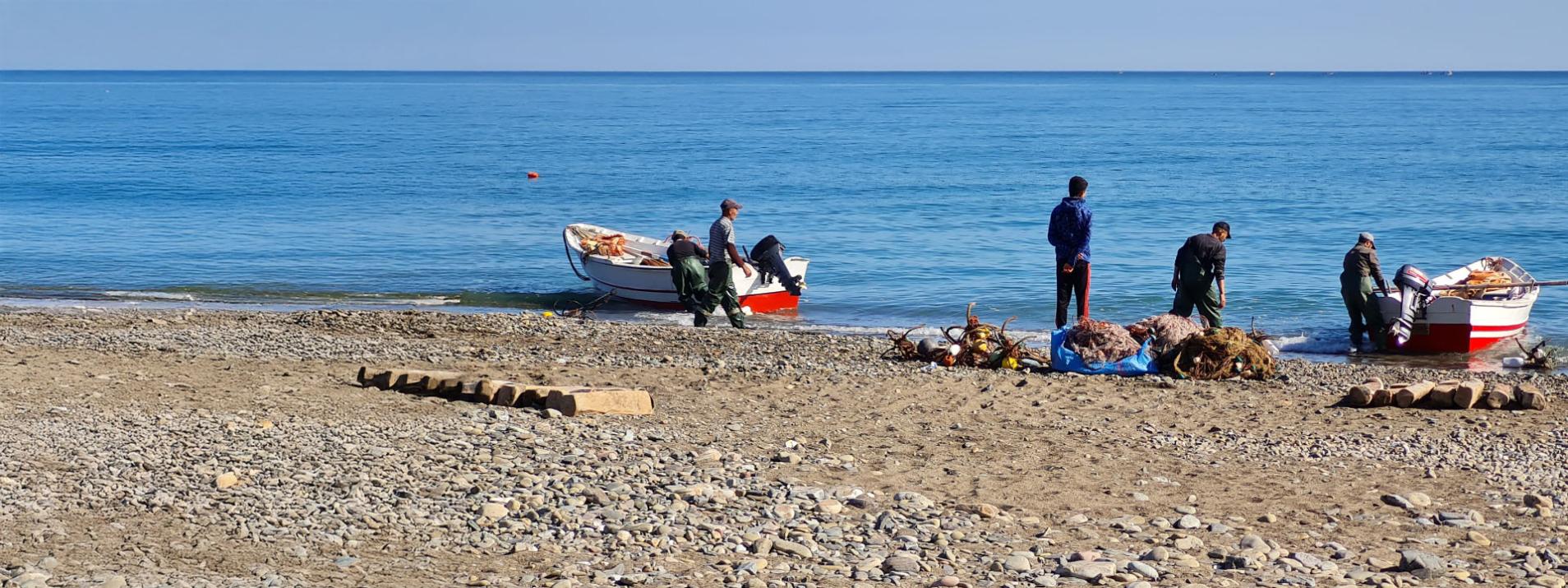
Mediterranean marine environments pay a heavy toll on intense and still insufficiently regulated human activities on a regional scale.© IRD – Daina Computer
Moving forward in stages to transform governance
The implementation of such a mechanism raises questions of feasibility. An agreement between the 21 riparian states would be ideal, but it seems difficult in the current geopolitical context. Regional tensions, differences in development and national priorities make rapid adoption at the level of the entire basin unlikely.
It is therefore more realistic to move forward in stages. A single state could already recognise a status to the Mediterranean in its national law. France, for example, could appoint a representative responsible for carrying the voice of the sea. Such an initiative could then expand to other volunteer countries, creating a progressive dynamic.
This strategy is inspired by a logic already proven in Europe. The European Union was built on the basis of agreements between a few countries. We can imagine a similar trajectory for the Mediterranean.
Beyond legal innovation, this reflection invites us to rethink our relationship with natural environments. To recognize the Mediterranean as an entity in its own right would be tantamount to affirming that it constitutes more than a common heritage, and whose preservation goes beyond national interests and exploitation.
The objective is to move forward gradually, by building a consensus around the recognition of the rights of the Mediterranean. An ambition that could make this sea, both fragile and strategic, an innovation laboratory for global environmental governance. «
source : le mag