
Along the coastal provinces of Central Vietnam, fishermen are gradually transforming their operating methods towards a more modern and sustainable model, marked by increased adoption of digital technologies and a strengthening of production links at sea.
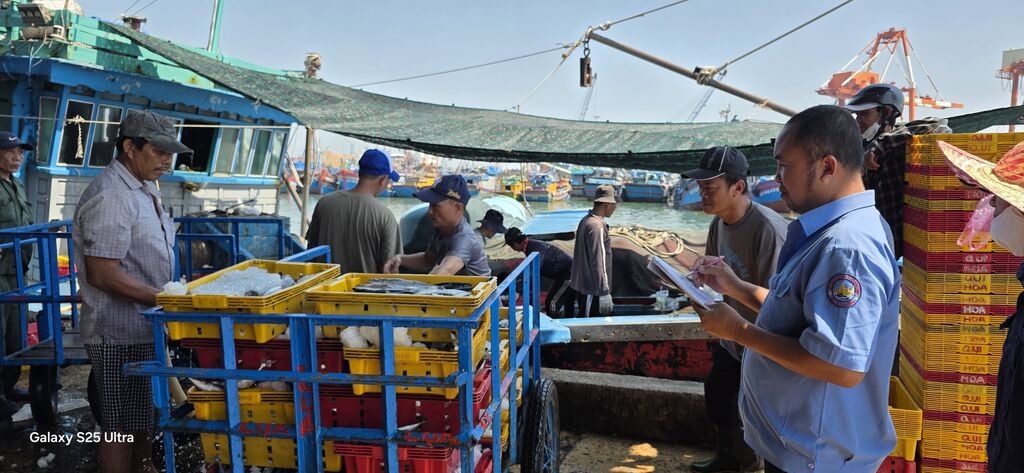 |
| In Central Vietnam, fishermen are modernizing their practices through digital technologies and offshore production models. |
| Photo: Dinh Quan/VNA/CVN |
This development helps to improve economic efficiency while preserving fishery resources and reducing illegal, unreported and unregulated (IUU) fishing.
In several locations such as Gia Lai, Quang Tri, and Da Nang, teams and fleets operating on the high seas for extended periods are gradually replacing individual fishing practices. This organization optimizes fuel costs, increases yields, and reduces risks at sea.
At the same time, the application of scientific and technological advances in fishing is experiencing significant growth. Many fishermen are investing in modern fish finders, satellite geolocation systems, digital fishing maps, and energy-efficient equipment such as LED lights and autopilot systems. These innovations improve the accuracy of locating schools of fish, reduce navigation times, and lower operating costs.
The economic results are significant. Several vessels are recording catches of several tens, even hundreds of tons per trip, generating revenues of several billion dong. The living conditions of the fishermen are gradually improving, encouraging the continuation of this modernization.
In terms of management, local authorities are also accelerating the digital transformation of the fisheries sector. Vessel monitoring systems (VMS), electronic fishing logs, and product traceability are being widely deployed, increasing transparency and meeting the demands of international markets.
In this regard, the city of Da Nang has transformed the Tho Quang fishing port into a digital management hub, where 100% of vessels are monitored, with catch certification and traceability ensured through electronic systems. Other localities are also investing in smart ports, expanding anchorage areas, and developing a modern logistics ecosystem.
Furthermore, Gia Lai province is implementing an ambitious sustainable fisheries development program focused on fleet restructuring, smart logistics services development and the integration of advanced technologies such as artificial intelligence (AI) and the Internet of Things (IoT).
Production, processing and export chains are also being set up, geared towards demanding markets.
In addition, the Central coastal provinces are continuing to rationalize their fleet, encouraging the conversion of inefficient or non-compliant vessels, thereby contributing to the sustainable protection of marine resources.
Overall, the digital transition and restructuring of the fisheries sector are opening up new opportunities for fishermen in Central Vietnam. With government support and increased technology adoption, the sector is moving towards sustainable growth and deeper integration into global value chains.
source : le courrier du Vietnam