Fishing generates about 3% of Senegal’s GDP, representing nearly 10% of the total value of goods exports. Faced with the depletion of stocks, the country wants to boost aquaculture.
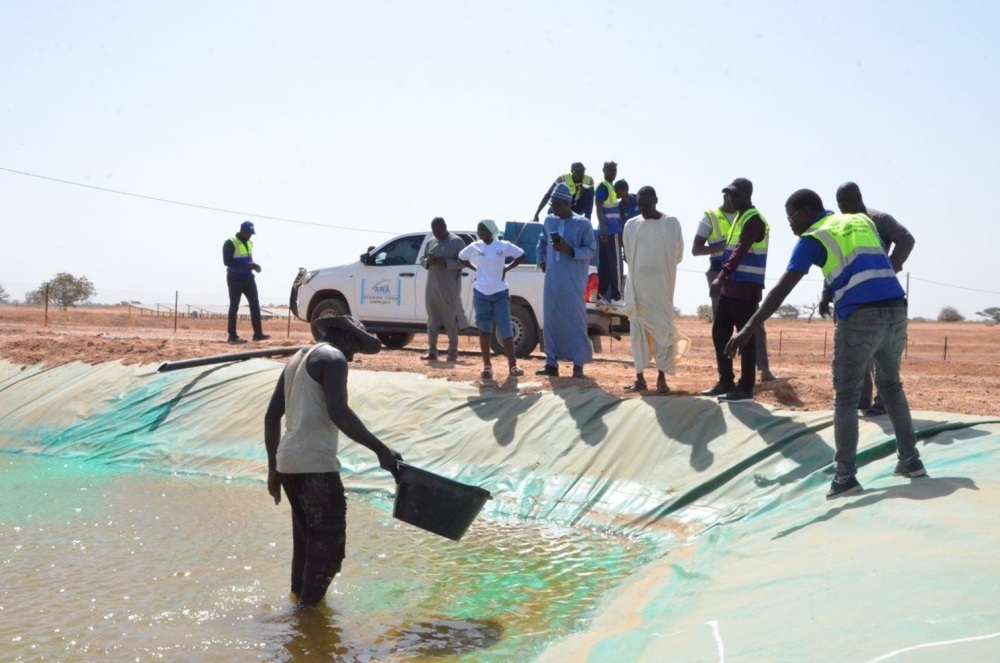
In Senegal, the National Aquaculture Agency (ANA) plans to raise 36.5 billion FCFA (55.6 million euros) to boost the sector by 2030. This financial objective will support the deployment of the Strategic Aquaculture Development Plan for the period 2026-2030, validated on May 12. This roadmap aims to increase domestic production by six, to increase it from 3,049 tonnes in 2025 to 20,000 tons by 2030.
According to the details relayed by the local daily LeSoleil, the funding will be used to support several interventions such as the annual securing of 52 million fowl for the sooting of fish ponds, the development of local fish feed manufacturing units, the training of more than 10,000 producers.
The goal is to reduce dependence on imported inputs, lower production costs and make aquaculture more competitive with increased involvement of the private sector.
Aquaculture, a strategic imperative
In the country, this strategic orientation towards aquaculture is to be put in a context where the challenges are numerous.
Indeed, like many countries on the West African coast, it must face the gradual depletion of fish stocks under the effect of overexploitation and illegal, unreported and unregulated fishing (IUU) practiced by industrial fleets and fueled by the demand of export markets, especially for pelagic species.
This situation, coupled with the degradation of coastal ecosystems and the effects of climate change, puts the supply of populations under tension.
A detamful situation for food and nutritional security while fish provides nearly 70% of the intake of animal proteins and where per capita consumption reaches 29 kg per year, compared to 20.5 kg worldwide and only 10 kg on average on the African continent, according to the FAO.
In such a context, the aquaculture sector is presented as one of the main response levers. By producing fish in controlled systems – ponds, floating cages, basins – the country wants to relieve pressure on marine stocks and stabilize supply. « Aquaculture is no longer an option, it is a strategic imperative, » hammers Samba Ka, Director General of ANA.
Initiatives already underway
This dynamic is also part of a longer-term vision for the sector, which represents less than 5% of total fish production. A ten-year roadmap with a total cost of 129 billion FCFA adopted in 2023 aimed to increase aquaculture production to 68,000 tons and that of fish feed to 90,000 tons by 2032.
On the ground, several structuring projects are already testifying to this rise in power. In the SaintLouis region, an aquaculture project of 18 billion FCFA was announced in September 2024 with modern infrastructure designed to produce large-scale farmed fish, while creating local jobs and structuring an integrated value chain.
Further south, the Kolda region was chosen in October of the same year, to host an aquaculture cluster capable of producing up to 4,000 tons of fish per year. This initiative is part of the Natural Resources Management Project in Senegal (SENRM), funded by the World Bank to the amount of $100 million (€86 million) for the period 2022-2028.
At the same time, a partnership launched in 2025 between ANA and the Cégep de la Gaspésie et des Îles (Canada) aims to strengthen vocational and technical training in aquaculture, research and innovation, the development and diversification of species with high commercial value, but also the economic empowerment of young people and women.
source : La Tribune