

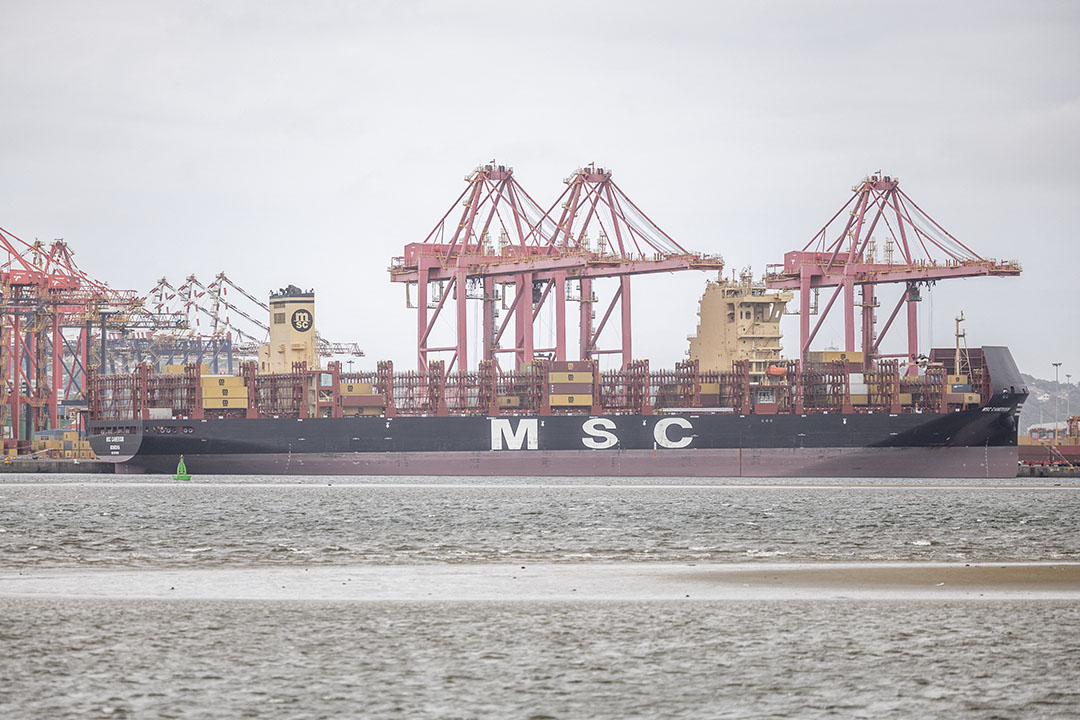
As more ships enter South African waters, the lack of naval financing and strategic guidance could be problematic
Since the waters of the Gulf of Aden and the Middle East are threatened by terrorism, military conflicts, blockades and piracy, large shipping companies have decided to use roads near the Cape of Good Hope in South Africa to better protect crews and cargo.
However, experts say that this increasing redirection of ships could expose some of the most important Achilles heels in South Africa’s maritime security. Two researchers from the Institute for Security Studies in Pretoria, Timothy Walker and Daniela Marggraff, participated in a round table hosted by the Institute at the University of Pretoria on March 31.
The subject was the Cape of Good Hope sea route. The conference attracted about 50 researchers, academicians and officials. Both researchers concluded that the government’s ability to properly direct actionable information on maritime security threats remains a major challenge.
They wrote in an article on April 29 for the Institute: « The increase in traffic expands the operational space for illegal activities, creating economic and security risks. As the number of ships increases and traffic modes change, surveillance and control requirements also increase and the detailed examination of maritime transport becomes more complex. At the same time, gaps persist in the pooling of information related to malicious activities. «
The main issues of maritime safety in South Africa focus on the prolonged lack of funding for naval and air forces and the severe constraints on capacity. The increase in ship traffic highlights the vulnerabilities that can be exploited by transnational criminal networks practicing smuggling, trafficking, illegal and unregulated fishing, and other maritime crimes.
Budget deficits have put pressure on the South African Navy’s ability to deploy and maintain its ships along the 4,000 km coastline. Similarly, the Air Force is short of aircraft assigned to maritime patrols.
In 2014, the government launched Operation Phakisa, an ocean economy initiative to improve maritime safety and security, among other economic objectives focused on shipbuilding and improving the efficiency of the country’s major ports. It started with strong support from the public but it lost its momentum over the years while giving little information on the status of the projects, or giving none.
A participant in the round table told DefenceWeb: « As far as I know, Phakisa still exists… my research on updating information and news has not been successful. «
The two researchers joined those who call for the completion of South Africa’s national maritime safety strategy. They also urge the government to empower the Maritime Safety Advisory Board to implement this strategy as the interdepartmental body responsible for conducting safety screenings, monitoring oncoming ships and coordinating national maritime responses.
« The monitoring of the Cape of Good Hope only in the event of a crisis reflects a vast underestimation of the oceans in South Africa’s strategic thinking and a recurring model of high-level limited commitment, » they write. Maritime issues must be better anchored at the heart of the government through clearer political ownership, supported by an Enhanced Maritime Safety Advisory Commission that implements a national maritime safety strategy and ensures the consistent participation of key ministries. «
Vice-Admiral Monde Lobese, Chief of Staff of the Navy, recently said that South Africa should not act alone, stressing the need for regional and continental collaboration.
He said at the sixth Symposium « Sea Power for Africa » held in Lagos on June 2 and 3: « Contemporarary maritime threats have an increasingly hybrid nature, combining conventional and unconventional tactics. This is why the protection of our seas is no longer a limited national concern, but a regional and continental imperative, and certainly indigenous to Africa. «
source : ADF magazine