An innovative underwater habitat is settling off the coast of Florida, ready to welcome researchers for extended missions. This project, after 18 months of development, aims to transform ocean research and prepare astronauts for extreme environments.
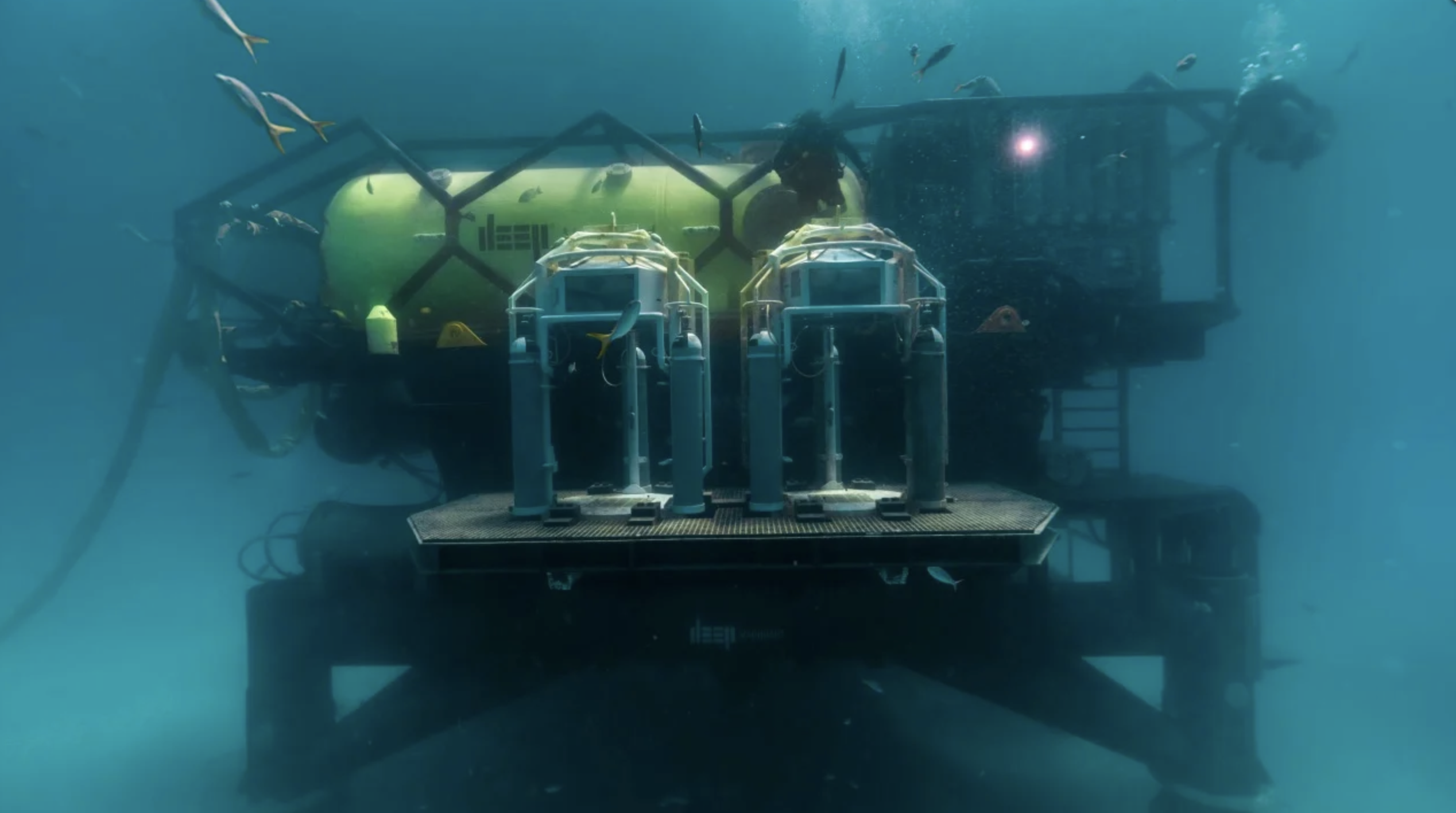
An underwater habitat has just landed at the bottom of the ocean, off the coast of Florida. This station the size of a school bus is preparing to host researchers for several days.
An underwater habitat settles 17 meters deep off the coast of Florida
Living and working in contact with a reef becomes possible without rising to the surface every day. According to the press release published on June 30, 2026 by DEEP, the Vanguard station now rests on the bottom, in a national marine sanctuary in the Keys. This British marine engineering company is signing a first here. It is the first human habitat deployed on the high sea in the United States in forty years. This installation marks a major step for ocean research.
The station now rests 17 meters deep, on a sandy bottom. Its habitable part is 10.7 meters long by 2.5 meters wide. It can house up to four aquanauts, these scientific divers who stay underwater for a long time. Each mission will last five days or more. The installation will have required eighteen months of design, construction and testing. The engineers first laid a foundation on the bottom, then lowered the habitat using a boat crane.
A buoy connected to the surface completes the device. It provides communications, breathable air and electricity supply. In this way, the station remains permanently connected to the outside world. The teams thus have everything they need to live at the bottom.
The station brings scientists closer to the coral reefs they are studying
Staying at the bottom for several days radically changes the way research is conducted. Until now, divers had to go up after each dive, which greatly limited their observation time. From now on, they will chain the readings without interruption. This continuity increases the volume of data collected on the reef.
The chosen site, called Tennessee Reef, is of major scientific interest. It is home to slow-growing corals and sponges characteristic of deep waters. Researchers will be able to continuously monitor the health of corals and the evolution of the ecosystem. In addition, this prolonged presence will help measure the effects of warming on these fragile environments.
This underwater habitat also paves the way for training in extreme environments
The uses of the station go far beyond the study of corals. It will be used to restore reefs, test new sensors and study human physiology under pressure. This work could shed light on clinical situations or other hostile environments.
The station will also host the training of future astronauts. Indeed, living confined to the bottom of the ocean reproduces many of the constraints of a space mission. Therefore, the teams will prepare to operate in isolated and high-risk environments.
Before opening its door, Vanguard still has to pass acceptance tests at sea and obtain its certification. Then, the first occupants will follow a dedicated training before their inaugural missions. However, this station is only the beginning. Its designers are already preparing a larger and more modular model, designed to permanently install humans under the seas.
source : science et vie