
For a long time, he crossed the Mediterranean like a discreet lord. Powerful, fast, almost invisible from the coast, bluefin tuna is one of those large marine animals that we think we know because they have entered the plates, auctions and conversations of fishermen. Yet, behind this familiar name hides one of the most fascinating fish in our seas: an extraordinary traveler, a symbol of power, but also a mirror of our sometimes excessive relationship with the Mediterranean.
A giant cut for the high sea
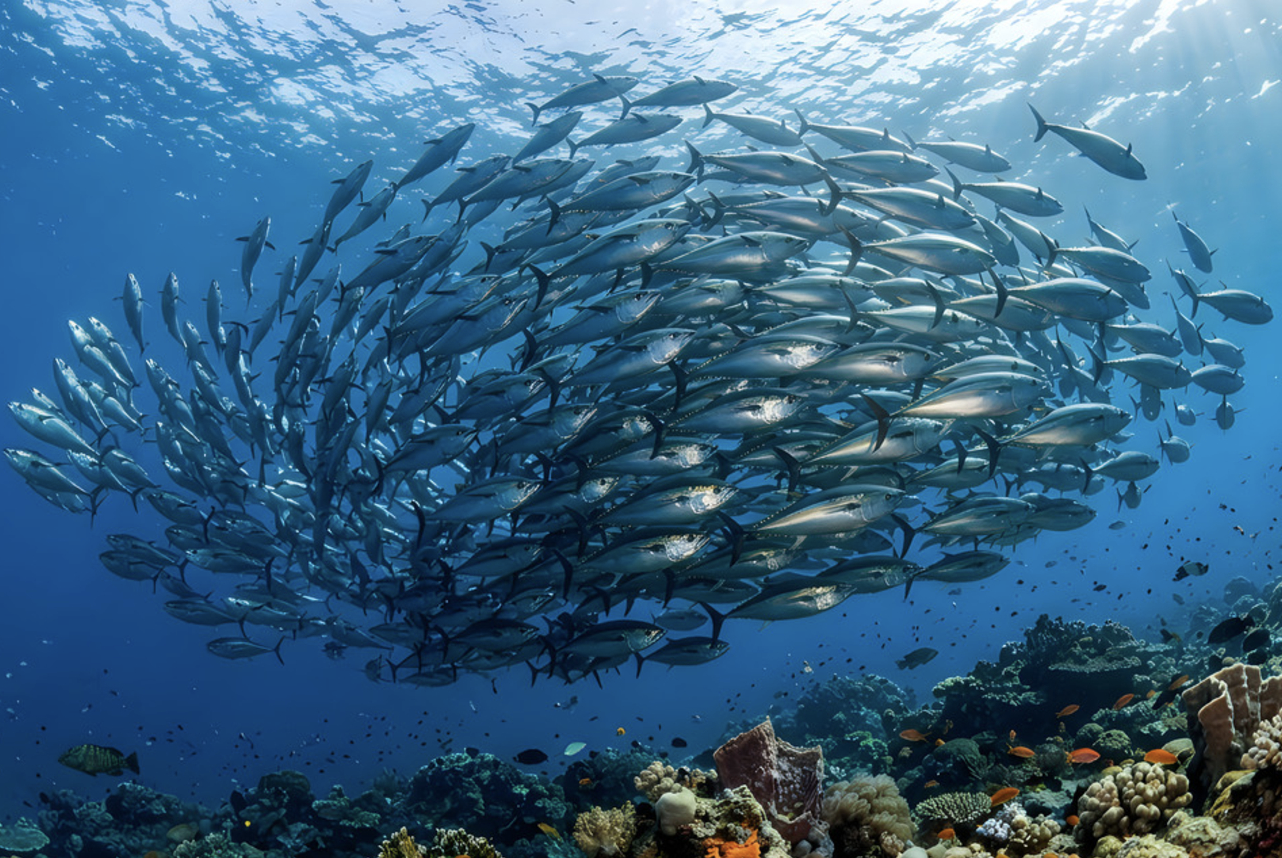
Bluefin tuna has nothing of ordinary fish. His body is a living torpedo, profiled to swallow the miles. It slits water with impressive power, capable of long migrations between the Atlantic and the Mediterranean, where it reproduces in particular. It is a fish from the wide, deep blue, open water. An animal that we guess more than we observe, except when the sea suddenly starts to boil under the hunts. His silhouette already tells his way of life: a dark blue back, silver flanks, dense muscles, continuous swimming. Where other species seem to belong to a coastal setting, bluefin tuna belongs to the road. It is made to cross, to continue, to disappear. This is probably what feeds its aura: bluefin tuna is not a fish that you cross at random, it is an apparition.
An old Mediterranean story
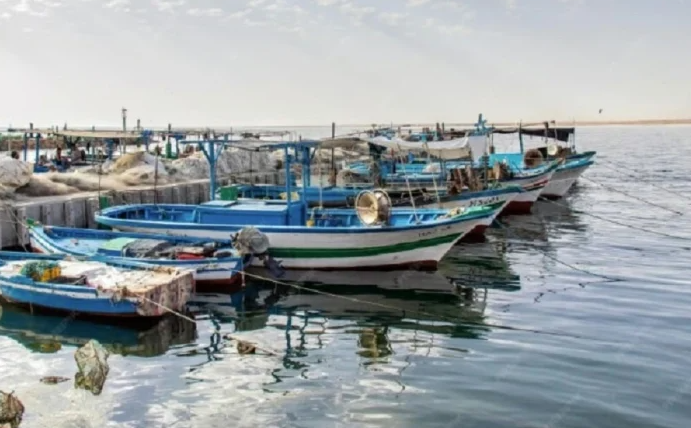
Long before being a luxury product, bluefin tuna was a story of season, know-how and patience. Around the Mediterranean, its migration has long punctuated the lives of fishing communities. We were waiting for him as we are waiting for a great passage. His arrival announced a particular moment of the year, almost a maritime scene in its own right. From the Spanish coast to Sicily, from Sardinia to some shores of North Africa, ancient tuna fisheries have shaped landscapes, trades and traditions. The madragues, these labyrinths of fixed nets installed on the fish routes, testify to this ancient relationship between men and large migrants. Bluefin tuna fishing was not only an economic activity: it was also a matter of a fine reading of the sea, currents, seasons and animal behavior.
This cultural dimension has gradually faded behind the more recent image of a globalized, listed, exported, monitored, sometimes controversial fish. But before being a market raw material, bluefin tuna was first a Mediterranean figure. A star of the depths, inscribed in the memory of the ports.
The fish that has become a symbol of excesses
The modern fate of bluefin tuna also tells a turning point. As international demand has exploded, especially for high-end markets, this large fish once familiar with Mediterranean roads has become one of the emblems of overfishing. In the 2000s, his image changed: the admired giant became a threatened species, subject to tensions between fishermen, scientists, NGOs, restaurateurs and quota managers. Bluefin tuna then concentrated all the contradictions in the Mediterranean. A sea intensely exploited but still rich. An old fishing tradition, but overtaken by industrial logic. A wild animal, but sometimes fattened in marine farms after capture. A precious but fragile resource.
This period has deeply marked the minds. Bluefin tuna has become a case study: that of a species capable of arousing both fascination, appetite, mobilization and anxiety. Few fish have so many have embodied, alone, the question of the limit.
A return, but not a blank-seing
Since then, the situation has improved. Management measures, quotas, catch control and follow-up efforts allowed the stock to show signs of reconstitution. This is good news, and even a form of revenge for a species that was sometimes believed to be close to the breaking point. But this return should not be confused with an invitation to forget the lessons of the past. Bluefin tuna remains a large predator, slow to renew compared to other smaller fish, and dependent on a complex balance between reproduction, migration, fishing pressure and sea condition. Its more visible presence in the Mediterranean does not mean that everything is settled. Rather, it recalls that strict management can bear fruit, provided that one remains vigilant.
This is perhaps where bluefin tuna is the most interesting today: it is no longer just the symbol of an announced collapse, but that of a possible rebalancing. Provided that he does not turn his return into a new rush.
An intact fascination in sailors
For boaters, sport fishermen or simple lovers of the sea, bluefin tuna keeps a place of it. Seeing him hunting on the surface is a rare and striking sight. The sea tightens, birds dive, small fish spring up, then these dark and fast masses appear that hit the water with raw energy. In a few seconds, everything disappears. Calm returns, as if nothing had happened. This dazzling appearance gives the bluefin tuna an almost mythological dimension. He recalls that the Mediterranean is not only a sea of coves, anchorages and postcards. It is also a wild space, traveled by large predators, crossed by invisible migrations, animated by a pelagic life that is too often forgotten from the shore.
In the nautical imagination, bluefin tuna belongs to this offshore Mediterranean: that of falling, currents, hunting, birds that betray the presence of fish, departures before dawn and returns to the port with stories bigger than the sea itself.
Rediscover bluefin tuna differently
The forgotten star of the Mediterranean now deserves to be looked at differently. No longer only as a trophy, nor only as an exceptional product, but as an emblematic animal of the big blue. A fish that connects ancient maritime cultures, the contemporary issues of fishing, gastronomy, biodiversity and the very simple emotion that the encounter with the wild. Bluefin tuna forces us to change scales. It reminds us that the Mediterranean is not limited to its ports, beaches and anchorages. Under its surface circulate giants, ancient roads, subtle balances. And among them, this powerful fish continues to embody a form of marine nobility.
It was almost reduced to a quota debate or a dark red edge on a stall. It is time to give it back its true place: that of a great Mediterranean traveler, witness of past excesses, but also of the ability of men to better deal with the sea when they agree to respect its rhythms.
source : lifestyle