

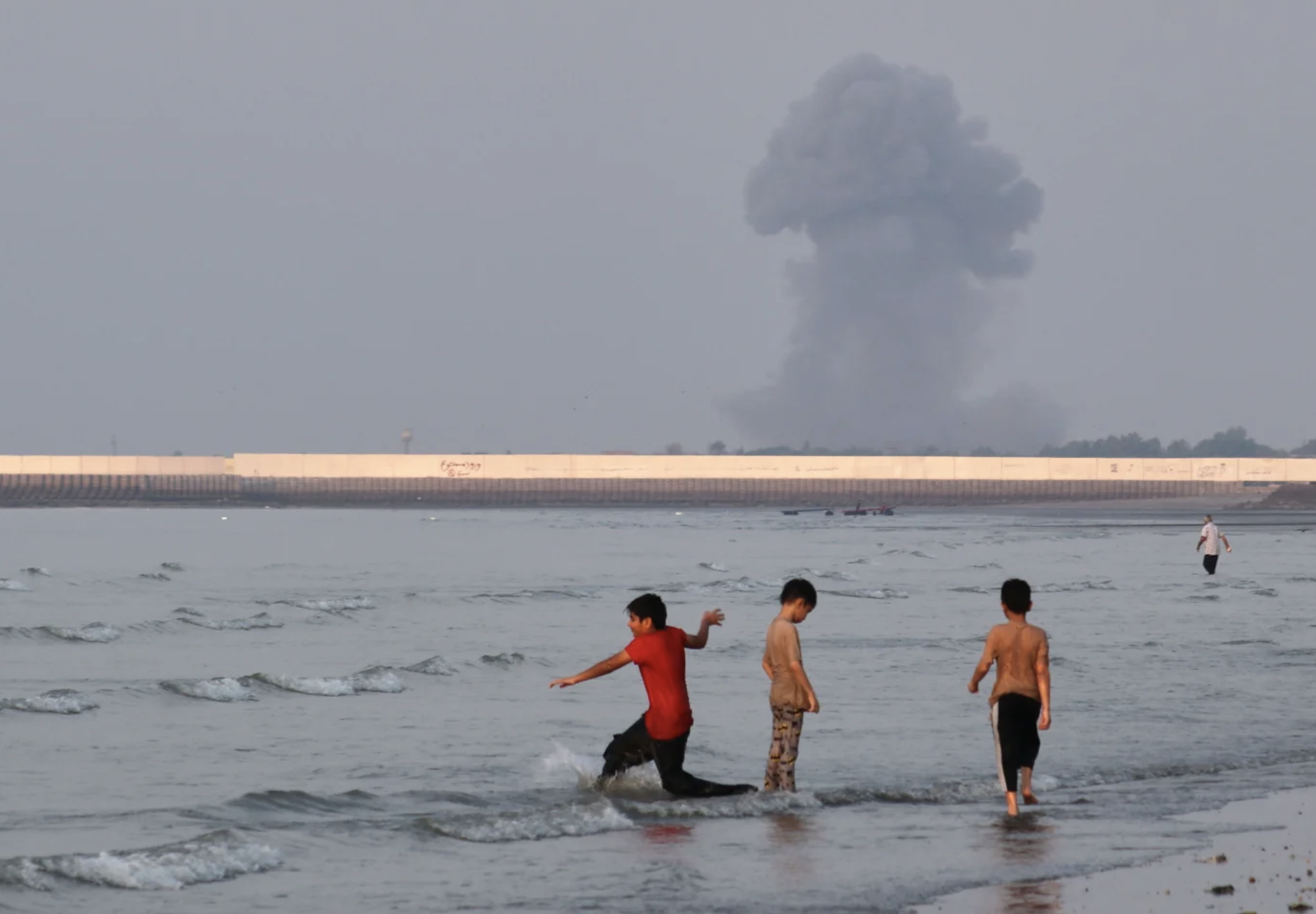
The United States launched new strikes against Iran on Tuesday evening and began blocking its ports again, Donald Trump, on the other hand, giving up taxing ships crossing the Strait of Hormuz, at the heart of the war.
The resumption of this maritime blockade at 4:00 p.m. Quebec time, as well as bombings, of unprecedented magnitude since the April ceasefire, undermine diplomatic efforts to make the memorandum of understanding signed on June 17 sustainable.
Iranian Deputy Foreign Minister Kazem Gharibabadi denounced the reimposition of the US naval blockade in the evening, believing that the Americans had « dismantled » the protocol, while Donald Trump renewed his threats against Tehran.
« Next week, it’s going to go really wrong for them, » unless they « sit down at the negotiating table, » he said on Fox News, referring to the possibility of bombing bridges and power plants in the country.
Consequence of this warlike climate and the quasi-paralysis of the strategic Strait of Hormuz: the price of a barrel of Brent, an international reference, had soared on Monday by more than 9% before slowing down its increase in the face of the announcement of the US president to renounce his project of a 20% tax on ships transiting there.
Like Tehran, which plans to charge for this passage, he said on Monday that he wanted to levy a fee in exchange for the protection of this sea route, in defiance of international law and the principle of freedom of navigation.
But in a message published on Tuesday on his Truth Social network, he backed down, replacing this project with « trade and investment agreements » with the Gulf monarchies.ALSO READ
« Socio-economic consequences »
On the ground, Iran reported all-round bombing throughout the day, then on the night of Tuesday to Wednesday, especially in Bandar Abbas and on the island of Qeshm, near the Strait of Hormuz, and in the city of Ahvaz.
This was the fourth consecutive night of American strikes. Donald Trump sent an official notice to Congress last week to report the resumption of the conflict, triggered on February 28 by Israeli-American strikes.
« It is certain that it does not feel good to see your country at war, » says Hossein, a 43-year-old salesman, to Tehéran. « But I think it is the natural right of every country to defend itself when its territorial integrity is attacked. »
Iran continued to retaliate by hitting American facilities, including a military base housing fighter jets in Jordan, the official news agency Irna said overnight.
Kuwait was also hit by Iranian strikes earlier Tuesday, injuring four Kuwaiti soldiers.
In and around the Strait of Hormuz, where maritime traffic has been reduced, several oil tankers have been attacked, killing at least two and injuring several since Monday evening, according to the International Maritime Organization.
In addition to the impact on global oil trade, the UN was alarmed on Tuesday by the « serious socio-economic and humanitarian consequences » of blocking this « essential crossing on which millions of people depend » for food, medicines and other basic necessities.
Ormuz, Gordian knot
The American president wants to put pressure on Tehran, which wants to keep his hand on the strait where he authorizes only one navigation corridor, along its coasts, through this resumption of the naval blockade.
During the previous blockade, launched in April in retaliation for the blockade of the strait by Tehran, Iran had not been able to export « a single barrel of oil », according to its chief negotiator, Mohammad Bagher Ghalibaf.
The operation had « played a decisive role in the conclusion of the memorandum of understanding », according to the Institute for the Study of War (ISW).
According to Barun Gupta, an analyst at the maritime security firm Vanguard Tech, the United States is « able to support ships » wishing to cross the strait without complying with Tehran’s rules, by « shooting down projectiles or advising them on the best times to cross ».
Israel has not yet taken part in the strikes, while the Lebanese front where Israeli troops are fighting pro-Iranian Hezbollah is experiencing a lull after a devastating war. Prime Minister Benjamin Netanyahu nevertheless warned Iranian leaders of a « much more powerful » response than earlier this year in the event of an attack.
source : le devoir