
Plastics from lobster fishing crossed part of the Atlantic Ocean before lashing on the islands of Faial and Pico, more than 3,000 km away. The oldest piece of plastic dates back to 1983.
Since 2010, researchers from the University of the Azores (source in Portuguese) have been monitoring waste from the sea, and they ended up seeing several objects that were repeated.
« We began to understand that these objects, which we did not know at first where they came from, had certain numbers. And when we started to see a lot of them, we tried to find out what they really meant, » explains Christopher Pham (source in Portuguese), researcher and head of the marine waste research group at the University of the Azores.
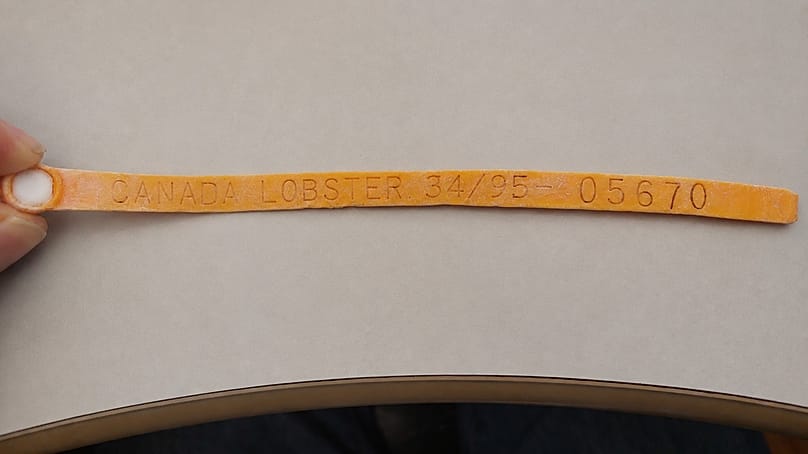
These objects actually came from lobster fishing, a sector that weighs heavily on the Atlantic coast of North America. The researchers also understood that the numbers present on some of these plastics were mandatory labels to identify their origin and date.
Thus began a study that mobilized scientists and volunteers.
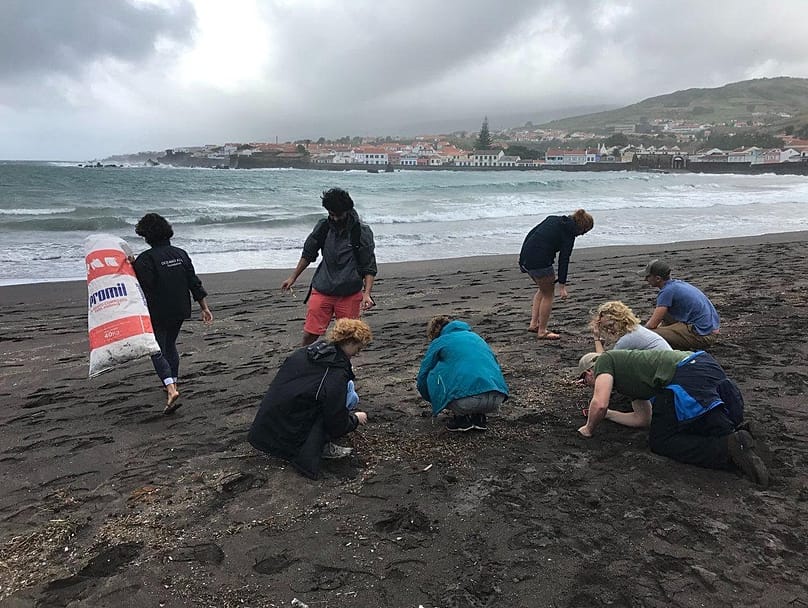
« We asked the people and other colleagues that, if they went to the beach and they could find these objects, they would bring them back, » says Christopher Pham. « We had at least ten people who were very interested and sent equipment every month. »
Between 2017 and 2025, they found more than 1,500 objects on Faial and Pico beaches.
These two islands are part of the Portuguese archipelago of the Azores (source in Portuguese), located in the middle of the Atlantic Ocean, about 1,600 km from the European continent.
Waste travels more than 3,000 km
These objects are elements or pieces of elements placed in the sea to catch lobster, such as corners and locker closures (cage-shaped traps), funnels or labels.

The labels whose inscriptions remained legible originated in the United States (63%) and Canada (37%). In the United States, the labels mainly related to the state of Maine (80%) and Massachusetts (11%). Canada’s labels refer to Newfoundland and Labrador province.
The study, published this summer, (source in Portuguese) highlights that it is an example of « an isolated oceanic archipelago directly exposed to plastic waste from coastal fishing that operates more than 3,000 km away« .
The fact that this waste makes a sea trip from the coast of North America to these Atlantic islands is not really a surprise to the researchers, but rather a confirmation. This displacement of debris had already been suggested by models showing the movement of currents, winds and waves.
« We know that this direct link exists and it was expected to receive particles from this area of the Atlantic, because the currents actually make this circulation in a clockwise direction, from west to east, » explains Christopher Pham, specifying that this study validates these models.
And, even if this study is limited to the islands of Pico and Faial, this waste can go much further, up to the European continent.
« These objects from lobster fishing are also quite common on the Portuguese coast and even in England and Ireland, » adds the researcher.
More than 40 years in nature
The researchers were also able to identify the age of some of this waste, because among them were labels bearing the year of registration.
Most labels are between 7 and 13 years old. The most recent dates from 2023 and the oldest from 1983, which means that it was placed in the sea more than 40 years ago. This shows that these plastics can reach the Azores in just two years and remain in the environment for many decades without fragmenting.
« Most of these objects entered the sea many years ago. This is also important, because it shows that plastic has enormous persistence in the environment, » says Pham.
« It is very likely that, if we continue to search, we will be able to find perhaps even older objects. Because these labels are made with very good quality plastic. »
Access to this information was possible because this North American industry requires that this material be labeled, even if the rules differ between the United States and Canada, for example in terms of information and validity period.
There is more waste on the beaches of the Azores
Lobster fishing is the most economically important fishing activity in the United States and Canada. In 2020, lobster exports from the two countries reached about 1.74 billion euros.
Estimates indicate (source in Portuguese) that each year 3 million traps are placed off the coast of the United States and 2 million in Canada to catch these crustaceans.
But lobster fishing is not the only one polluting the beaches of the Azores. There is more fishing waste on these beaches in the middle of the Atlantic, but they are less frequent and it is impossible to identify their origin.
« We found trawl nets, but a trawl net can be used in Greenland or Brazil. We no longer know where it comes from, » explains Cristopher Pham.
« Sometimes we find some traps typical of octopus fishing, but they are traps used from Spain to Morocco, they are not as specific as in the case of lobster« .
Other types of waste also arrive on these beaches, which can come from anywhere.
« We have never known so precisely the geographical location. Sometimes we have Chinese bottles, but we don’t know if they come from China. They probably come from a Chinese ship that was offshore and threw the bottle into the sea, » says Christopher.
In addition to bottles, there are also butts, shoe soles or lighters. But the most common waste is composed of small pieces of plastic, « a piece of white plastic of 2 centimeters », parts of an unrecognizable object.
« All these cities that spill a lot of plastic into rivers, » says Christopher Pham. « With the light and action of the sea, the plastic begins to fragment, then it forms this soup of fragments that entered the sea many years ago, but are no longer recognizable in their original form. »
Tackling the problem at the source
It is only by knowing the origin of these objects that it is possible to take action at the source to solve the problem. That’s why the labelling of fishing equipment, as in the lobster industry, is so important.
The Food and Agriculture Organization of the United Nations (FAO) (source in Portuguese) makes recommendations for the identification of the equipment used in fishing. Scientists at the University of the Azores emphasize the importance of adopting this practice.
The team responsible for this study also offers specific recommendations for the fishing industry in North America. These recommendations include better equipment management, incentives to hand over old equipment and the establishment of collection points.
For these researchers, the next steps are to carry out a more systematic analysis in terms of the density and volume of waste from lobster fishing.
« Try to understand whether this phenomenon is up or down and what is the real proportion of this waste in the overall landscape of plastic pollution, what is the contribution of these objects, » says Christopher Pham.
But they believe that the most important work has been done: alerting the authorities of the United States and Canada, so that they act.
« It is important that you do something to reduce this entry of plastic into the sea, because people who have nothing to do with pollution are victims of it, » concludes Christopher Pham.