

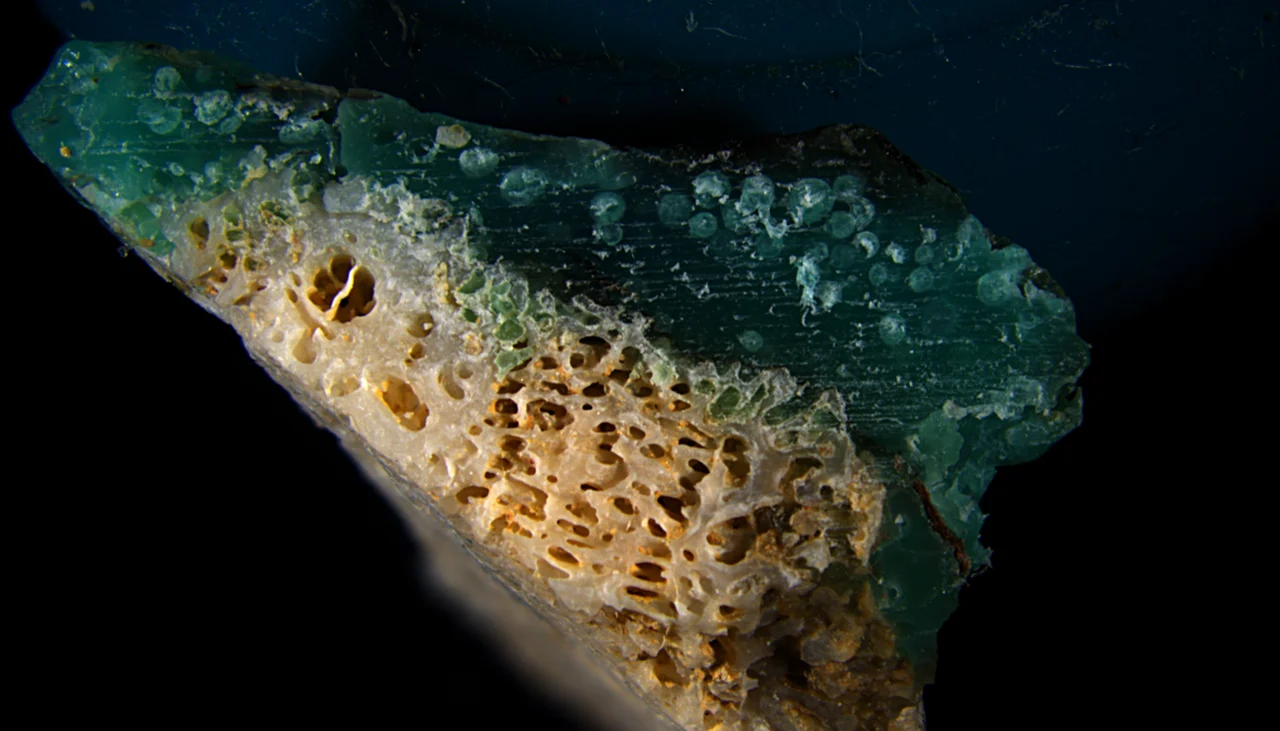
On the Japanese island of Okinawa, a region famous for its corals, scientists have discovered dead corals with which melted household plastic has permanently amalgamated. These « plasticorals » could, in the long term, threaten the fragile habitats of the reef.
Among the fragments of light coral drotting the beaches of Okinawa, researchers have discovered particles with remarkably bright colors. What, at first glance, resembled simple plastic waste turned out, after closer examination, to be an unusual combination of plastic and natural coral skeletons. This material was called « Plasticorals », or « plastic corals ».The lead author, Dr. Ifenna Ilechukwu, and the lead author, Professor James D. Reimer, introduced the term « Plasticorals » in a study published on September 4, 2026 in the scientific journal *Marine Pollution Bulletin*.
A research team from the Okinawa Institute of Science and Technology (OIST) and Ryūkyū University, also located in Okinawa, examined the samples under a microscope and using spectroscopic techniques. It was thus confirmed that molten polymers, from plastic materials commonly used in homes, had penetrated the fine pores of dead corals. Plastic and coral material had become impossible to dissociate.
Testimony of the plastic era
In theory, this phenomenon could be related to campfires lit on the beach. High temperatures can melt plastic waste, allowing the material to penetrate the porous coral residues. A possible source could therefore be waste burned without precaution. However, the exact origin of all the samples studied remains uncertain.
« plastiglomerates » are mixtures of plastic and natural materials, fused under the effect of heat. The « plasticorals » are a particular variant, because the synthetic material binds directly to coral skeletons.
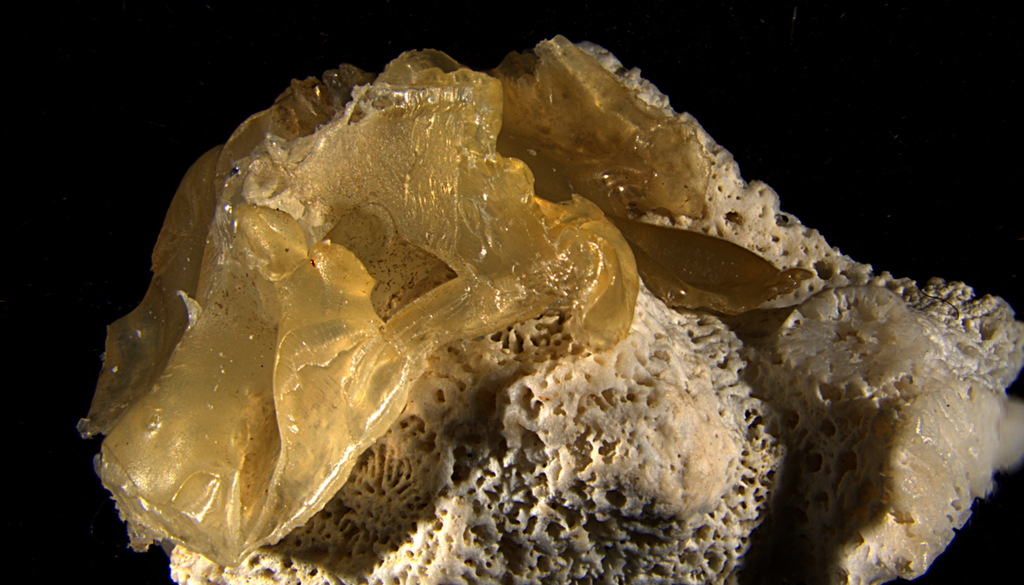
Discovery sites are located in the north of Okinawa, including beaches located within the Yanbaru Protected National Park. These discoveries demonstrate how much the residues left by man affect natural structures.
Since the 1950s, the production of plastics has increased sharply worldwide. Researchers are already wondering whether plastic deposits will be identifiable later in geological layers, as traces of human activity. To designate this era, the term « Plastic » has also been proposed.
Risks to fragile reef ecosystems
Coral debris plays an important role in the marine environment: it provides young corals with a stable surface on which they can grow, and creates protective cavities for small fish as well as other marine animals. If plastic corals were to end up in the water, it could introduce more plastic materials into habitats already weakened by climate change or human activity.
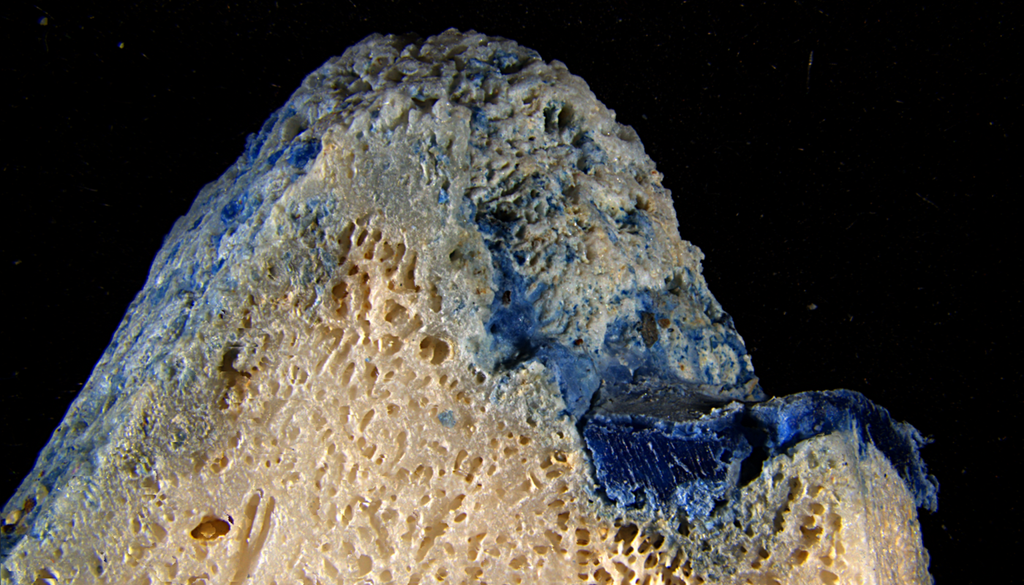
The concrete consequences that this would entail have not yet been clearly established. However, previous studies have shown that chemical substances released by some plastics can disrupt the reproduction of corals. In addition, plastic particles can carry pathogens and spread them within the food chain.
Further studies will have to determine whether plastic corals actually transmit these harmful substances to reef inhabitants and which organisms are therefore particularly exposed. However, this discovery highlights the fact that plastic pollution is not limited to scattered debris: it can be sustainably integrated into natural habitats and, potentially, alter their ecological function.


