
The G20 Summit: Africa Moves from Spectator to Key Player in Global Decision-Making
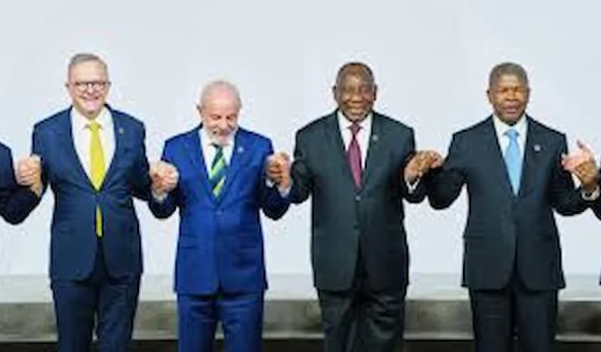
The G20 summit, held for the first time on African soil on 22–23 November in Johannesburg, South Africa, marks a turning point in global economic governance.
Under the theme “Solidarity, Equality, Sustainability”, the South African presidency emphasized a decidedly inclusive approach, placing the priorities of African and vulnerable countries at the center, according to the Mauritian news site lexpress.mu.
Indeed, the final declaration, infused with the spirit of Ubuntu – “I am because we are”, highlights the need for a more equitable global economic order, sending a strong signal to economies exposed to external shocks.
In the absence of the Trump-era United States, the G20 acknowledges the accumulation of geopolitical, climate, and financial crises, which particularly weaken low- and middle-income countries. The summit warns of rising capital costs, increasing risks of economic fragmentation, and the growing debt burden. Renewing commitment to the Common Framework appears crucial, as interest payments for poorer countries have doubled over the past decade.
Energy is another pillar of the declaration. In 2025, nearly 600 million Africans still lack access to electricity. To address this, the G20 pledges to triple global renewable energy capacity and double energy efficiency by 2030, relying on innovative financing mechanisms such as concessional loans, public guarantees, and hybrid instruments.
The summit also adopts a Critical Minerals Framework to strengthen the local processing of strategic minerals, aiming to avoid raw exports and secure global value chains. This measure is crucial for Southern Africa, as well as island economies dependent on connectivity.
Furthermore, leaders stress the urgency of socially inclusive growth, aiming to reduce the youth NEET rate by 5% by 2030 and decrease gender inequalities in the labor market by 25%.
Finally, the summit formally recognizes the African Union as a full G20 member and launches the G20 Africa Engagement Framework (2025–2030). This milestone makes Johannesburg not only a historic summit, but also a pivotal moment where Africa no longer merely hosts the world – it helps redefine it.
Source: L’économiste Maghrebin