

With the closure of the Strait of Hormuz and threats on the Suez Canal, a growing share of the world’s cargo runs along the continent. From Morocco to South Africa, a promising market is developing for ports and shipowners.
Day after day, maritime traffic on the outskirts of the African coasts is intensifying. Now, off the Cape of Good Hope, in South Africa, and in the deep-water ports of West Africa, the largest bulk carriers and tankers in the world cross and dock with their constant nonchalance.
Like last year, in April, when the MSC Diletta (owned by the Italian-Swiss shipowner, world number one), as long as four football stadiums and carrying nearly 23,000 containers, touched the port of Lomé, Togo. A first on the scale of the entire continent.
Accented movement
« On the roads of world maritime trade, a change is taking place, » notes Paul Tour-ret, director of the Higher Institute of Maritime Economy (Isemar) in Saint-Nazaire. Faced with instability in the Middle East, the routes along Africa seem to offer a refuge route for the main shipowners responsible for ensuring trade between Asia and Europe, which represents about a quarter of the total container traffic.
If the war in Iran, which began on February 28 by Israeli-American strikes, has further accentuated the effect of deportation to African routes, the disruption actually dates from the end of 2023 In addition to the Strait of Hormuz, of which 20% of the world’s oil is dependent, the Suez Canal located a few thousand kilometers away, also crystallizes many tensions. « It was after the first strikes by the Houthis of Yemen / rebels allied with Iran and Lebanese Hezbollah / on Western merchant ships in the Red Sea, at the entrance to the Suez Canal, in connection with the war in Gaza, that the first cargo routing took place two years ago, » reports the director of Isemar.
Too uncertain, the route was thus replaced by the route to the Cape of Good Hope, in South Africa. « From the Strait of Malacca, Malaysia, ships are now heading back to the southern tip of the African continent, to go up to the port of Tangier, Morocco, via Gibraltar, and reach Europe, » continues Paul Tourret.
In mid-2024, freight via Bonne-Esperance thus jumped by 89% compared to the end of 2023, compensating for the 70% fall in the Suez Canal, according to a report by the UNCCD, the UN organization for trade and development. In March 2026, bypasses reached up to + 116% in one day and +35% on average over seven days. A very bad time for Egypt, while the fees of the Suez Canal, where 12% of world trade passes, constitute the third financial rent of the country.
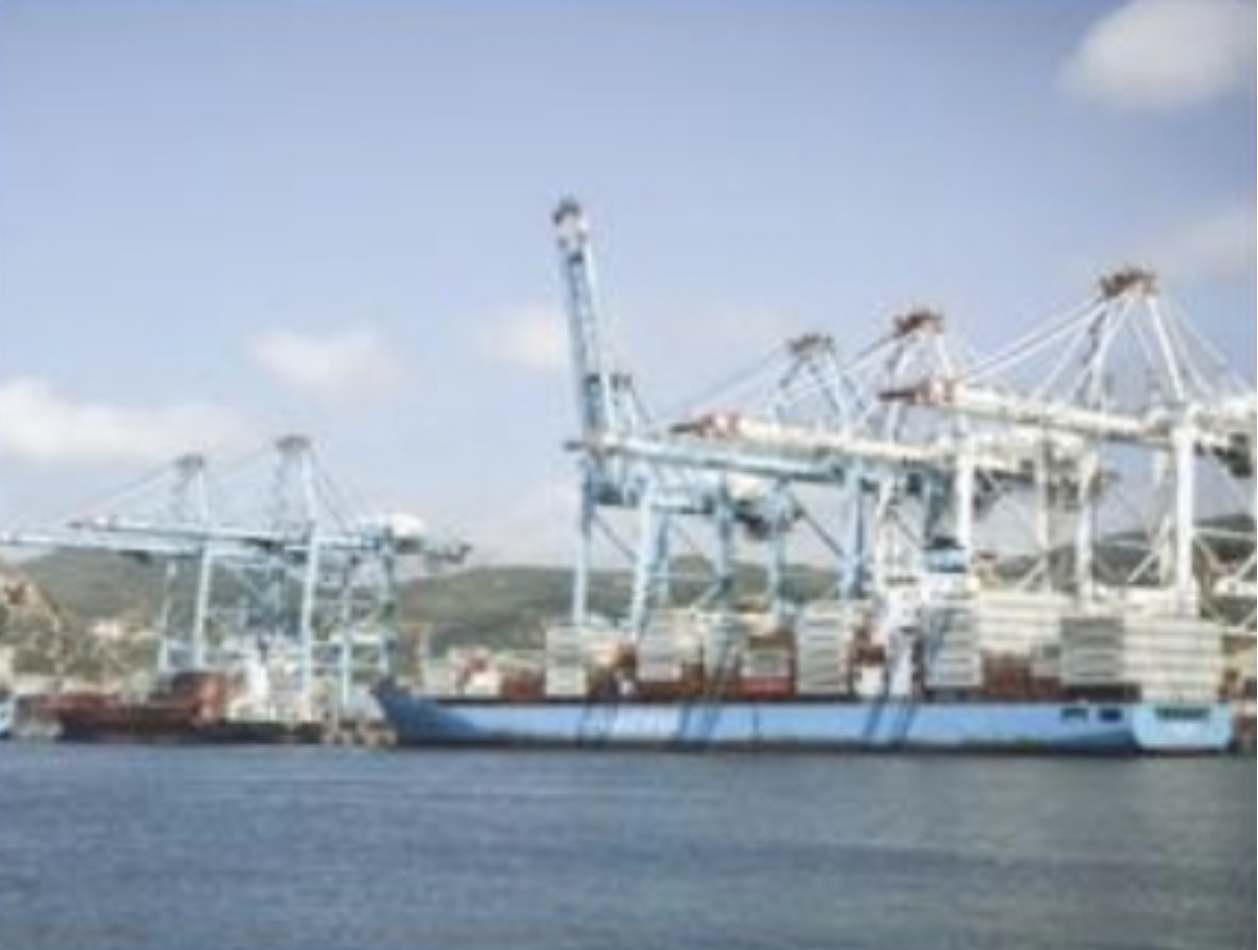
Conversely, the big winners of these new routes are the ports of West and North Africa. First of all, Tangier Med, Morocco. In two years, the port bordering the Strait of Gibraltar has recorded records: 11 million containers processed in 2025, compared to 10.2 million in 2024 and 8.6 in 2023.
Or an increase of 28%, « The Tanger Med hub has suddenly become the main receptacle of the large unions that transfer to smaller ships to Europe, » says Yann Alix, general delegate of the Sefacil Foundation, a think tank analyzing international maritime and port logistics. Freight carriers that used to unload some of their goods in Piraea, Greece, or Malta, at their exit from the Suez Canal, now do so in Morocco.
Long-term trend
For West African ports too, these contours by the Cape of Good Hope are a boon, according to Antonella Teodoro, economist for the specialized firm MDS Transmodal. « Ships don’t just go off the coast, they stop, refuel, run their staff, and ultimately promote the opening of new markets, » says the expert. In two years, the connectivity rate of African ports has greatly improved, from 65% in 2024 to nearly 70% in 2025. * We observe that West African and Asian countries are now able to process more directly, without necessarily going through the north of the continent or Europe, « she continues. The arrival of the MSC Diletta last year is a good example of this.
For ten years, the trend was already towards investment in West African ports and container terminals. The main shipowners are investing in the long term.
Recently, the CMA group Faced with insecurity in the Middle East, many ships from Asia pass directly through Good Hope and fuel the growth of West African ports.
CGM announced that it would take parts in the management of the Nador West Med terminal, in the northeast of Ma-roc, while MSC took control in 2022 of Bolloré Africa Logistics’ 16 container terminals and its railway tracks. Because land logistics, underdeveloped and sometimes little supervised, attracts the giants of maritime traffic. Ceva, a subsidiary of CMA CGM specialising in freight transport logistics, has announced its arrival in 2025 in Gabon, Guinea and Ghana. For its part, Maersk invests in storage, with a refrigerated warehouse,
The Belcon Cold Store,| in Cape Town (South Africa). « Africa is now part of the profitable routes for shipowners, » summarizes Yann Alix. The market is still confidential, they have the ability to gain very good margins on the control of the transport chain and many other segments. »

