

Cut off from many western ports and fishing grounds, russia is now looking closely at african waters. partnerships are being forged, agreements signed… promising the best for moscow, and potentially the worst for marine biodiversity.
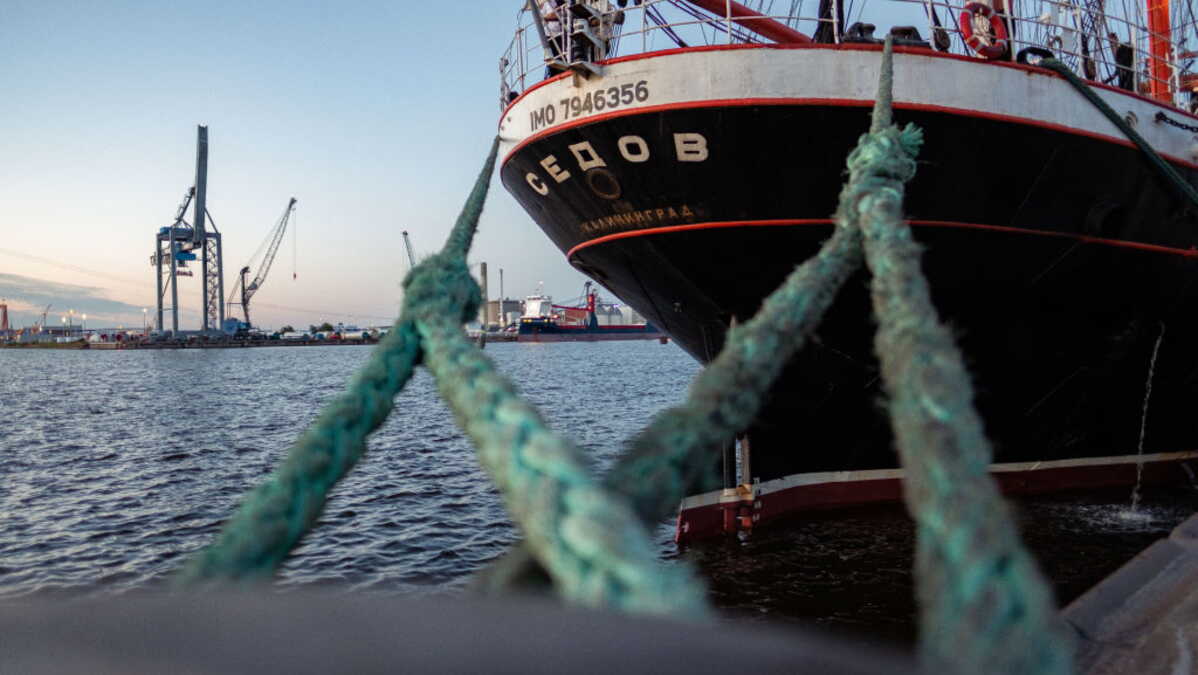
In 2024, three Russian vessels left the port of the Kaliningrad enclave for Africa as part of the “Great African Expedition.” Officially scientific, the mission aimed to map fish stocks alongside African researchers.
In reality, West Africa has become the global epicenter of illegal fishing, losing up to $9.4 billion per year in unreported or unregulated catches, according to estimates by the Financial Transparency Coalition. But behind the blessings, fanfare, and official photos lies Russia’s broader strategy of influence and resource capture unfolding in African waters.
Fish: a coveted African resource
Under severe economic sanctions since the invasion of Ukraine, Moscow has been working to forge new alliances across the continent’s 54 states: military cooperation and training, agricultural support (grain and fertilizers), arms deals — all reinforced by anti-colonial narratives aimed at counterbalancing Western influence. Russia, which has lost access to certain European ports (The Moscow Times) and U.S. fishing grounds (NOAA Fisheries) — with Donald Trump renewing the ban on Russian seafood imports imposed by his predecessor — is also eyeing the fishery resources of African countries.
“As we’ve seen with gold and other minerals, diamonds, and to some extent oil and gas, Russia sees an opportunity to expand its fishing in African Exclusive Economic Zones,” Joseph Siegle, senior researcher at the University of Maryland at College Park and specialist on Russian influence in Africa, told Bloomberg. “It is clearly ramping up its interest in Africa.”
Fishing, less publicized than the exploitation of gold, diamonds, or gas, represents a strategic asset: it generates billions of dollars in revenue for Moscow, which is modernizing its fleet and seeking new waters in which to operate. Africa — where seas are overfished but weakly monitored — offers the Kremlin a way to secure resources and strengthen political leverage in key regions.
Russia, a “reliable” fishing partner
Two of the Russian vessels that departed Kaliningrad in 2024 sailed through the waters of Mauritania, Morocco, Mozambique, and Senegal, signing agreements or entering discreet negotiations.
In Sierra Leone, Russia obtained access to 40,000 tons of fish per year and plans to deploy up to 20 vessels, with investments in ports and local infrastructure. In Morocco, Russian scientists observed healthy mackerel and sardine populations, paving the way for exploitation along the entire Atlantic coast.
Amid criticism directed at European and Chinese fleets — accused of depleting stocks and sidelining local communities (in June, Gabon ended its 18-year fisheries partnership with the EU, calling it “unbalanced,” according to RFI) — Moscow presents itself as the dependable partner.
“Our fishing companies are interested in cooperation on the African continent, and they are investing,” Kremlin spokesperson Dmitry Peskov told Bloomberg. “They will continue to invest.”
The figures are promising, notes the U.S. outlet: the global seafood trade is valued at more than $160 billion, and consumption is expected to surge by 80% by mid-century, driven by emerging markets and Asia. Thanks to this demand, Russian seafood exports are expected to reach $6 billion this year, helping offset the loss of Western markets.
A threat to local economies and biodiversity
But African waters are neither empty nor limitless. More than half the stocks from the Strait of Gibraltar to the mouth of the Congo River are biologically unsustainable, according to the Food and Agriculture Organization (FAO). Destructive trawling, overfishing, and massive extraction of juvenile fish threaten food security and the livelihoods of hundreds of thousands of artisanal fishers.
The arrival of the Russian fleet — parts of which operate with limited international oversight — heightens these concerns.
“The Russian fleet has never been particularly disciplined anywhere it operates,” Steve Trent, CEO of the Environmental Justice Foundation (EJF), told Bloomberg. “It tends to work in the shadows, with very little reporting on its activities.”
But for many African states, the Russian offer remains highly tempting.
Source: GEO