
American blue tech is crossing the Atlantic to test, in the Mediterranean waters off Nice, an underwater desalination process that drastically reduces energy requirements and brine discharge.
Seawater desalination is an age-old story. While Aristotle was already exploring the process more than 2,500 years ago, the first patent—intended for the English navy—was published in 1675, paving the way for numerous studies and innovations aimed at producing fresh water aboard ships.
Much water has flowed under the bridge since then, and water stress has become a critical issue for certain regions of the world. At the beginning of the 21st century, there are around 20,000 desalination plants in operation, producing 100 million cubic meters of fresh water every day from saline sources. That capacity has doubled in a decade and continues to grow by 6 to 12 percent annually, despite its well-known environmental and energy costs.
Some studies predict that by 2050 the sector could be responsible for emitting 400 million tons of CO₂. In response—and because desalination is seen as an essential tool in addressing the effects of climate change on freshwater availability—a new generation of companies is working to drastically reduce the process’s ecological and economic footprint.
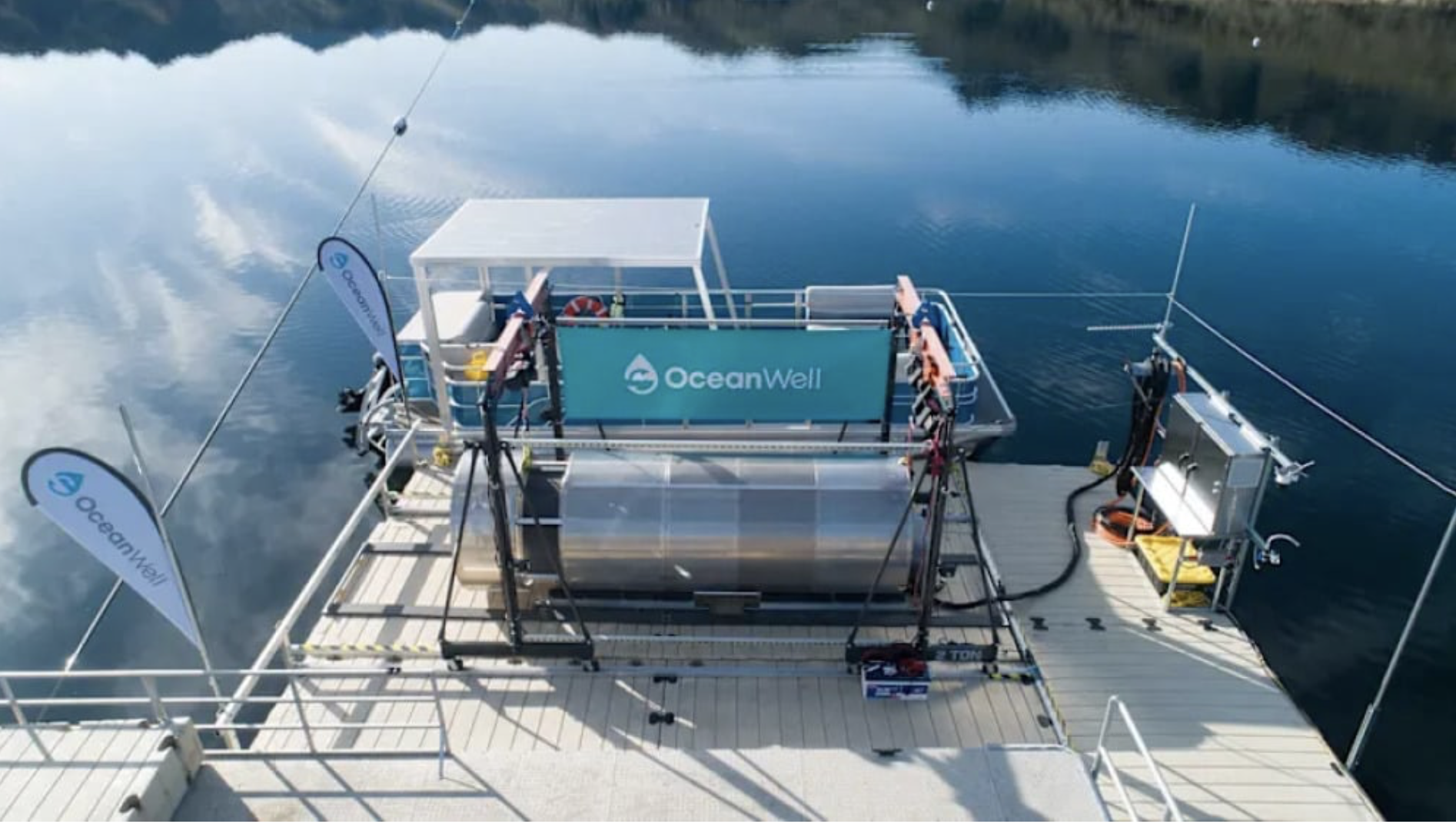
Among them is OceanWell, founded in 2019 in Los Angeles, which opened its European beachhead in Nice last October. The French Riviera capital offers several advantages, notably a unique marine topography, with deep waters located very close to shore—an ideal setting for the technology developed by the American start-up.
What sets OceanWell apart from its competitors is the installation of its modular “water farms” underwater, at a depth of 400 meters.
source : la tribune