

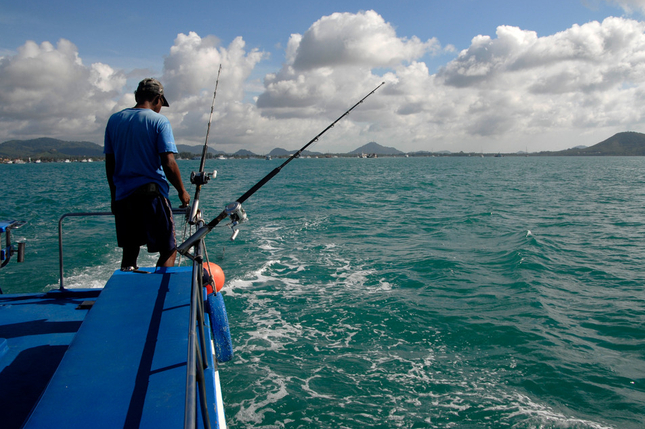
Bluefin tuna, swordfish, albacore, mahi-mahi: big-game fishing in the Mediterranean continues to be a dream, but the legal reality is much stricter than the image one might have. In France, recreational fishing is now governed by specific regulations, reporting requirements, minimum sizes, and, for certain species, outright bans. Between what the law still allows, what it severely restricts, and what it now prohibits, big-game fishing in the Mediterranean is no longer something to be taken lightly.
Big game fishing in the Mediterranean, in common parlance, refers to the pursuit of large offshore fish, particularly migratory species such as bluefin tuna, swordfish, and albacore tuna. These powerful species, capable of long migrations, have forged the spectacular reputation of this practice. However, in French waters, this image no longer fully reflects the regulatory reality. Today, not all iconic species can be freely fished, and some can no longer be targeted at all for recreational fishing. The first rule to remember is simple: recreational sea fishing remains non-commercial. The Rural and Maritime Fishing Code specifies that catches are intended for the exclusive consumption of the fisherman and his family. They cannot be sold, offered for sale, or knowingly purchased. The law also stipulates that recreational fishing must adhere to the same general frameworks as professional fishing regarding minimum sizes, seasons, zones, prohibitions, and conditions of gear use.
What regulations still actually allow in the Mediterranean
In 2026, bluefin tuna remains the flagship species for big-game fishing in the French Mediterranean, but it cannot be fished like any other fish. Its capture for recreational purposes is subject to a specific permit. This permit is issued on a vessel-by-vessel basis. The reference text published for 2025 already outlined this very strict framework, with only one application possible per vessel, the requirement to have the permit on board, and a total ban for vessels flying the flag of a country outside the European Union.
It is also important to understand that bluefin tuna is part of an international management system. ICCAT, the International Commission for the Conservation of Atlantic Tunas, is the organization that sets the main management rules for these migratory species in the Atlantic and the Mediterranean. For bluefin tuna in the Eastern Atlantic and the Mediterranean, this commission has set a total allowable catch of 48,403 tonnes for the period 2026 to 2028. Next, each state receives its share. France has a national quota of 7,833 tonnes for this area in 2026. This figure covers all authorized uses, not just recreational fishing. Within this French quota of 7,833 tonnes, a small portion is reserved for recreational fishing. In 2026, the French quota allocation decree provides for 78.3 tonnes to be collectively allocated to this practice. In other words, recreational fishing for bluefin tuna still exists, but it represents a very small fraction of the total volume authorized for France. This explains the particularly high level of control surrounding this species.
Bluefin tuna: what the law actually requires of recreational fishermen
For bluefin tuna, regulations don’t stop at authorization. When catch and retention is permitted, it comes with very specific obligations. The fish must be tagged. Landings must be declared to FranceAgriMer within 48 hours. The fisherman must also indicate the weight and length of the fish caught. Even if a fish is caught dead during a catch-and-release operation, a declaration is required. The minimum legal size for bluefin tuna in recreational fishing is set at 30 kg or 115 cm in length at the fork. This threshold is important because it shows that the regulations target not only the number of catches but also the protection of underdeveloped or under-grown individuals. However, caution is advised regarding the exact opening dates and detailed procedures for the 2026 recreational bluefin tuna fishing season. The annual decree published on Légifrance for 2025 set out a precise schedule and conditions, but I have not found, in the official texts published to date, the equivalent annual decree for 2026 detailing the leisure campaign with its opening dates. Therefore, we must avoid writing 2026 dates that are not confirmed by a published document.
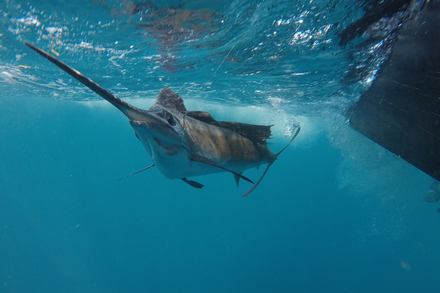
Swordfish and albacore tuna: a ban that completely changes the reality of big game fishing
This is the most important point for understanding the current situation in the French Mediterranean. Since the decree of July 8, 2025, recreational fishing for swordfish and albacore tuna has been subject to a three-year moratorium in French waters of the Mediterranean Sea. The text is very clear: the ban applies to both catch and release and catch-and-release fishing. In other words, these two species can no longer be targeted for recreational fishing in this area for the duration of the moratorium. This ban profoundly changes the situation. For a long time, swordfish was one of the species that immediately came to mind when discussing big-game fishing in the Mediterranean. This is no longer the case under the current French regulations. In the event of an accidental catch of swordfish or albacore tuna, the text also requires a declaration within 48 hours using a dedicated CERFA form.
Declarations, registration, marking: recreational fishing is much more closely monitored than before
Beyond the species themselves, regulations have taken another step forward with new reporting requirements. The Ministry of the Sea indicates that in the Mediterranean, all recreational fishers aged 16 and over must now register every 12 months, regardless of the species targeted, with the exception of shore fishers. For so-called sensitive species, catches must be reported daily. The Ministry
also specifies that in 2026, the sensitive species identified for the Mediterranean are bluefin tuna, red seabream, and mahi-mahi. It adds that the European RecFishing app, initially expected on January 10, 2026, was finally launched in France on February 12, 2026, due to a technical delay. This detail is important because it shows that the current framework is no longer based solely on outdated regulations, but also on a digital catch tracking system. Another fundamental requirement is the tagging of catches. The ministry reminds everyone that, to prevent poaching, each fisherman must mark his catch by removing the lower part of the caudal fin. This principle has been enshrined in law for several years and remains a cornerstone of the control of fish kept on board.
What the regulations also say about fishing gear and conditions
Big game fishing isn’t just about the targeted species. The methods used are also regulated. The Ministry reminds us that, for fishing from a boat, only certain gear is permitted, including rigged lines, two longlines limited to a maximum of 30 hooks each, two lobster pots, a harpoon, a landing net, or a dip net, with possible adaptations depending on the area. The Rural Code also specifies that electric line haulers or electric reels are permitted, up to a limit of three devices per vessel, each not exceeding 800 watts. This aspect is less dramatic than quotas or moratoriums, but it plays a significant role in enforcement. The legislation doesn’t only concern the species caught. It also regulates fishing methods, onboard equipment, and catch traceability.
What can be clearly written about big game fishing in the Mediterranean in 2026
The reality is therefore much more complex than the traditional narrative surrounding big-game fishing in the Mediterranean. In French Mediterranean waters, bluefin tuna remains the emblematic species still accessible for recreational fishing, but within a highly controlled framework, requiring authorization, quotas, tagging, minimum size limits, and declarations. Conversely, swordfish and albacore tuna are now prohibited from recreational fishing for three years, including catch and release.
In the Mediterranean, big-game fishing still exists, but it no longer embodies the fantasy of a widespread and unrestricted practice. It is a highly regulated activity, closely monitored, and its framework changes with each new annual decree and conservation measure. To write accurately on the subject, one must therefore start with current legislation and not with past practices or fishing stories from another era.
source : figaronautisme