
In the shipyards of Istanbul, a titanic project is taking shape under the watchful eye of President Erdoğan. MUGEM, Turkey’s future aircraft carrier, promises to redraw the map of global naval power by 2030. With its extraordinary dimensions and revolutionary technology centered on combat drones, this behemoth of the seas heralds a new era in maritime military strategy.
A giant that outclasses all its Mediterranean rivals
The dimensions of MUGEM are striking: 285 meters in length and 72 meters in width, with a displacement of more than 60,000 tons. These figures immediately place Turkey’s future aircraft carrier ahead of France’s Charles de Gaulle, which, at 261 meters and 42,500 tons, had until now reigned supreme in Mediterranean waters.
This dimensional superiority translates into exceptional operational capabilities. According to Turkish engineers, the ship could complete a round trip from Istanbul to New York without requiring refueling. This remarkable endurance is the result in particular of hydrodynamic innovations, including a redesigned bow that is said to reduce energy consumption by 1.5%.
Future aviation at the heart of the design
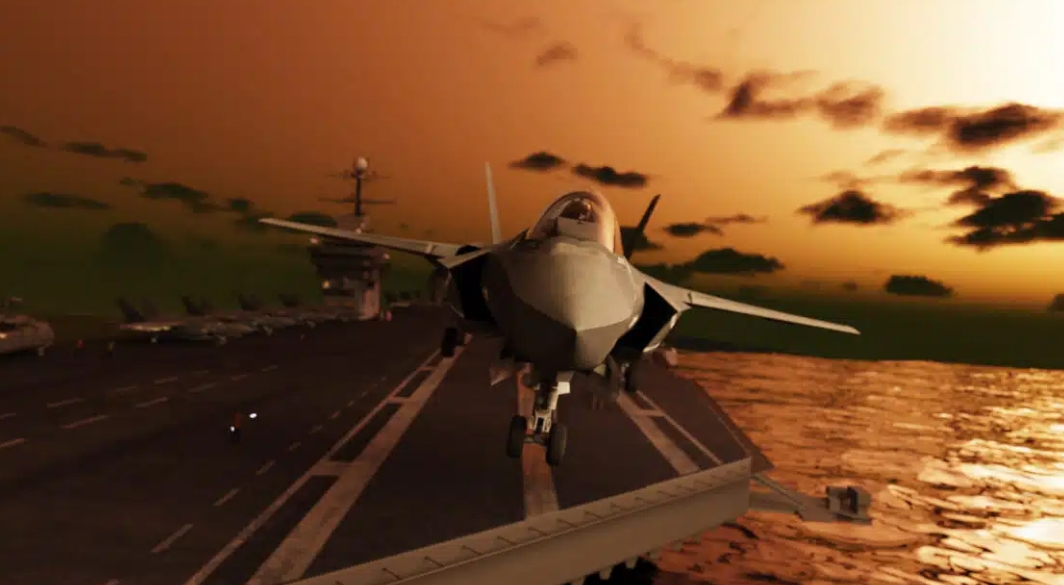
Unlike traditional Western aircraft carriers, MUGEM was designed from the outset to massively integrate combat drones. This forward-looking approach places Turkey at the forefront of new naval doctrines, in which unmanned aviation plays an increasingly important role.
The flight deck will accommodate around fifty aircraft, combining conventional fighters and next-generation stealth drones, reports Le Figaro. Among the latter are the Kızılelma and the ANCA-III, developed by Turkey’s defense industry. The light fighter Hurjet, in its navalized version, will complete this hybrid air wing.
Technological independence as a driving force
Turkey’s ambition goes beyond military performance alone. Ankara proudly claims that more than 80% of the components will be produced on national territory. This approach reflects a strategy of technological and industrial independence, reducing reliance on traditional foreign suppliers.
This production autonomy is part of a broader drive for technological sovereignty, in which Turkey seeks to control the entire value chain, from design to maintenance—an undeniable advantage in a sector where technology transfers remain highly sensitive.
The “Blue Homeland,” an expansive maritime doctrine
MUGEM fits into the strategic doctrine of the “Blue Homeland” (Mavi Vatan) promoted by Recep Tayyip Erdoğan. This geopolitical vision aims to extend Turkish influence across a maritime arc stretching from the eastern Mediterranean to the Red Sea, via the Black Sea.
This projection of maritime power accompanies Turkey’s regional ambitions, as it seeks to play a greater role in the geopolitical balance of the Mediterranean basin. The aircraft carrier will complement a fleet already strengthened by the TCG Anadolu, which entered service in 2022, and the future TCG Trakya, currently under construction.
An ambitious timeline amid growing competition
With a launch expected between 2027 and 2028 and entry into service around 2030, Turkey is preparing to join the very exclusive club of naval powers capable of designing such vessels. At present, only the United States, Russia, France, and China possess this technology.
However, this Mediterranean supremacy could be short-lived. France’s future PANG aircraft carrier, with a projected displacement of 75,000 tons in the following decade, promises to reclaim the title of the region’s most imposing aircraft carrier. The race for naval armament is only just beginning.