
GTT leaves the ship and attacks the land in China.
For decades, the French GTT (Technigaz and Gaztransport) has ruled the world of LNG tanks thanks to its expertise acquired in the design of tanks, which allow these giants of the sea (sometimes more than 200,000 tons anyway) to limit the losses of their precious cargo as much as possible: Liquefied Natural Gas (LNG).
Today, French technology is so popular that the company is about to take a strategic step: bring it to the mainland near a liquefaction plant!
A first step towards a new adventure that could take French very, very far.
A first for GTT which will experiment with its membrane technology developed close to an LNG liquefaction plant on land
The contract announced on April 8, 2026 marks a fundamental turning point for GTT since the latter was selected by Beijing Petrochemical Engineering Co., Ltd., in cooperation with Shaanxi Yanchang Petroleum & Natural Gas Co. Ltd., to design an land LNG storage tank.
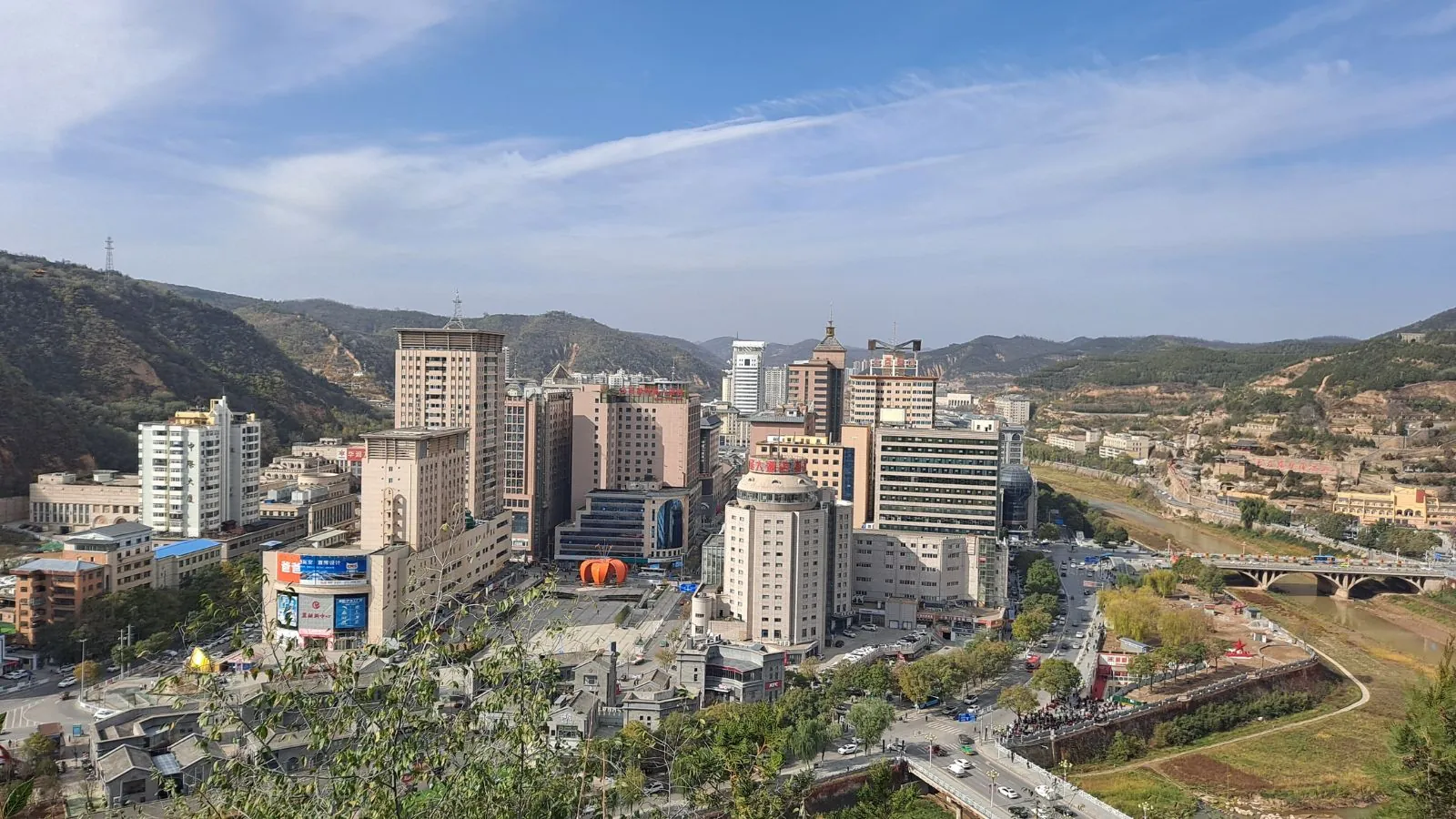
This reservoir, with a capacity of 10,000 m³, will be installed at the Yangjiawan liquefaction site, in the city of Yan’an (Shaanxi province).
On paper, this may seem modest compared to the gigantic LNG tankers capable of transporting up to 200,000 m³. However, this project marks a real milestone in the company’s history.
This is the first time that GTT membrane technology has been deployed in the immediate vicinity of a land-based liquefaction plant.
GTT leaves its historic playground, the sea, to enter that of energy infrastructure on land.
Why this small 10,000 m³ reservoir marks a strategic turning point
In the LNG industry, not everything is played only on a large scale. In recent years, a new trend has emerged: that of compact, more flexible, faster to deploy liquefaction units.
Unlike large coastal terminals, these facilities must deal with:
- significant space constraints
- maximum energy efficiency needs
- high safety requirements
In this context, conventional reservoirs show their limits.
The choice of a membrane tank for a terrestrial installation therefore responds to a clear logic: do better with less space.
A technology capable of doubling thermal performance
The heart of this contract is based on a key innovation: GST® technology (Total Integrity Membrane) developed by GTT.
The latter is intended to limit cold losses in an environment where LNG is stored at about –163 °C.
Thanks to an advanced insulation design, this technology allows:
- a thermal performance up to twice as high as traditional terrestrial reservoirs
- a significant reduction in evaporation losses (in English boil-off gas)
- better storage stability
Added to this is an often underestimated element: integrated monitoring.
The system includes real-time monitoring tools that make it possible to monitor the state of the tank, anticipate anomalies and optimize operation.
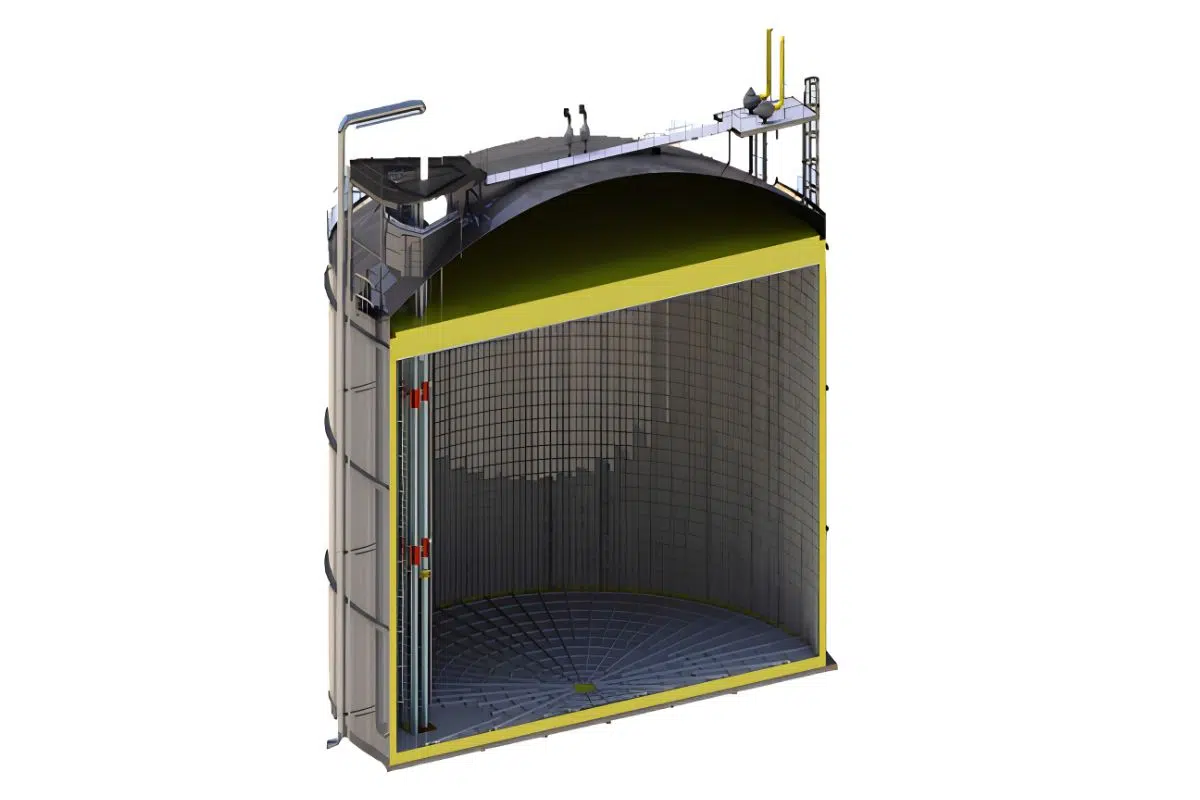
GTT has developed GST® technology, derived from the Mark III membrane, which has been recognized for its reliability for more than 60 years. This solution adapts to different storage capacities while respecting the highest international security standards.
China, the LNG of tomorrow’s life-size laboratory
Unsurprisingly, like everything related to energy, China is now one of the engines of global LNG growth, with an energy strategy based on several pillars:
- diversification of energy sources
- reduction of dependence on coal
- development of more flexible infrastructures
In this context, projects such as Yangjiawan play a key role.
They make it possible to test new industrial formats, more adapted to local and regional needs.
For GTT, it is a major strategic opportunity because succeeding in China is validating a technology in a demanding market that can open the door to a similar project multiplication and ultimately anchor the company in the land LNG value chain
In other words, this contract could well be the first in a series.
GTT expands its playing field
Until now, the GTT model in this market was mainly based on one principle: to provide cryogenic containment technologies for ships.
An extremely effective model, based on technological licenses with high margins.
With this project, GTT is beginning to integrate into the infrastructure itself, which should open the doors to a much wider potential market (land storage, small units, regional hubs).

World leader in the design of tanks for LNG, the French GTT has also confirmed its importance for innovation in France with 68 patents filed in 2025.
A LNG market in full global acceleration
According to Shell, global demand for LNG could increase by almost 60% by 2040, driven by several very concrete factors: Asian economic growth, the decarbonization of heavy industry, but also the explosion of energy needs related to artificial intelligence and data centers.
The projections now suggest a consumption of between 630 and 718 million tons per year, compared to 407 million tons in 2024, a year marked by very limited growth for lack of new capacities.
To meet this demand, more than 170 million tonnes of additional production are expected by 2030, mainly in the United States and Qatar. The United States alone could reach 180 million tons per year, or almost a third of the global supply.
In this context, Europe also continues to strengthen its imports to secure its supplies. In other words, every new infrastructure, even of intermediate size like that of Yangjiawan, is part of a global mechanic where every cubic meter counts.
It should also be noted that another Frenchman than GTT is interested in this form of energy since TotalEnergies ranks 3rd in the world on the LNG market in 2025, with 44 million tons sold (Mt/year), behind Shell and QatarEnergy.
GTT no longer only plays on LNG: the discreet turn to digital
Finally, let’s add that GTT has embarked on a profound transformation of its activities in 2025 with the acquisition of the Danish company Danelec, specialized in the collection and analysis of embedded data.
Result: GTT is no longer content to contain gas, it begins to pilot the performance of ships in real time. With its digital platforms (Ascenz Marorka, Vessel Performance Solutions), the group now covers more than 17,000 ships worldwide and helps shipowners reduce their fuel consumption, anticipate breakdowns and respond to growing environmental constraints.
Clearly, the company has undertaken a diversification of its activities so that it is no longer confined to its « simple » role as a supplier of tanks for Ln tankers.
source : Média 24