

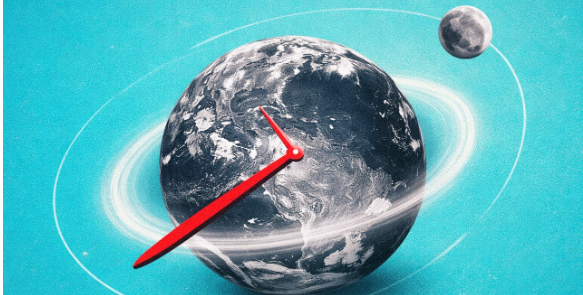
Climate change isn’t just melting glaciers; it’s also altering the Earth’s rotation. According to a new study, the redistribution of water across the planet is lengthening the days at a rate unseen for at least 3.6 million years!
If humankind has fixed thedurationFrom one day to 24 hours , the Earth’s rotation on its axis is not, however, perfectly regular like a metronome. Numerous studies have revealed that since the formation of our planet, the length of days has varied considerably, noticeably lengthening due to the Earth’s gradual movement away from the Sun.Moonandtidal forces.
These gravitational effects cause the Earth’s rotation on its axis to slow down by about 1.7 milliseconds per century. This isn’t enough to change our timekeeping system. A small correction is simply needed from time to time to « re-synchronize » our clocks with reality.
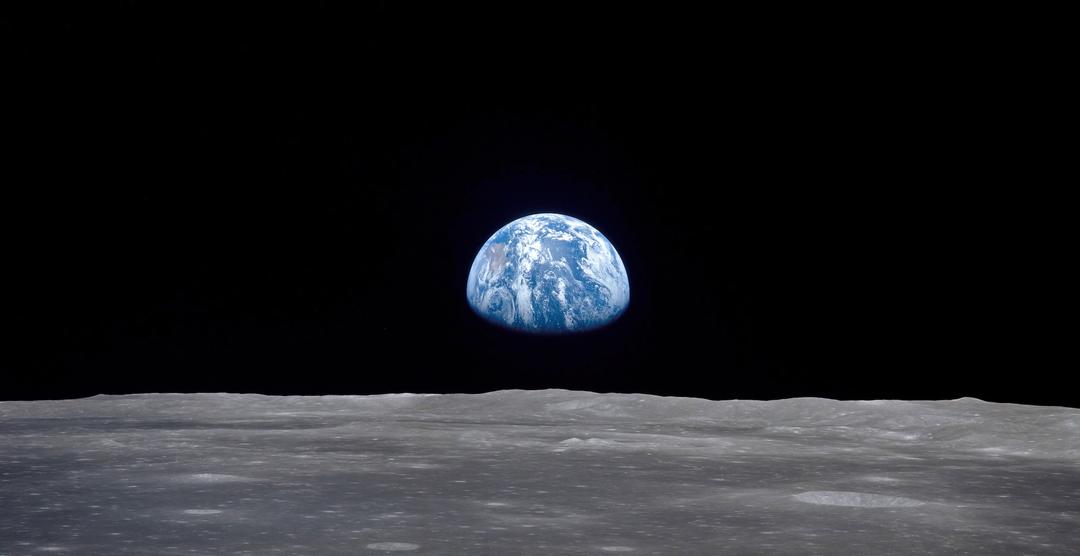 The Moon, through the effect of tides and its gradual movement away, is progressively slowing the Earth’s rotation. © TOimages, Adobe Stock
Day length: the influence of internal dynamics and climate
Besides the Moon , other factors can disrupt the length of an Earth day. The planet’s internal dynamics and plate tectonics can indeed have minor effects, as can climate change, themovementcontinents, as well as thecast ironor the formation ofice caps do indeed modify the distribution ofmassesterrestrial, which very slightly alters the rotation of the planet.
However, the effect of current global warming is far from negligible. Previous studies have calculated that between 2000 and 2020, the redistribution of water mass due to the melting of polar ice caps and glaciers lengthened the days by a significant amount.speedof 1.33 milliseconds per century.
But is this rate abnormal compared to the variations that the Earth has experienced in the past during periods of natural global warming?
The evolution of day length as observed in the shells of marine microorganisms
» What was unclear was whether there had been periods in the past when the climate had increased the length of the day so rapidly , » explains Mostafa Kiani Shahvandi, a researcher at the University of Vienna.
To answer this question, which aims to quantify the impact of current climate change on global Earth systems, a team of researchers explored fluctuations in day length over the last few million years. To do this, they analyzed the fossilized remains of tiny marine organisms called foraminifera.
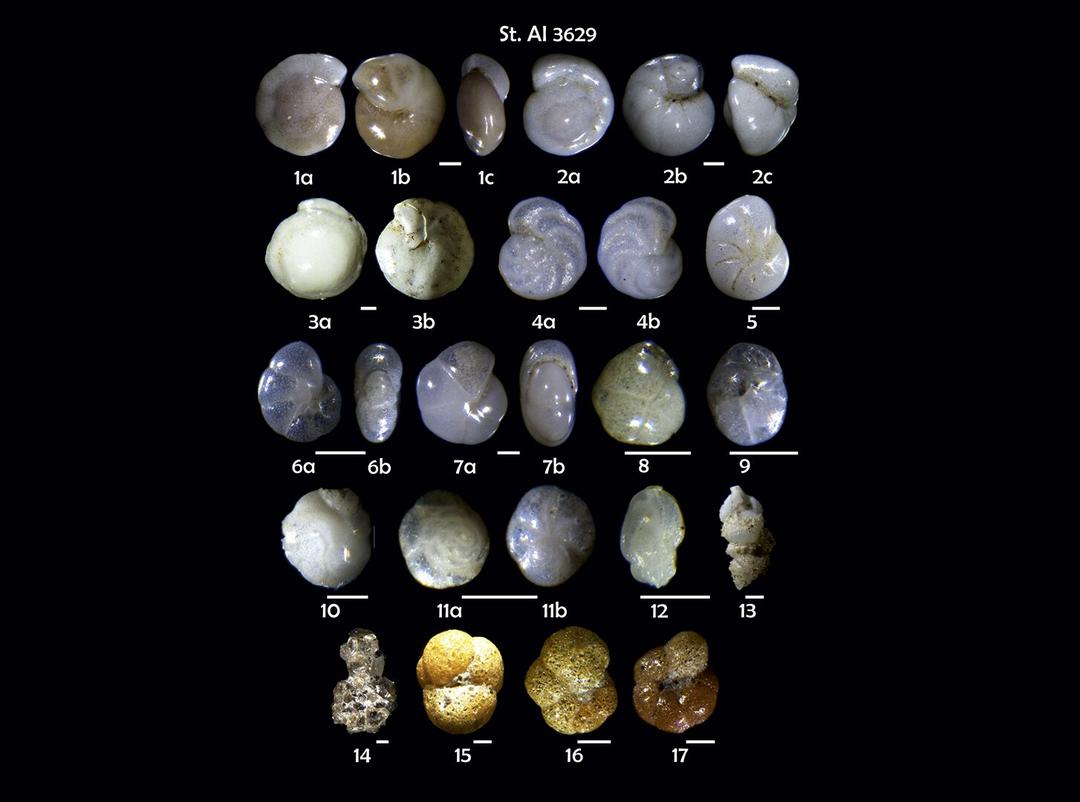 The composition of foraminifera shells helps to reconstruct the evolution of day length over time. © ETH Zurich
Foraminifera aremicroorganismssingle-celled organisms that build shells limestoneelaborate, which are called tests, based on thecalcium carbonate(CaCO3 ) present in seawater. However, the oxygen composing these carbonates can be represented byisotopesdifferent. The 16O / 18O ratio in the tests will also depend on two main factors: the water temperature and the amount of water trapped in the ice sheets.
Indeed, when glaciers form, they preferentially trap « light » water composed of the isotope 16 O, which leads to an enrichment in 18 O in the ocean and therefore in the tests of foraminifera.
When glaciers melt (and sea levels rise), the 16O returns to the oceans and the 16O / 18O ratio in the tests changes. This isotopic ratio is therefore said to be a » proxy « rather reliable for estimating thevolumeice and therefore sea level at a given time. From these parameters, it is then possible to calculate the length of the day .
Will the effect of global warming soon be stronger than that of the Moon?
The results of the analyses andmodelingProbabilistic studies, published in the Journal of Geophysical Research , have thus shown that during theQuaternary(that is, over the last 2.6 million years), the cycles of growth and melting of continental ice have led to significant variations in day length. But the values measured since the beginning of the 21st century have nothing to do withmatterrates compared to those observed over the last 3.6 million years.
The changes since the 2000s have indeed been much more rapid and reveal the unprecedented impact that human activities have on Earth’s climate. And the effect is not about to stop; on the contrary. By the end of the century, the influence of climate change on the length of the day could even surpass that of the Moon!
source : futura sciences