(Ecofin Agency) – In Ghana, livestock contributes 13% to agricultural GDP. In a context where the government wants to revive poultry farming and accelerate the development of aquaculture, the need for animal feed is expected to continue to grow.
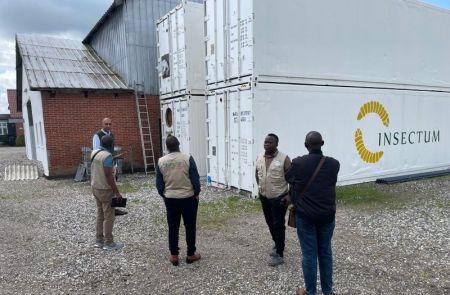
The Danish biotechnology company Insectum ApS, specialized in the production of proteins for animal feed from organic waste, is preparing to launch its first commercial facility in Ghana.
According to information relayed by international media, this new project will be carried out as part of a tripartite partnership concluded on March 4 in Accra with its compatriot Michael Bundgaard Holding and the Ghanaian company JSO Waste, specialized in recycling and recovery of waste.
“At Insectum, we are very excited to form our first franchise partnership in Africa, and we are particularly proud to do so with JSO and Michael Bundgaard Holding, companies with which collaboration has become natural from the start,” said David Munk-Bogballe, Managing Director of Insectum ApS.
With a total cost of 2.5 million euros ($2.9 million), the future plant will be able to treat 8,000 tons of organic waste per year, transforming these flows into protein for fish and poultry, as well as organic fertilizers for agriculture. For the time being, the details regarding the start of the work and the location of the site are not yet known.
Towards reducing the production costs of animal feed?
The peculiarity of Insectum lies in its innovative technology based on the breeding of black flies (Hermetia illucens). The larvae of this insect consume organic waste and transform it into rich protein and lipids, ideal for animal feed. The residues serve as natural fertilizers, supporting local agricultural production while reducing the environmental footprint.
The project responds to a strategic need for Ghana, which seeks to revive its poultry sector and develop aquaculture. According to the FAO, black soldier fly flour is a sustainable and less expensive alternative to conventional fish meal traditionally used in fish feed in aquaculture farms.
In a report published last January, the World Economic Forum (WEF) stressed that in Africa, restrictions related to fish feed lead to aquaculture production costs 10% to 20% higher than the world averages. “These high costs are due to dependence on conventional fish foods, imported due to limited local production capacity, and composed of soy cake [also essential for human consumption] and fishmeal [extracted from fish caught in the wild],” explains the WEF.
In this context, the prospect of reducing the production costs of fish feed made from black soldier flymeal should support the growth momentum observed in the Ghanaian aquaculture industry in recent years. According to data from the Ministry of Fisheries and Aquaculture Development, aquaculture production in Ghana has almost doubled, from 52,360 tons in 2019 to 100,000 tons in 2023. With this significant jump, aquaculture currently accounts for nearly 20% of total fish catches, estimated at 484,412 tons in 2023.
On the poultry side, the high cost of producing animal feed is also considered one of the main obstacles to the development of local industry. According to the U.S. Department (USDA), Ghana produced only 60,000 tons of chicken meat in 2023, or only 18% of the total consumption that was estimated at 330,000 tons this year.
With its project in gestation in Ghana, Insectum ApS and its partners are looking to position themselves in an animal feed market, destined to grow with the government’s desire to increase poultry and aquaculture production in the coming years.
source : agence ecofin