
Chairman of the Ho Chi Minh City People’s Committee Nguyen Văn Duoc used a coordination meeting with local departments to reiterate the city’s strong commitment to fighting illegal, unreported and unregulated (IUU) fishing and securing the withdrawal of the European Commission’s (EC) « yellow card ».
In line with the recommendations of the EC, the city simultaneously deploys numerous solutions to manage the fishing fleet, control the origin of products and sanction infringements.
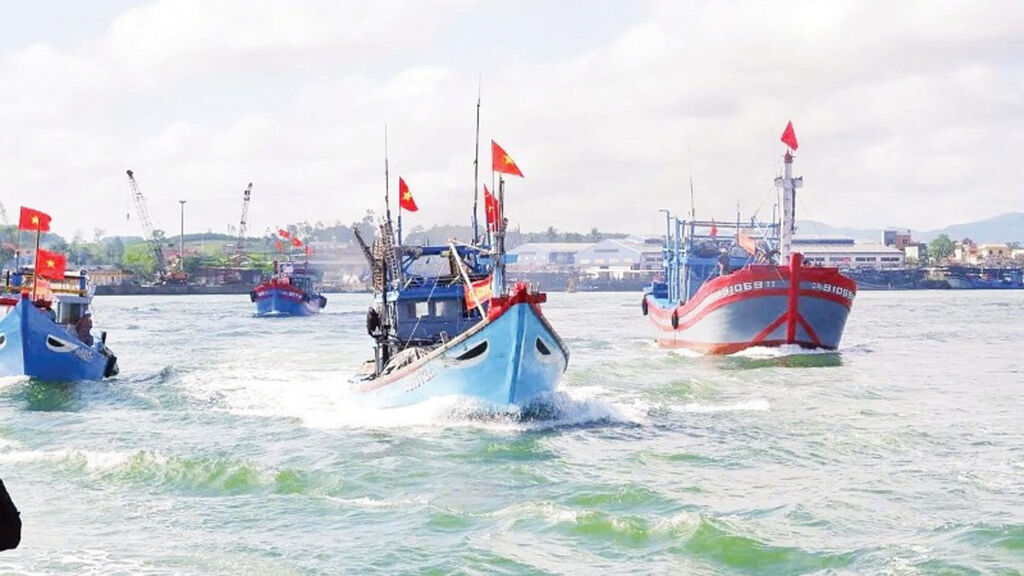
As of February 27, 2026, the city had 4,454 registered fishing vessels, of which 2,225 were more than 15 m long. All of them have been updated in the national VNFishbase database and have completed the registration, marking and licensing procedures in accordance with the regulations. Since the beginning of 2024, 1,663 vessels that have ceased operations have been removed from the register and updated in the system to eliminate any risk of potential infringement.
In terms of route monitoring, 2,202 of the 2,225 vessels over 15 m are equipped with tracking devices, i.e. nearly 99%. The remaining ships, currently docked, are subject to strict control. The monitoring system works 24/7 to quickly detect any loss of connection or crossing of authorized limits. The city has also drawn up a list of 469 vessels that do not meet the operating conditions, entrusted to the management of local authorities to avoid illegal activity.
Ho Chi Minh City currently has nine officially opened fishing ports, four of which are authorized to certify the origin of fish products. Since the beginning of 2024, more than 27,000 ship movements have been recorded, with a volume landed around 222,000 tonnes. Certification and attestation of origin for export are carried out according to a complete chain of custody, guaranteeing exhaustive and verifiable records.
At the same time, law enforcement has been strengthened. Hundreds of cases have been sanctioned for a total of high amounts; Several serious cases have been prosecuted and tried, including for the dismantling of surveillance equipment, intermediation to send illegally operating vessels abroad and the falsification of original documents.
Hoang Nguyen Dinh, Vice Chairman of the municipal People’s Committee, asked local departments and authorities to continue reviewing all records and data to ensure accuracy, uniformity and availability at all times for the inspection mission.
Increased vigilance and preparation for unannounced inspections
Phạm Thị Na, Deputy Director of the Department of Agriculture and Environment of Ho Chi Minh City, stressed the spirit of preparation for hosting the EC mission: not to be complacent and to be on high alert.
She recommended that companies assume that they have been selected for an audit, in order to prepare themselves at the highest level: files organized in a scientific manner, accurate data that can be immediately used at the request of the delegation.
According to the Commission, the EC can carry out unannounced checks in companies, fishing ports or monitoring centres without prior notice. Companies must have all legal documents, traceability files, raw material input and output data as well as internal control procedures.
The EC can also examine the chain of consignments exported to Europe over the past two to three years, tracing the origin from the company to the port and the supplying vessel. Data between companies, ports and managing authorities must therefore be interconnected and consistent.
The competent forces are required to update all administrative sanction decisions since 2018 in the management software. The authorities of the municipalities and coastal districts must closely monitor non-compliant vessels and activate a 24-hour on-call regime, including outside administrative hours.
A collective responsibility beyond the fishing sector alone
Nguyen Phú Quoc, Deputy Director of the Department of Fisheries and Fisheries Resources Control, praised the city’s proactivity while reiterating the need to avoid complacency.
He said the EC’s choice of Ho Chi Minh City is not fortuitous, but stems from its role as a major national centre for seafood processing and export, using raw materials from both domestic fishing and imports. Companies must precisely control their figures: annual production volumes, quantities exported to Europe, origin of raw materials, catches by ship and by port. The data must be accurate and consistent.
Concluding the meeting, Nguyen Văn Duoc, Chairman of the Ho Chi Minh City People’s Committee, stressed that lifting the « yellow card » for the IUU is not only a technical mission of the fisheries sector, but a joint responsibility of the entire municipal political system. Unless the EC’s recommendations are fully addressed, the risk of a « red card » remains real, with serious economic consequences: impact on exports, difficulties for businesses and threats to fishermen’s livelihoods.
He stressed that corrective measures should not be adopted on a temporary basis, but should become a regular and sustainable management practice. As a major national economic centre and a strategic export gateway, Ho Chi Minh City should set an example in terms of law enforcement and responsible and sustainable development of the maritime economy.
source : le courrier