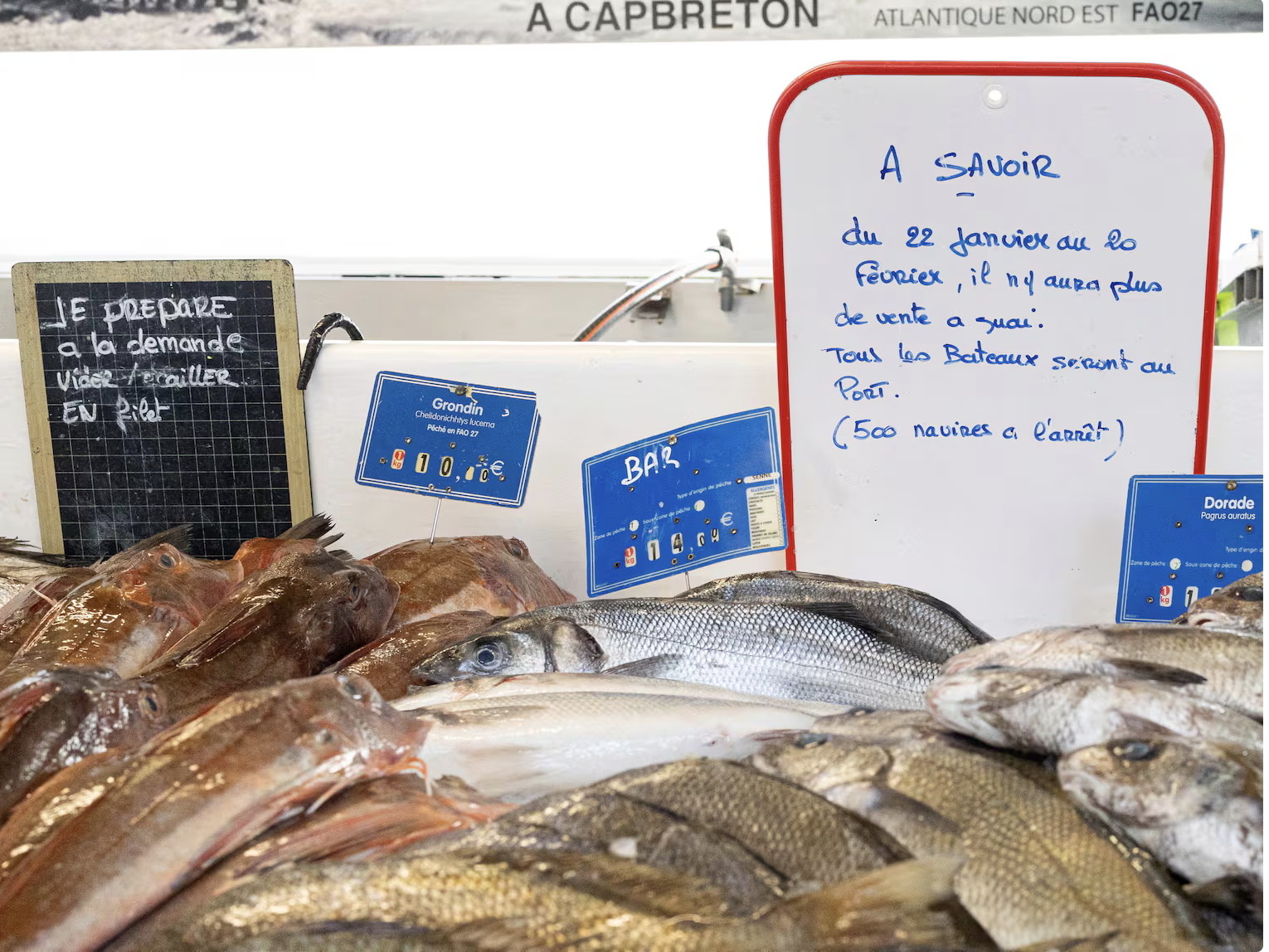
THE FIGURE OF THE WEEK. Household spending on fish in the EU reached €62.8 billion in 2024, up. It is in Portugal that we consume the most, far ahead of Spain and France.
According to Eurostat, the European Union’s fishing fleet had 68,863 vessels in 2024, 10,850 fewer than in 2014 (- 13.6%); a majority measured less than 10 meters. Italy had the largest number of fishing boats (12,297), ahead of Greece (11,452), Spain (8,431), Croatia (6,860), Portugal (6,810) and France (5,975).
Fish catches by the 27 countries of the European Union are estimated at 3.2 million tons in 2024, for a total value of 5.5 billion euros. This represents about 3% of catches worldwide, far behind China (15%), Indonesia (9%) and India (7%).
Spain, Europe’s largest fisherman
The Spanish fishing fleet totaled 21% of the overall mass of fish caught by the countries of the European Union, ahead of France (15%) and Denmark (14%). Nearly three-quarters (71%) of the catches by the EU fishing fleet were in the North-East Atlantic, with the main species taken in this area being herring (19%), merning (17%), sprat (13%) and mackerel (10%).THE ECONOMY NEWSLETTER
Apart from this, 9% of catches took place in the Mediterranean and in the Black Sea, mainly sardines and anchovies, and 7% in the Central-East Atlantic area, primarily albacore tuna and chinchard. Finally, the western part of the Indian Ocean contributed to 6% of the EU’s catches, mainly tuna.
In addition, imports of fishery and aquaculture products in the EU amounted to 5.9 million tonnes in 2024, for a value of €29.9 billion, while exports reached 2.2 million tonnes, for a value of €8.3 billion, showing a trade balance deficit of €21.6 billion in this sector.
The self-sufficiency rate of the 27 countries of the Union in fishery and aquaculture products (i.e. their ability to meet demand through their own production) stood at 38.1% in 2023, compared to 46.1% in 2014.
Finally, household spending on fish in the European Union reached €62.8 billion in 2024, €2.7 billion more than the previous year. Consumption was estimated at an average of 22.88 kg per inhabitant: 16.35 kg of wild fish, the lowest level in ten years, and 6.53 kg of farmed fish.
Tuna is the most consumed fish (2.7 kg per year and per capita), ahead of salmon (2.4 kg) and Alaskan sea (1.8 kg). The Portuguese are the largest consumers with 53.6 kg per capita, ahead of the Spanish (40.7 kg) and the French (32.1 kg). At the other end of the ladder, there are Czechs (5.6 kg), Hungarians (5.8 kg) and Bulgarians (7.6 kg).
source : le point